Shia LaBeouf Arrested Again in New Orleans, Faces New Battery Charge After Mardi Gras Altercation
NEW ORLEANS — In a dramatic and troubling legal twist, actor Shia LaBeouf was arrested again this weekend in New Orleans on a fresh charge of simple battery, adding to a growing legal saga rooted in an incident during the city’s Mardi Gras celebrations earlier this month. The new arrest — linked to a late-February bar altercation — has reignited public scrutiny of the Transformers star’s behavior and his ongoing personal struggles.
LaBeouf, 39, surrendered to authorities Saturday afternoon after a new arrest warrant was issued by New Orleans police. Court records show he was booked on a third misdemeanor count of simple battery, tied to the same February 17 confrontation near the Royal Street Inn & R Bar in the city’s French Quarter — a confrontation that took place amid the raucous crowds of Fat Tuesday.
The sequence of events began when police and witnesses say LaBeouf became physically aggressive outside the bar in the early hours of the Mardi Gras festivities. Video evidence captured by bystanders shows the actor shirtless, pushing one person to the ground and striking another’s face, allegedly causing a nose injury. Multiple witnesses, including local entertainer Jeffrey Damnit — identified in police reports as Jeffrey Klein — described LaBeouf as becoming increasingly combative, punching and pushing during the scene. According to law enforcement reports, he also directed homophobic slurs at those involved, adding a layer of offensive conduct to the alleged battery.
Authorities responded to the disturbance around 12:45 a.m. on February 17, near the height of Mardi Gras celebrations. LaBeouf was initially arrested that same night and charged with two counts of simple battery related to the altercation, then released on his own recognizance. Shortly after his release, footage circulated of him walking Bourbon Street with revelers, an appearance that underscored the surreal nature of his arrest during one of New Orleans’ biggest cultural events.
In a court appearance on February 26, Judge Simone Levine established stricter conditions for LaBeouf’s release. The actor was ordered to post a $100,000 bond, undergo weekly drug and alcohol testing, and return to a substance abuse rehabilitation program — a direct response to concerns raised by the courtroom about his conduct and possible underlying issues. During that hearing, LaBeouf submitted to an on-the-spot drug and alcohol test, though the judge indicated that the results left lingering doubts about his readiness to address those struggles.
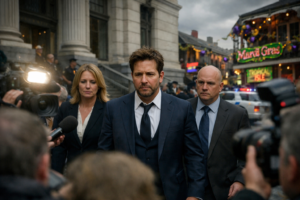
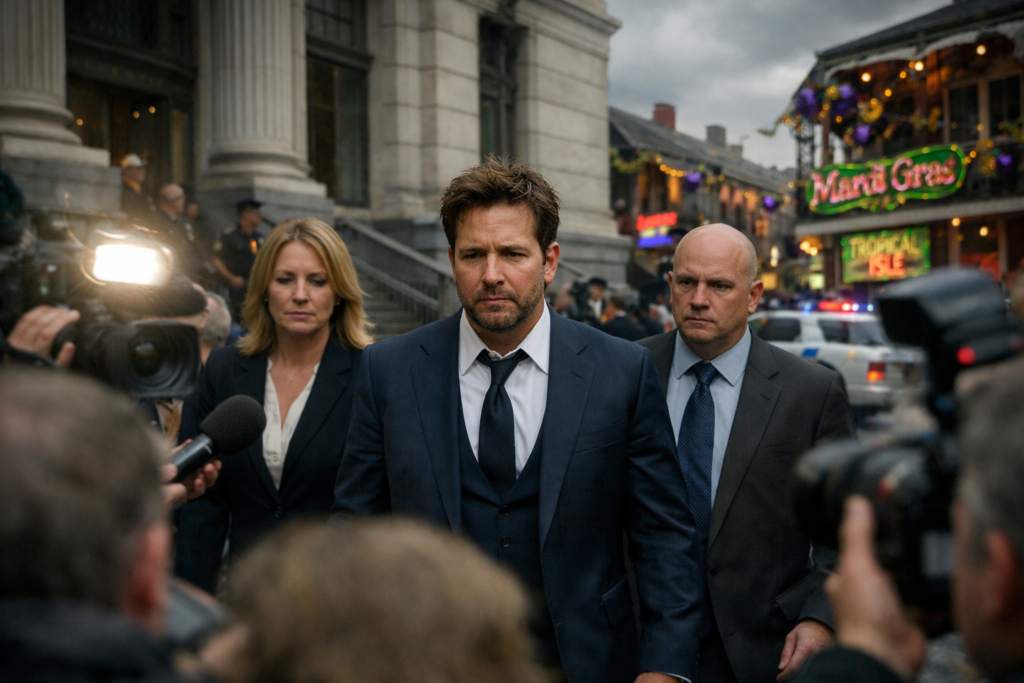
After posting bond, LaBeouf was spotted walking quickly away from reporters outside the courthouse, adding a surreal image to an already controversial case. His attorney, Sarah Chervinsky, defended him in a written statement after the new arrest, arguing that no ordinary individual would face such punitive measures — including high bonds and repeated arrests — for what began as a misdemeanor incident, and asserting that LaBeouf should not be treated more harshly by justice systems because of his celebrity.
The extra battery charge that landed him back in custody on Saturday did not result from a new incident, but rather another individual coming forward alleging harm during the same Mardi Gras night. Prosecutors sought the additional warrant after learning that a third person claimed to have been battered by LaBeouf, meaning he could now face three separate counts of simple battery linked directly to the same chaotic bar encounter.
For LaBeouf, this is not his first brush with legal trouble in recent years, nor his first run-in with police over violent behavior. His public persona has swung between critically acclaimed performances and widely reported personal challenges, including multiple arrests and public controversies. Earlier in this case, LaBeouf admitted in interviews that he had behaved poorly, acknowledging that he did not handle himself well during the Mardi Gras incident. Yet his comments, especially those involving homophobic slurs and remarks about his discomfort around LGBTQ+ people, have drawn significant public backlash and raised questions about accountability.
In an interview released around the same time as his second arrest, LaBeouf attempted to contextualize his behavior, suggesting it was rooted in personal issues rather than substance abuse alone. He described what he called a “small man complex” — attributing his actions to ego and anger rather than addiction — and expressed skepticism about whether traditional rehabilitation would help him. These comments have done little to calm critics and have instead further polarized public perception of the actor’s self-assessed path to change.
Legal experts note that misdemeanor battery charges — even multiple counts arising from a single night — can quickly become complicated when video evidence and witness testimony are involved, potentially leading to higher stakes if prosecutors can tie those behaviors to broader patterns of violent conduct. In Louisiana, simple battery is defined as intentionally causing bodily harm, and multiple convictions can carry cumulative consequences.
The broader context of the case — a beloved cultural celebration turned legal minefield — has drawn national attention, with entertainment and legal commentators alike weighing in on the severity of LaBeouf’s actions and the court’s response. Some argue that the judge’s decision to order rehabilitation alongside legal penalties reflects growing awareness of how substance misuse and emotional health intersect with violent outbursts, while others see the repeated arrests as a sign of legal escalation rather than therapeutic intervention.
For New Orleans, a city used to Mardi Gras excesses and rowdy revelry, the incident involving LaBeouf stands out not just because of his celebrity status but because of the nature of the alleged violence and language directed at those involved. With changes and developments still unfolding, including scheduled future hearings, the legal battle ahead promises to test both the justice system’s handling of celebrity defendants and LaBeouf’s own efforts to confront his public conduct.
As it stands, LaBeouf has not yet entered a plea in connection with the February 17 allegations or the new count linked to the additional victim, and his next court date is expected to be later this month. Whether this case becomes a turning point in his personal journey — or another chapter in a protracted legal saga — remains to be seen.