RFK Jr. Pressures U.S. Medical Schools to Add Nutrition Training or Risk Losing Federal Funding
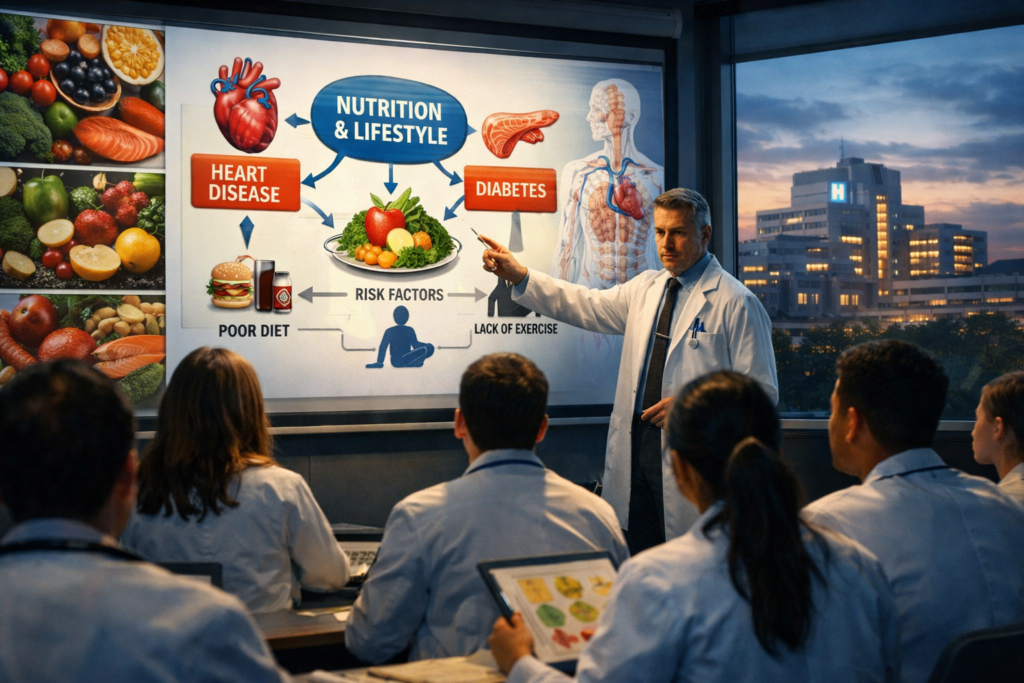
A new push from the nation’s top health official is igniting debate across American medical schools. The proposal aims to reshape how future doctors are trained — by putting nutrition at the center of medical education.
U.S. Health and Human Services Secretary Robert F. Kennedy Jr. is urging medical schools across the country to dramatically expand their teaching of nutrition. His message is clear: schools that fail to strengthen nutrition education could eventually risk losing federal funding.
The proposal has sparked intense discussion among physicians, educators, and public health experts about how doctors should be trained to fight chronic disease in the United States.
A Shift Toward Prevention
Kennedy’s campaign is part of his broader public health initiative known as “Make America Healthy Again.” The effort focuses heavily on preventing illness rather than simply treating it after it develops.
At the center of his argument is a belief that modern medical training emphasizes drugs and procedures while giving too little attention to diet and lifestyle — factors that many experts say play a critical role in preventing disease.
Kennedy has argued that doctors are often well trained in surgery, pharmaceuticals, and diagnostic technology but receive limited education on how nutrition affects health.
“We train physicians to use advanced medical tools,” he has said in public remarks. “But we rarely teach them how to help patients avoid illness in the first place.”
His proposal calls for nutrition education to be embedded throughout every stage of medical training — from undergraduate pre-medical coursework all the way through residency programs and continuing medical education.
A Growing Health Crisis
The push comes at a time when chronic illnesses linked to diet are surging in the United States.
Conditions such as obesity, type 2 diabetes, heart disease, and high blood pressure remain among the leading causes of death nationwide. Public health researchers say poor nutrition plays a major role in many of these illnesses.
Supporters of Kennedy’s proposal say that improving nutrition education for doctors could help physicians guide patients toward healthier habits before disease develops.
Advocates argue that if doctors were more comfortable discussing food choices, meal planning, and lifestyle changes, patients might receive more practical guidance during routine medical visits.
Some nutrition experts say the gap in training is real.
Studies have shown that many medical students receive minimal formal instruction on clinical nutrition during their education. In some cases, the topic may only appear briefly in broader biochemistry or physiology courses rather than as a dedicated subject.
Schools Already Teach Some Nutrition
Medical education organizations, however, say the picture is more complex.
The Association of American Medical Colleges, which represents more than 170 accredited medical schools in the United States and Canada, says nutrition is already included in many training programs.
According to the organization, students learn about diet and its connection to health through integrated courses that cover metabolism, disease prevention, and patient counseling.
Still, even some educators who defend the current system acknowledge that nutrition training can vary widely between institutions.
In some programs, students may receive extensive instruction through specialized courses or clinical rotations focused on lifestyle medicine. In others, nutrition education may be scattered across different subjects and receive less emphasis.
Public health researchers have long argued that doctors should receive more consistent training in this area.
Experts note that physicians are often the first professionals patients consult when facing chronic health issues. Because of that, they say doctors should feel confident offering evidence-based guidance on diet and nutrition.
Experts See Opportunity — and Challenges
Many medical educators agree that stronger nutrition training could benefit both doctors and patients. However, they also warn that implementing major curriculum changes will not be simple.
Medical school programs are already densely packed with required coursework covering anatomy, pharmacology, pathology, and clinical practice.
Adding significant new content could require schools to redesign existing programs or remove other material.
Another challenge is determining what nutrition education should look like.
Nutrition science continues to evolve, and debates about dietary guidelines — including topics such as fats, carbohydrates, and processed foods — remain common even among experts.
Educators say any new training standards would need to focus on evidence-based guidance rather than popular diet trends.
Some experts also emphasize the importance of teaching communication skills alongside nutritional science.
Doctors often struggle to discuss diet with patients in ways that feel supportive rather than judgmental. Training programs that focus on respectful conversations about food choices may help patients feel more empowered rather than criticized.
Prevention Versus Treatment
At its core, the debate reflects a broader shift in American health care.
For decades, the U.S. medical system has focused heavily on diagnosing and treating illness after it appears. Critics say that model is expensive and reactive.
Kennedy and other advocates want to push the system toward prevention — encouraging doctors to address lifestyle factors such as diet, physical activity, and sleep before diseases develop.
Supporters argue that even modest improvements in nutrition across the population could significantly reduce healthcare costs and improve quality of life.
But critics caution that doctors alone cannot solve the country’s nutrition problems.
Access to healthy food, economic inequality, food marketing, and cultural habits all shape how Americans eat. Without broader social changes, some experts say, nutrition education for doctors may have limited impact.
What Happens Next
For now, the proposal remains in the early stages.
Federal officials have asked medical schools to outline how they plan to strengthen nutrition education in their programs. Institutions may need to submit detailed plans explaining how new courses or training modules would be incorporated into existing curricula.
Whether the government ultimately ties funding to those reforms remains uncertain.
Still, the debate has already sparked renewed interest in the role of nutrition within modern medicine.
For some educators, the moment represents an opportunity to rethink how doctors are trained.
For others, it raises concerns about political pressure shaping medical education.
Either way, the conversation is forcing a fundamental question into the spotlight: should doctors of the future spend as much time learning about food as they do learning about drugs?
The answer could reshape the way medicine is practiced in America for decades to come.