Retail Mogul Les Wexner Faces Intense Congressional Scrutiny Over Ties to Jeffrey Epstein — Ohio Community Demands Answers
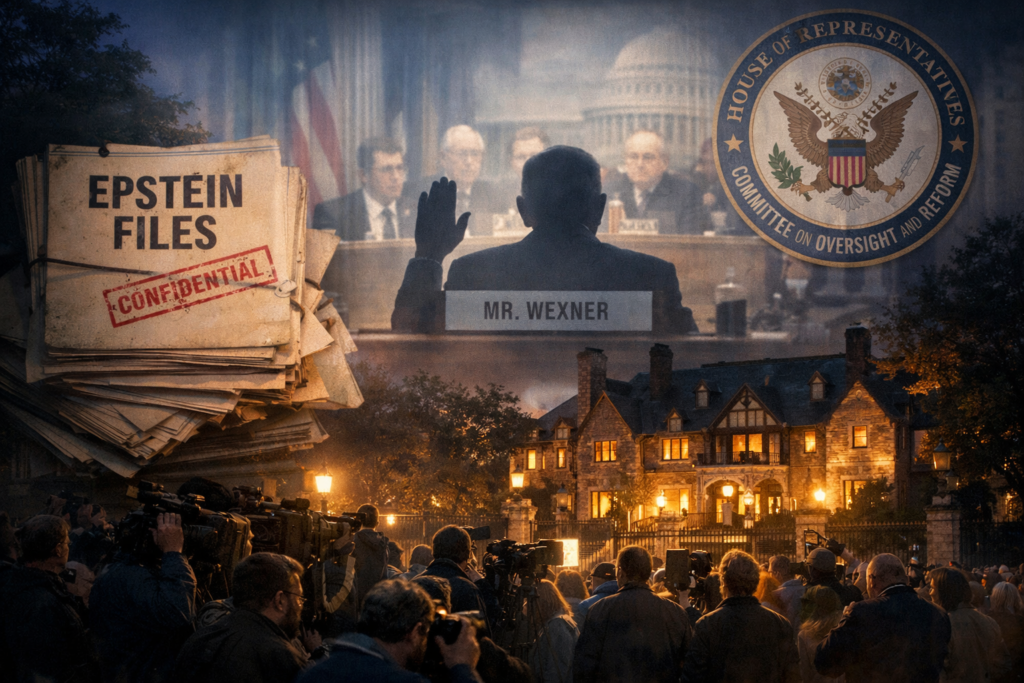
In the quiet of his sprawling Ohio estate, a man once celebrated for building one of America’s most iconic retail empires now finds himself at the center of a storm that’s shaking Wall Street, Washington and Main Street alike.
Billionaire Leslie “Les” Wexner, the 88-year-old former head of L Brands — the company that brought us Victoria’s Secret, Bath & Body Works and Abercrombie & Fitch — was deposed by the U.S. House Oversight Committee in a closed-door session on Wednesday as part of the broad, ongoing investigation into the late financier Jeffrey Epstein and his network of powerful associates.
What happened in that six-hour testimony — and the emotional aftermath — sheds light on how a retail titan’s rise became entangled with one of the most notorious scandals of this generation, leaving survivors, lawmakers, and everyday Americans demanding accountability.
Wexner’s Testimony: “I Was Duped”
On Feb. 18, 2026, Wexner sat before members of the House Oversight Committee at his New Albany, Ohio, mansion, answering questions about his decades-long connection to Jeffrey Epstein — a convicted sex offender who died in federal custody in 2019 while awaiting trial on sex trafficking charges.
In a prepared statement released ahead of the deposition, Wexner described himself as “naive, foolish and gullible” for putting trust in Epstein, whom he first met in the mid-1980s. He called Epstein a “world-class con man” and insisted he never witnessed or knew of his crimes and was never a co-conspirator in Epstein’s illegal activities.
Wexner said he met Epstein through business circles when the financier was young and seeking clients. Eventually, Epstein became his personal financial manager with power of attorney, handling many aspects of Wexner’s fortune and resources. The billionaire told lawmakers he completely cut ties with Epstein in 2007 — long before Epstein faced serious criminal charges.
He acknowledged a brief visit to Epstein’s private island with his family and disputed rumors that he ever traveled with Epstein or saw him with minors, saying the man he knew was very different from the predator later exposed by investigators.
Lawmakers Push Back Hard
But Democratic lawmakers didn’t accept Wexner’s explanation at face value.
Rep. Robert Garcia (D-Calif.), the ranking Democrat on the Oversight Committee, told reporters that Wexner’s relationship with Epstein was far closer and more enabling than he acknowledged. According to the committee’s briefing, sucessive transfers, stock exchanges and financial support totaling about $1 billion flowed from Wexner to Epstein — helping fund his luxury lifestyle, private jet, and New York town home.
“There is no question that there would have been no Epstein island, no Epstein plane, no money to traffic women and girls without the financial support from Les Wexner,” Garcia said.
Other lawmakers pressed Wexner about whether he truly understood the depth of Epstein’s network — both socially and financially. Representative Dave Min (D-Calif.) was particularly blunt, questioning how Wexner could claim ignorance despite interacting with Epstein over decades.
The tensions ran high in the closed session, and as the deposition video was released to the public, viewers saw the former retail titan at times rambling under pressure — so much so that at one point, his own attorney was caught on camera admonishing him to keep his answers brief. “I will f-king kill you if you answer another question with more than five words,” the lawyer jokingly but firmly whispered into his ear.
Wexner’s Denial, Public Doubt
Despite his denials, Wexner’s name appears more than 1,000 times in federal Epstein files released by the Department of Justice — a collection of internal documents that American lawmakers and investigators are still sifting through for new leads on Epstein’s network and possible enablers.
Wexner’s legal team insists that his responses were truthful and that he has nothing to hide. Wexner stressed in his prepared statement that he cut ties with Epstein nearly two decades ago, never participated in illegal conduct, and deeply regretted how events unfolded.
But House Democrats have publicly expressed skepticism. Some called his claims of ignorance “not credible,” pointing to the extensive financial and personal contact the two had over many years.
Emotional Fallout in Ohio Communities
The ripple effects of Wexner’s testimony extend far beyond Washington. In his hometown near Columbus, Ohio, longtime residents and local leaders are grappling with what this means for a man who was once a beloved philanthropist and major community donor.
Several activists and sex trafficking survivors have called on institutions that bear Wexner’s name — including parts of Ohio State University’s medical center and arts facilities — to reconsider those honors in light of the latest revelations and his relationship with Epstein.
At protest gatherings, former OSU athletes and survivors of other abuse scandals have openly questioned whether Wexner should still be celebrated as a major benefactor — a stark contrast to the admiration he once enjoyed.
Local residents are also demanding greater transparency about how deeply Wexner’s resources helped Epstein grow his influence before the financier’s 2019 arrest and suicide in jail.
What Comes Next in the Epstein Investigation
The deposition of Wexner is just one chapter in an expansive, unfolding investigation into Jeffrey Epstein’s network — a probe that has already drawn in politicians, diplomats, business leaders, and now one of Ohio’s richest sons.
Former President Bill Clinton and former Secretary of State Hillary Clinton are also scheduled for closed-door testimony later this week, part of the same probe aiming to map the full extent of Epstein’s reach and connections.
For Epstein survivors and the American public, the questions are both specific and profound: Did wealth and power shield abusers and their associates from accountability? And what does justice look like for those left behind?