Republicans Break with Trump on Filibuster, Exposing Deep Divisions Within GOP
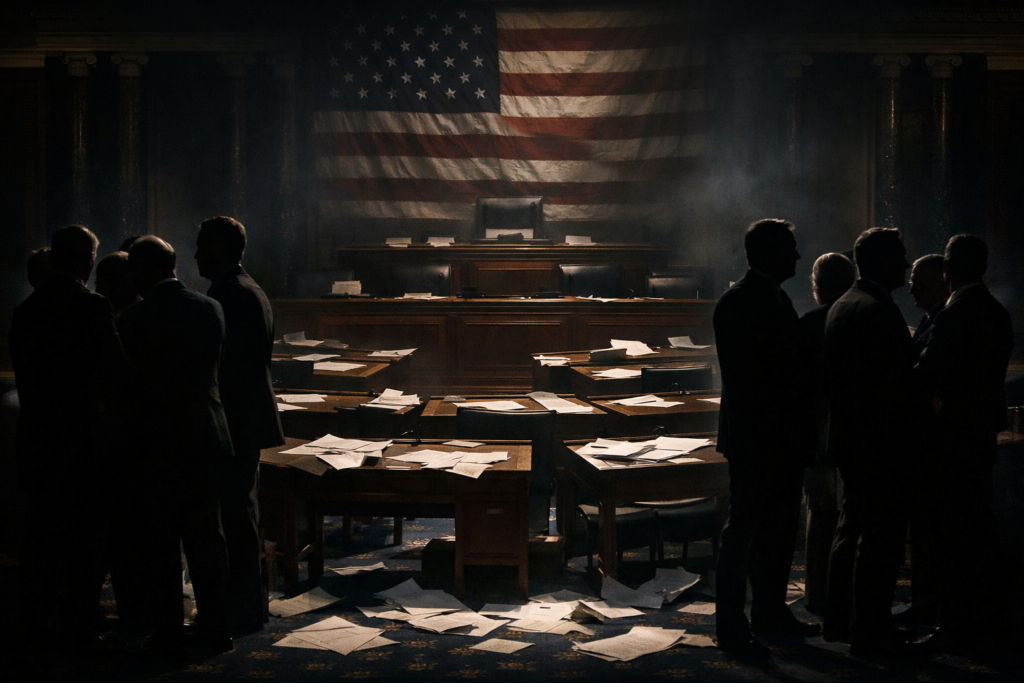
WASHINGTON, D.C. — A growing divide within the Republican Party has come into sharp focus as several GOP lawmakers push back against efforts to eliminate the Senate filibuster, signaling a rare but significant break from former President Donald Trump’s influence.
The debate centers on one of the most powerful procedural tools in American politics—the filibuster, which requires a supermajority of 60 votes in the Senate to advance most legislation. While Trump and some of his allies have called for its removal to accelerate conservative policy goals, a number of Republican senators are standing firm in defense of the rule.
This internal clash is drawing national attention, particularly as Republicans opposing Trump Senate filibuster decision becomes a defining moment for party identity ahead of upcoming elections.
For many GOP lawmakers, the filibuster is more than just a procedural mechanism—it’s a safeguard against sudden shifts in policy when political power changes hands. By requiring bipartisan support, it forces compromise and prevents one party from unilaterally pushing through sweeping legislation.
Several Republican senators have argued that eliminating the filibuster could ultimately backfire. While it might provide short-term gains when the party holds power, it could also allow Democrats to pass major legislation more easily when roles are reversed. This concern is fueling resistance and shaping the broader narrative around Senate filibuster rules impact on U.S. politics.
Trump, however, has taken a different stance. He has repeatedly criticized the filibuster as an obstacle to progress, urging Republicans to take a more aggressive approach to advancing their agenda. His position reflects a broader shift toward a more confrontational style of politics, where speed and decisiveness are often prioritized over bipartisan negotiation.
The disagreement highlights a deeper philosophical divide within the Republican Party. On one side are traditional conservatives who value institutional norms and long-standing rules. On the other are those aligned with Trump’s vision, which emphasizes bold action and a willingness to challenge established practices.
This tension is becoming increasingly visible as lawmakers prepare for the next phase of political battles in Washington. The issue of the filibuster is not just about procedure—it’s about the future direction of the party and how it chooses to govern.
Political analysts say the situation underscores the evolving dynamics of Trump influence on Republican Party leadership today, as some members begin to assert independence while others remain closely aligned with his views.
The stakes are high. Control of Congress and the ability to pass legislation are central to both parties’ strategies, and the rules governing those processes can have far-reaching consequences. The filibuster, in particular, has been a focal point in debates over voting rights, healthcare, and economic policy.
Democrats have long criticized the filibuster as a barrier to progress, arguing that it allows a minority of senators to block legislation supported by the majority. Some within the party have called for its elimination or reform, especially when it comes to key priorities.
However, the current Republican stance complicates the picture. By defending the filibuster, GOP lawmakers are positioning themselves as protectors of Senate tradition, even as they face pressure from within their own ranks to adopt a more aggressive approach.
The debate is also resonating with voters, many of whom are paying closer attention to how political decisions are made. For some, the filibuster represents a necessary check on power. For others, it is seen as a source of gridlock that prevents meaningful change.
This has made U.S. Senate filibuster debate political implications a trending topic, as Americans seek to understand how these internal conflicts could affect the legislative process.
Beyond the immediate issue, the disagreement reflects broader challenges within the Republican Party as it navigates its identity in a post-presidential landscape shaped by Trump’s legacy. The question of how much influence he should continue to wield remains unresolved, and debates like this one are likely to play a key role in shaping the answer.
At the same time, the situation highlights the complexities of governing in a deeply polarized environment. Balancing ideological goals with practical considerations is no easy task, and the choices made now will have lasting implications.
As the debate continues, it is clear that the Republican Party is at a crossroads. Whether it chooses to maintain traditional rules or embrace a more aggressive strategy could define its future trajectory.
For now, the refusal by several GOP senators to support eliminating the filibuster stands as a notable act of independence—one that signals a willingness to challenge even the most influential voices within the party.
The coming months will likely bring further developments, as lawmakers continue to navigate the intersection of policy, politics, and party unity. And as the nation watches closely, the outcome of this debate could reshape not only the Republican Party but the broader landscape of American governance.