Prince Harry Leads Major Privacy Lawsuit Against British Tabloids in London High Court
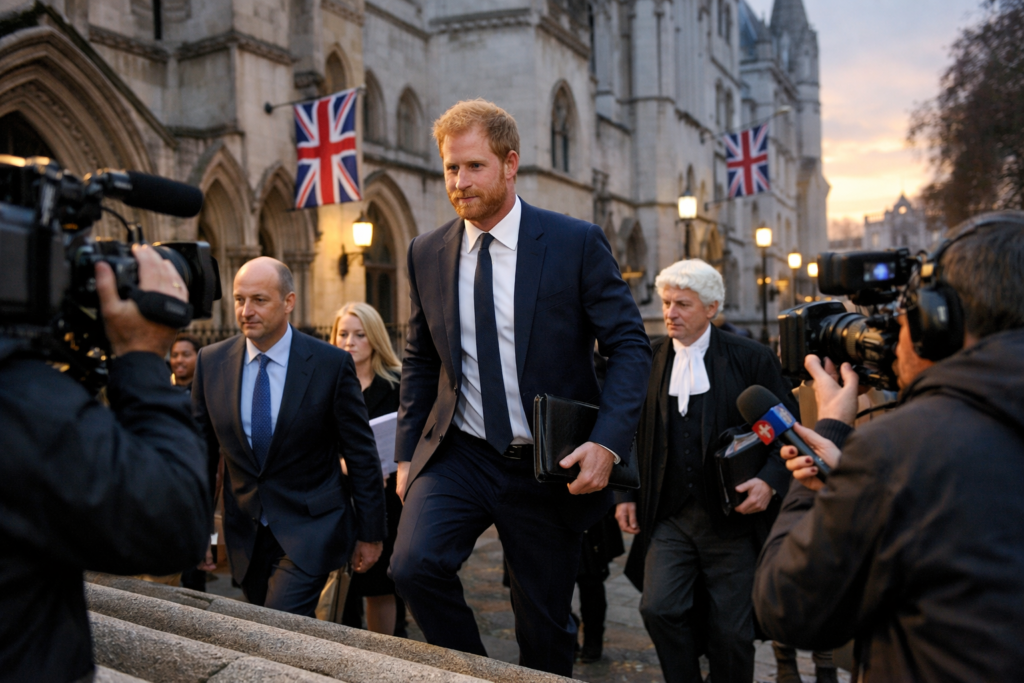
LONDON — Prince Harry, the Duke of Sussex, has returned to the United Kingdom this week for one of the most closely watched legal battles of his life: a nine-week High Court trial against Associated Newspapers Ltd. (ANL) — the publisher of the Daily Mail, Mail on Sunday, and MailOnline — over alleged unlawful media practices that span decades.
The trial, which officially began at London’s Royal Courts of Justice on Monday, pits the younger son of King Charles III against a powerful British media establishment — in what many legal experts are calling a landmark case in press accountability and privacy rights.
Allegations of Unlawful Information Gathering
At the heart of the lawsuit are allegations that Associated Newspapers engaged in illegal and intrusive practices including phone hacking, voicemail interception, covert surveillance, “blagging” (obtaining confidential information by deception), and hiring private investigators to infiltrate private lives for sensational tabloid stories.
The case is not just about historical headlines or old gossip columns. Lawyers for Prince Harry and six other high-profile co-claimants — including music legend Sir Elton John, actor Elizabeth Hurley, fashion designer Sadie Frost, civil rights activist Baroness Doreen Lawrence, politician Simon Hughes, and Sir Elton’s husband David Furnish — argue these alleged tactics were part of a widespread culture of misconduct at the Daily Mail titles.
Their legal team, led by prominent barrister David Sherborne, contends that the tabloid publisher routinely broke British privacy laws in pursuit of lucrative headlines, and that such conduct invaded the personal lives and reputations of the claimants over years.
ANL has denied all wrongdoing, dismissing the claims as “preposterous smears” and asserting that its journalists acted within legal boundaries. The publisher has said it will vigorously defend itself throughout the trial.
A Personal Mission Against Media Intrusion
For Prince Harry, this trial isn’t just another lawsuit — it’s the culmination of a long personal and legal campaign aimed at holding parts of the British press to account for what he says are systematic abuses of power.
The emotional weight of the case is deeply personal. Harry has publicly blamed tabloid culture and invasive journalism for the harassment his family endured growing up, and has cited the tragic death of his mother, Princess Diana, as one of the darkest shadows cast by unchecked media scrutiny.
In past litigation, Harry has already secured victories: he won a major privacy ruling against Mirror Group Newspapers in 2023, where judges found that editors were aware of unlawful information gathering by private investigators working for the group. He also settled with News Group Newspapers, publisher of The Sun and the now-closed News of the World, receiving apologies and substantial damages as part of a 2025 settlement.
Still, this lawsuit against ANL marks the most significant and potentially consequential confrontation yet in Harry’s broader effort to reform how tabloids operate.
High-Profile Co-Claimants and Legal Stakes
What makes the ANL case even more remarkable is the roster of claimants and the wide range of alleged intrusions at issue. Alongside Harry, figures like Sir Elton John and Elizabeth Hurley say they were targets of similar alleged misconduct — ranging from voicemail hacking to deceptive information gathering.
The trial is expected to last around nine weeks, with live testimony from Prince Harry scheduled later in the proceedings and detailed legal arguments about whether specific Daily Mail articles were produced using unlawfully obtained information.
A key figure in the case is a private investigator whose statements both support and contradict the claimants’ allegations — a stark reminder of how murky and contentious decades-old tabloid practices can become when exposed in a courtroom.
Privacy Rights vs. Press Freedom
At stake in this trial — beyond personal reputations and possible damages — are fundamental questions about privacy rights, press freedom, and media accountability in the UK. Critics of the tabloid press say the industry has long operated with a “publish first, apologize later” mentality, invading people’s private lives in order to drive sales and sensational headlines.
Supporters of press freedom argue that tabloids play a vital role in British cultural life and that aggressive reporting is sometimes in the public interest. However, the balance between investigative reporting and illegal information gathering remains a persistent global debate.
Legal analysts say the outcome of the case could have lasting implications not just for Associated Newspapers but for the broader British media landscape, as it may set precedents on the limits of journalistic conduct and the legal accountability of major media groups.
A Royal Return to Court
Prince Harry’s presence in London for the trial comes after months of buildup. The Duke traveled from his home in Montecito, California, where he lives with his wife Meghan Markle and their children, to participate in what his legal team calls a crucial moment for privacy rights.
Despite the high emotions surrounding the case, Harry has indicated he is “confident and ready” as the legal fight unfolds, recognizing both the challenges and opportunities the trial presents.
King Charles III and other senior royals are not expected to participate in or comment on the trial, although Harry’s presence in the UK raises thoughtful questions about the ongoing relationships within the royal family and their public roles.
Looking Ahead
As the High Court proceedings continue, both sides will present months of evidence, witness testimony, and legal strategy in the most high-profile media trial in Britain in years. For Prince Harry and his co-claimants, the fight is about privacy, dignity, and the power of the press. For the Daily Mail’s publisher, it’s a defense of journalistic practices and commercial journalism in a 21st-century media environment.
The trial’s outcome could reshape public trust in British tabloids, influence future privacy legislation, and alter how high-profile figures around the world approach lawsuits against the media.