Policing Experts React to Minneapolis Federal Shooting, Debate Use-of-Force and Accountability
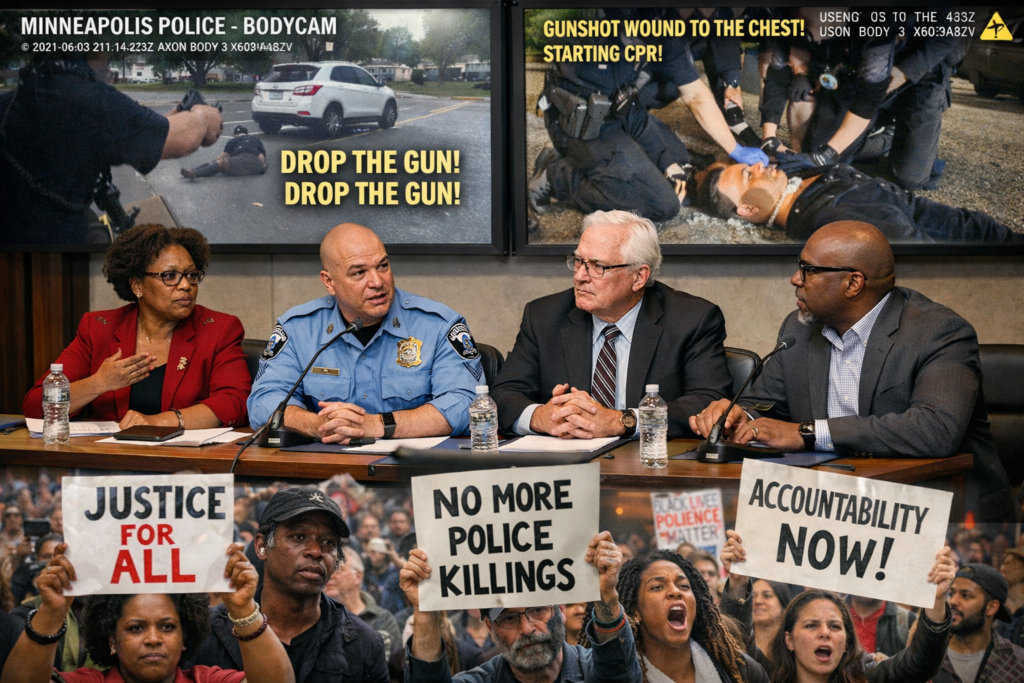
MINNEAPOLIS — In the wake of a deadly shooting by a U.S. Border Patrol agent in Minneapolis, policing experts across the country are weighing in on whether federal law enforcement used justified force, how training and protocols may have failed, and what this incident means for civil liberties, law enforcement accountability and public trust in policing. The shooting — one of two fatal encounters involving Immigration and Customs Enforcement (ICE) agents in Minneapolis this month — has reignited a national conversation about federal use-of-force standards, the limits of police power and the role of oversight in high-stakes enforcement operations.
What Happened in Minneapolis?
On January 24, 2026, Minneapolis was rocked by another deadly encounter between federal agents and civilians when 37-year-old Alex Pretti, an intensive care nurse and community volunteer, was shot and killed by U.S. Border Patrol officers during a federal immigration “Operation Metro Surge” enforcement operation. Videos documented Pretti trying to assist another person after a tense interaction with agents — and contrary to federal claims, footage verified by major outlets shows him holding a phone, not a weapon, when he was shot multiple times.
The incident closely followed a January 7 shooting of 37-year-old Renée Nicole Good by an ICE agent, which also drew controversy over whether the use of lethal force was warranted. Good was killed during a federal raid, with conflicting accounts over whether she posed a threat.
Experts on Use-of-Force: What They’re Saying
Policing and use-of-force experts have been quick to publicly dissect the Minneapolis incident — not only the facts of the case but the broader implications for federal enforcement tactics.
A central point of debate is whether shooting at a moving vehicle is ever justified. Historically, most police departments discourage officers from firing at moving cars unless there is an obvious, immediate danger to life — a standard that critics say is not met in most vehicle-related confrontations. In lawsuits and academic commentary, experts have repeatedly stressed that hitting a moving vehicle rarely stops it and often endangers bystanders.
Retired police trainers and former law enforcement leaders told major outlets that, based on available publicly viewed video, they saw no clear justification for deadly force in the Minneapolis scenario. One expert said officers could have stepped aside rather than moving into a position that limited their own escape and heightened risk. Another questioned whether current training sufficiently prepares federal agents for interactions that involve civilians recording or approaching them.
Another former police official noted that even with incomplete information, the videos raised serious concerns about whether the officer’s actions were consistent with a “reasonable officer” standard — a constitutional test used to evaluate whether force was necessary. Some experts further observed that Minneapolis’ updated use-of-force laws created a statutory benchmark that requires clearly identified and immediate threats to justify lethal force, standards that federal agents might not be trained or required to follow.
Federal Versus Local Standards
One major issue experts highlighted is the difference between federal and local force policies. Unlike many police departments, federal agencies such as ICE and U.S. Border Patrol often operate under different training protocols and less transparent oversight, making it harder for the public to assess whether an agent’s actions align with best practices.
Academic voices have also criticized the lack of independent investigation authority at the federal level. In the Minneapolis case, the Minnesota Bureau of Criminal Apprehension (BCA) — a state agency with decades of experience investigating officer-involved shootings — was reportedly blocked from accessing the scene by Department of Homeland Security personnel. This intervention has raised questions about impartiality and transparent accountability in federal shootings.
Legal scholars emphasize that federal and local differences in force policy can create confusion and distrust. One former prosecutor noted that even if federal authorities determine an agent acted within policy, state prosecutors could still pursue charges under state law — a rarely-used but legally acknowledged path that could reshape how accountability is enforced.
Policing Experts and Civil Liberties Advocates
Civil liberties advocates and policing scholars are also alarmed at the broader trend of federal agents exercising force with limited transparency. Research has shown that when trust between communities and law enforcement deteriorates — especially after use-of-force deaths — long-term relationships break down, making everyday public safety cooperation more difficult.
One criminologist highlighted how such incidents can exacerbate community fear and confusion, particularly when federal agents are perceived as outside traditional accountability systems. This is especially true in cities like Minneapolis, which still grapples with policing controversies stemming from other high-profile deaths in recent years.
Experts argue that independent oversight mechanisms — separate from the agency involved — are crucial to restoring trust. They point to models where civilian review boards, state investigative bureaus and joint task forces provide checks on force decisions, rather than allowing federal agencies to conduct self-investigations that are shielded from public view.
The Legal Landscape: Accountability and Immunity
Policing experts point out that a key factor complicating potential legal outcomes is federal officer immunity, which can shield agents from prosecution under certain circumstances. Vice President J.D. Vance has publicly stated that the ICE officer involved enjoys “absolute immunity” as he was acting within his duties — a claim that itself has legal nuance and is being debated by legal analysts.
Still, experts note that legal immunity isn’t absolute, and state prosecutors can bring charges if evidence shows a clear violation of criminal law. Historically, federal and state prosecutions of law enforcement officers have occurred in rare but significant cases — underscoring that accountability is possible but often requires focused legal efforts.
Fallout and Public Confidence
The Minneapolis shootings have ignited protests locally and across the U.S., as community members blasted federal enforcement actions and called for reform in immigration policing and the use of force. Business leaders, tech executives and civil rights organizations publicly condemned the shootings, citing a need for systemic change and fair enforcement practices.
Local officials, including Minnesota’s governor and Minneapolis’s mayor, have demanded federal agents be withdrawn and oversight improved — highlighting a clash between state and federal authority that has become a symbolic frontline in the broader debate over policing and civil rights in America.
Looking Ahead: Reform and Recommendations
Policing experts recommend multiple reforms in the wake of such force incidents:
- Unified force-use standards across agencies — ensuring federal agents adhere to the same thresholds as local police departments.
- Independent oversight and investigation — empowering outside bodies to review use-of-force deaths and build public confidence.
- Transparent training benchmarks — making clear what scenarios justify lethal force and how officers are evaluated.
- Community engagement strategies — reducing fear, increasing dialogue and building mutual understanding between law enforcement and residents.
As the Minneapolis community mourns and legal processes unfold, experts say the nation is watching a pivotal moment — one that could shape how federal law enforcement uses force and how policing is governed across jurisdictions going forward.