Pentagon Orders 1,500 Soldiers on Standby for Possible Minnesota Deployment Amid Unrest
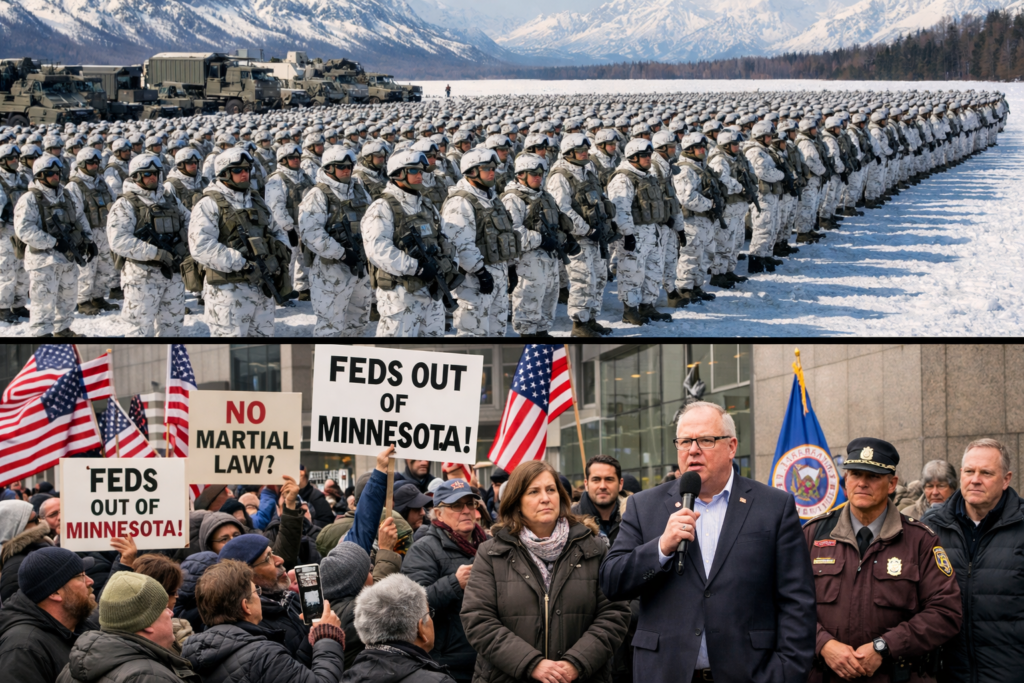
MINNEAPOLIS — The Pentagon has quietly placed about 1,500 active-duty U.S. soldiers on standby for potential deployment to Minnesota, marking a dramatic escalation in the federal government’s response to widespread protests and unrest tied to an ongoing immigration enforcement operation. The decision comes amid heightened tensions between the Trump administration and state authorities — and against a backdrop of fierce public demonstrations.
The soldiers, assigned to two infantry battalions from the 11th Airborne Division based in Alaska, were issued prepare-to-deploy orders — a procedural step that doesn’t yet indicate a formal military deployment, but signals the administration’s intent to keep military options open should unrest intensify.
Why Minnesota Is at the Center of a National Flashpoint
The troop preparedness order follows weeks of demonstrations in Minneapolis and the surrounding Twin Cities area triggered by an aggressive immigration crackdown under what the U.S. Department of Homeland Security has dubbed Operation Metro Surge — reportedly the largest immigration enforcement effort in recent U.S. history.
The unrest escalated after the fatal shooting of 37-year-old Renee Nicole Good by an agent from U.S. Immigration and Customs Enforcement (ICE) on January 7, which has fueled anger among residents and protesters. The deployment of thousands of ICE and Border Patrol agents to the region has been criticized as heavy-handed and has drawn legal challenges from local leaders.
Federal authorities say the increase in immigration officers and federal presence is meant to enforce existing immigration law and quell what they describe as violent attacks on federal personnel and property. Critics — including Minnesota’s top elected officials — argue it’s a political provocation and a misallocation of resources.
The Insurrection Act and the Limits of Military Action
President Donald Trump has publicly suggested — though later softened his comments — that he could invoke the Insurrection Act, a rarely used 19th-century statute that would allow him to deploy active-duty military personnel domestically to enforce federal law if state authorities are deemed unable to maintain order.
The Insurrection Act was last meaningfully invoked in 1992 to quell unrest in Los Angeles following the Rodney King verdict, and many constitutional scholars argue that its application to protests — especially ones that remain largely peaceful — would face serious legal obstacles.
Even with the standby troops, active-duty forces cannot engage in routine law enforcement unless the Insurrection Act is formally triggered. Absent that declaration, the troops would remain under Pentagon control — not operating on the ground in Minnesota cities.
Minnesota Officials Push Back
Minnesota’s governor and Minneapolis mayor have been vocal opponents of a potential military deployment.
Governor Tim Walz, a Democrat, has mobilized the Minnesota National Guard to support peaceful protests and local law enforcement if needed, but he has also urged the federal government to de-escalate tensions rather than escalate them. Walz’s administration has framed the surge of federal agents — and the threat of military forces — as disruptive and counterproductive.
Minneapolis Mayor Jacob Frey went further, calling the idea of invoking the Insurrection Act “a shocking step” and warning that bringing in active-duty troops would intensify unrest rather than calm it. Frey pointed to local crime statistics showing declines in many categories and stressed that residents “don’t need more federal agents to keep people safe.”
Frey and other local officials have also filed federal lawsuits seeking to block certain federal enforcement actions, arguing that the expanded presence of immigration officers violates civil liberties and constitutional protections.
Protests and Public Reaction
Protests in response to immigration enforcement have drawn thousands of residents and activists in Minneapolis and beyond. Many are calling for an end to what they see as a militarized federal campaign targeting immigrant communities, with chants like “ICE out” and “Justice for Renee Good” echoing at demonstrations.
The American Civil Liberties Union (ACLU) has also filed lawsuits alleging racial profiling and constitutional violations during the immigration operations, adding yet another layer of legal conflict to an already fractious situation.
Public opinion on the possible use of troops is sharply divided. Supporters of the Trump administration argue that the federal government must act decisively to protect law enforcement personnel and enforce immigration laws. Critics counter that domestic military deployment poses risks to civil liberties and could erode public trust in government institutions.
Legal and Constitutional Challenges
Legal experts warn that if President Trump moves forward with invoking the Insurrection Act, the action could face serious judicial scrutiny. Courts have previously blocked domestic military involvement in civilian affairs when constitutional boundaries were perceived to be crossed.
One key legal hurdle is the Posse Comitatus Act, a long-standing law that restricts the use of federal troops in domestic policing. While the Insurrection Act creates exceptions, its application has always been narrow and controversial. Recent Supreme Court decisions have underscored the judiciary’s willingness to closely examine any executive action involving military intervention in domestic disputes.
Even if the administration stops short of invoking the Insurrection Act, the mere preparation of troops represents a rare and politically charged moment in the use of military forces within U.S. borders.
What Happens Next?
As the situation unfolds, a key question remains whether tensions in Minnesota will escalate to a point that justifies active-duty military deployment. For now, the 1,500 troops remain on alert but unassigned, and state and local officials continue to advocate for restraint and peaceful protest.
Amid lawsuits, public demonstrations, and political sparring between Washington and Minnesota leaders, the standoff has become a test case for how far the federal government can go in using its military and law enforcement powers to address domestic unrest.
Whether this moment becomes a defining chapter in U.S. civil-military relations — and how Minnesotans, residents and lawmakers ultimately respond — remains a central focus in a deeply divided national conversation about immigration policy, civil rights, and federal authority.