New Details Reveal U.S. Citizen Shot and Killed by Federal Immigration Agent in South Texas – Family Demands Answers
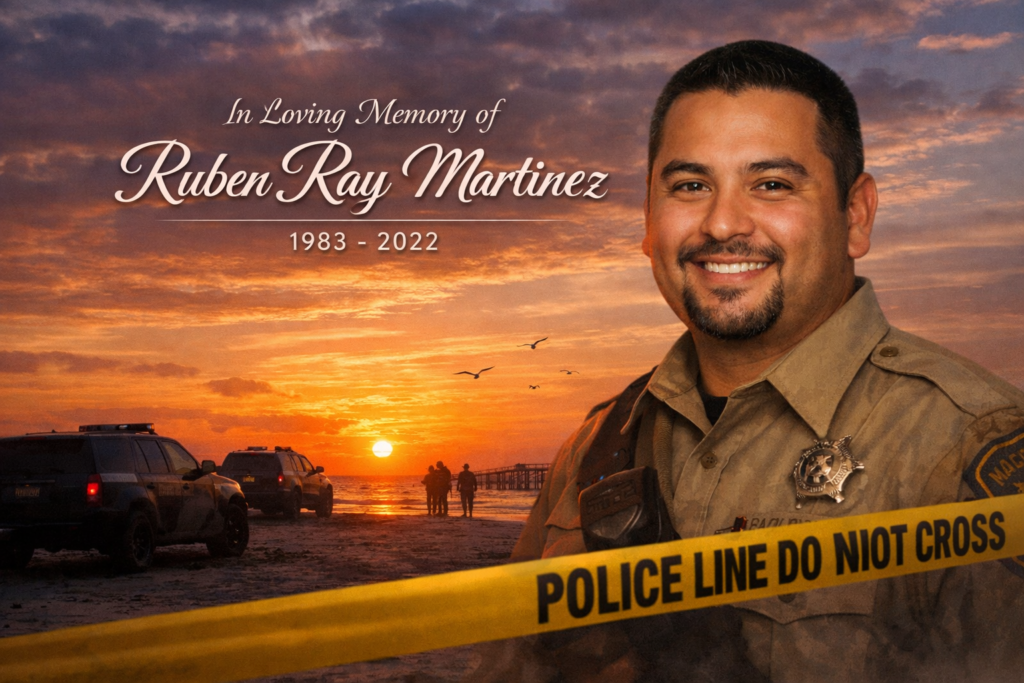
In a troubling development that has renewed questions about law enforcement accountability, federal transparency and the safety of everyday Americans, newly released internal records show that a young U.S. citizen was shot and killed by a Homeland Security agent during an immigration enforcement operation in Texas last year — an incident that was not publicly disclosed by federal authorities at the time.
The late Ruben Ray Martinez, 23, of San Antonio, lost his life on March 15, 2025, on South Padre Island, Texas, after a late-night encounter with Homeland Security Investigations (HSI) agents assisting local police — a confrontation that has since stirred national debate over federal force, family trauma, and the need for transparency in officer-involved shootings.
What Happened: A Fatal Federal Shooting
Late in the early hours of March 15, 2025, federal immigration agents were assisting the South Padre Island Police Department with traffic control near a major vehicle accident when Martinez’s blue four-door Ford approached the controlled area. According to internal incident reports obtained by watchdog group American Oversight and reviewed by media outlets, officers gave multiple verbal commands for Martinez to stop and exit the vehicle.
After initially slowing, Martinez allegedly came to a stop and was surrounded by agents. The report states that the car accelerated forward and struck one of the HSI agents, who ended up on the vehicle’s hood. In response, another supervisory HSI special agent fired multiple rounds through the open driver’s side window. Martinez was critically wounded and later transported by ambulance to a Brownsville hospital, where he was pronounced dead.
A passenger in Martinez’s car — also a U.S. citizen — was taken into custody following the incident. Federal authorities described the shooting as defensive action, saying the agent fired to “protect himself, his fellow agents, and the general public.”
What makes this case particularly sensitive is that federal and state officials did not publicly disclose the involvement of federal immigration agents at the time. Martinez’s death was initially reported locally as an officer-involved shooting, but it wasn’t clear which agency was responsible, leaving Martinez’s family and community with unanswered questions for more than a year.
A Family Left in Anguish
Martinez was just 23 years old, weeks past his birthday, when he died. His mother, Rachel Reyes, later learned from a Texas Ranger investigator that her son had been shot by a federal agent — not a local police officer — and that there may be video evidence that contradicts the official description of events. Reyes told reporters that she previously believed her son’s death was unrelated to immigration enforcement before the documents came to light.
In an interview with a news outlet, Reyes described her son as a kind, humble young man, employed in Texas and looking forward to his future before his life was cut short. She has since called for accountability and transparency, questioning why crucial details about the shooting were withheld from the public and her family for so long.
Local advocates and critics of the federal immigration crackdown have echoed her concerns, noting that Martinez’s case is one of several recent fatal shootings involving federal officers since the Biden administration’s asylum and deportation policies were tightened.
Federal Transparency and Public Trust
One of the most striking aspects of this story is that the Department of Homeland Security (DHS) did not issue a public announcement or detailed explanation about the shooting at the time it occurred — something that many experts say is standard when federal officers use lethal force. The latest details emerged only after watchdog group American Oversight sued for internal documents under the Freedom of Information Act.
DHS has since confirmed the incident, but many questions remain. Officials insist the agent’s actions were defensive, stating that Martinez intentionally struck an agent, which prompted the shots. However, Martinez’s family and legal representatives dispute that narrative, emphasizing that he had no criminal history, was with a friend, and had been celebrating with others at the popular Gulf Coast beach near the Mexican border.
The fact that federal involvement was not disclosed publicly has drawn sharp criticism from lawmakers and civil liberties groups, who argue that the lack of transparency undermines public trust and prevents families from garnering closure.
Calls for Further Investigation
In the wake of the revelations, U.S. Rep. Joaquin Castro (D-Texas) has called for a Department of Justice investigation into the shooting and has demanded the release of body-camera footage and other video evidence related to the case. Castro and other officials stress that when federal agents engage in lethal force, it must be fully reported and examined in public view, especially when the person killed is an American citizen.
State legislators and civil rights advocates in Texas have also joined the chorus for answers, arguing that families should not have to wait months or years to understand the circumstances under which their loved ones were killed. Calls have been made for the Texas Department of Public Safety, Texas Rangers, and federal agencies to work in concert to ensure accountability and transparency.
Some activists have described the handling of Martinez’s death as part of a broader pattern of undercounted officer-involved shootings and delayed disclosures — a situation they say erodes confidence in law enforcement oversight.
Broader Impact on American Communities
Martinez’s death has struck a chord across the country, resonating especially in communities along the U.S.–Mexico border where residents are deeply aware of the risks and tensions that often accompany federal immigration operations. South Padre Island, known for its tight-knit community and tourist economy, has been left reeling — and Martinez’s family has become a voice for those who feel overlooked in national conversations about enforcement, civil rights and justice.
For many Texans and Americans nationwide, the case is a stark reminder that federal authority must be balanced with accountability, and that when U.S. citizens lose their lives during law enforcement encounters, the public deserves honest, prompt disclosure from government agencies.