Myanmar Junta Frees Thousands of Inmates in Independence Day Amnesty Amid Controversial Election Process
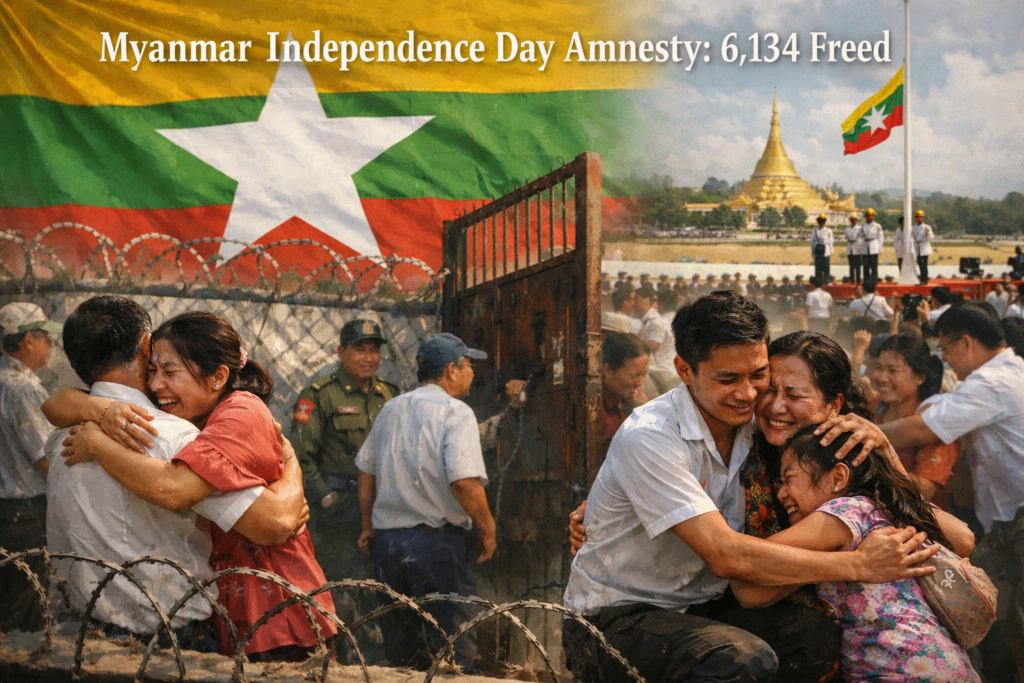
YANGON, Myanmar — Myanmar’s military government announced an annual mass amnesty on Sunday, granting clemency to over 6,100 prisoners as part of celebrations honoring the 78th anniversary of the country’s independence from British colonial rule.
The release was declared by Senior General Min Aung Hlaing, head of the ruling junta, with state media reporting that 6,134 incarcerated individuals were pardoned and permitted to leave prisons across the country. Another 52 foreign nationals were also freed and are expected to be deported, according to official statements.
Other inmates not included in the pardon saw their sentences reduced, except for those convicted of major offenses such as murder, rape and other serious security charges — exclusions that local authorities clearly outlined.
The amnesty comes as Myanmar conducts a month-long, three-stage election cycle, a process that critics both within the country and abroad describe as an attempt by the junta to secure political legitimacy. Opposition figures argue the election lacks broad participation and fails to represent voices who resist military rule.
Despite the large number of pardons, there has been no confirmation that high-profile political prisoners — including opposition leaders arrested since the coup in 2021 — are among those released. Many political detainees remain incarcerated under charges frequently criticized by rights groups as politically motivated.
Across the country, families and advocates gathered at prison gates — especially at Yangon’s notorious Insein Prison — hoping for news of loved ones freed under the decree. The annual tradition of mass releases on major national holidays has long been used by Myanmar’s leadership, though questions persist about the transparency and intent behind these decisions.
The Independence Day observances were marked with flag-raising ceremonies in the capital, Naypyitaw, but amid ongoing civil unrest and a protracted resistance movement, the amnesty has brought both relief and renewed debate over Myanmar’s political trajectory.