Kristi Noem Ousted as Homeland Security Chief After Mounting Controversies, but Democrats Say the Crisis Runs Deeper
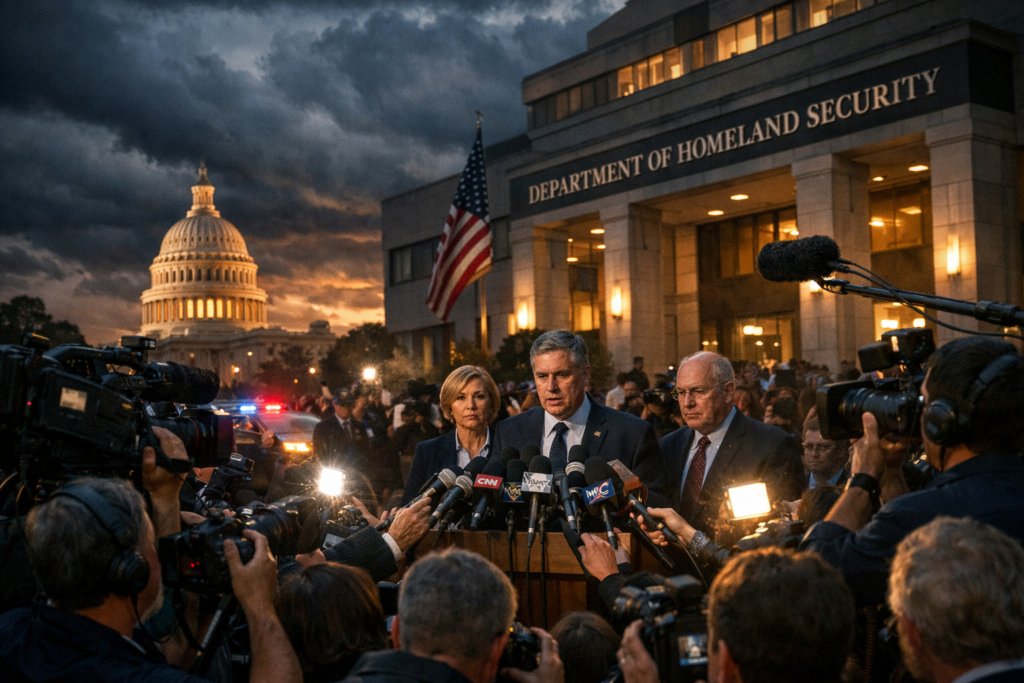
In a dramatic political shake-up in Washington, President Donald Trump removed Kristi Noem from her position as Secretary of the U.S. Department of Homeland Security, ending a turbulent tenure marked by fierce political battles, controversial enforcement actions, and growing scrutiny from lawmakers.
While the administration framed the move as a leadership transition, Democratic lawmakers quickly declared that the dismissal alone would not resolve what they describe as deeper systemic problems within the nation’s homeland security apparatus.
The decision represents the first major cabinet-level firing of Trump’s second presidential term and follows weeks of escalating criticism from both political parties over Noem’s handling of immigration enforcement, government spending, and internal management at the agency.
A Sudden Departure After Intense Pressure
Noem, a former governor of South Dakota, had served as the nation’s top homeland security official since early in the administration’s current term. Known as one of Trump’s most loyal political allies, she had been a central figure in implementing aggressive immigration policies and expanding federal enforcement operations along the southern border.
But her leadership became increasingly controversial in recent months.
Lawmakers on Capitol Hill had begun pressing the department for answers about several high-profile incidents tied to federal immigration enforcement. Among the most serious controversies was an operation in Minneapolis that ended with federal agents fatally shooting two U.S. citizens during a confrontation with protesters.
Critics said the episode raised urgent questions about the use of force by federal agents and the oversight of immigration operations.
During congressional hearings that followed, Noem strongly defended the department’s actions, insisting the operations were necessary to maintain national security and public safety. Yet the hearings only intensified scrutiny, with lawmakers accusing her of failing to provide clear answers about how the incident unfolded.
Spending Decisions Under Fire
At the same time, members of Congress were examining how the Department of Homeland Security had spent hundreds of millions of taxpayer dollars during Noem’s tenure.
One of the most contentious issues involved a massive advertising campaign reportedly costing more than $200 million. The campaign promoted voluntary deportation for people living in the United States without legal status and prominently featured Noem herself.
During testimony before lawmakers, Noem said the campaign had been approved at the highest levels of the administration. However, that claim was later disputed publicly by the president, adding fuel to the controversy and raising questions about how the program had been authorized.
Democrats argued the campaign was not only wasteful but also inappropriate, accusing the department of using taxpayer funds to promote the image of a political official rather than focusing resources on public safety.
Additional spending decisions — including luxury aircraft purchases and expensive vehicle upgrades — further intensified the debate over fiscal oversight.
Democrats Celebrate the Ouster — But Demand Accountability
While many Democrats welcomed Noem’s removal from the powerful post, they emphasized that replacing one leader would not fix what they view as deeper institutional problems.
Several lawmakers said the department’s enforcement practices had become overly aggressive and insufficiently transparent during her tenure. Critics argued that the agency had operated with limited oversight while implementing controversial immigration raids and detention policies.
Democratic leaders said the administration must go further by reforming how immigration enforcement is carried out and by strengthening safeguards designed to protect civil liberties.
Some lawmakers also pointed to an earlier impeachment push against Noem in the House of Representatives, which accused her of abuse of power and mismanagement of federal resources.
Although that effort did not ultimately succeed, the controversy highlighted the extent of political opposition she faced.
A New Role — and a New DHS Leader
Despite her removal from the Homeland Security post, Noem is not leaving the administration entirely.
Trump announced that she will transition into a newly created diplomatic role as a special envoy focused on regional security cooperation in the Western Hemisphere.
To lead the Department of Homeland Security moving forward, the president has nominated Markwayne Mullin, a Republican senator from Oklahoma and longtime ally of the administration.
If confirmed by the Senate, Mullin would oversee a massive federal agency responsible for immigration enforcement, border protection, disaster response, and cybersecurity.
The appointment will require Senate approval, meaning lawmakers from both parties will have an opportunity to scrutinize his views on immigration enforcement and national security.
Immigration Policy at the Center of the Debate
The leadership change comes during a period of intense national debate over immigration policy.
The Department of Homeland Security plays a critical role in managing border security and immigration enforcement through agencies such as Immigration and Customs Enforcement and Customs and Border Protection.
Under Noem’s leadership, the department pursued a hardline approach that included expanded deportation operations and stricter enforcement measures.
Supporters of those policies argue they are necessary to protect national sovereignty and enforce immigration laws.
Critics, however, say the approach has created humanitarian concerns and damaged trust between immigrant communities and law enforcement.
Those competing views have made immigration one of the most polarizing political issues in the United States.
A Department Still Facing Political Gridlock
Even with Noem’s departure, lawmakers say the Department of Homeland Security faces ongoing challenges.
Congress remains locked in a broader debate over funding for the agency, with disagreements about how much money should be allocated and how the department should carry out its mission.
Some Democrats have warned that the leadership change will not resolve those disputes unless the administration agrees to broader reforms.
Meanwhile, Republican leaders have defended the administration’s enforcement policies and urged lawmakers to focus on strengthening border security rather than revisiting past controversies.
The Political Fallout Ahead
For Noem, the sudden end of her tenure as homeland security secretary represents a significant turning point in a high-profile political career.
For the Trump administration, it marks a moment of recalibration within one of the most powerful federal agencies.
And for lawmakers in Washington, the debate over immigration policy and federal enforcement powers is far from over.
If anything, the political battle surrounding the Department of Homeland Security may only be intensifying — with the next chapter likely unfolding during the Senate confirmation process for the department’s new leader.