Kilauea Erupts in Spectacular Fury as Lava Fountains Soar Nearly 1,000 Feet Above Hawaii
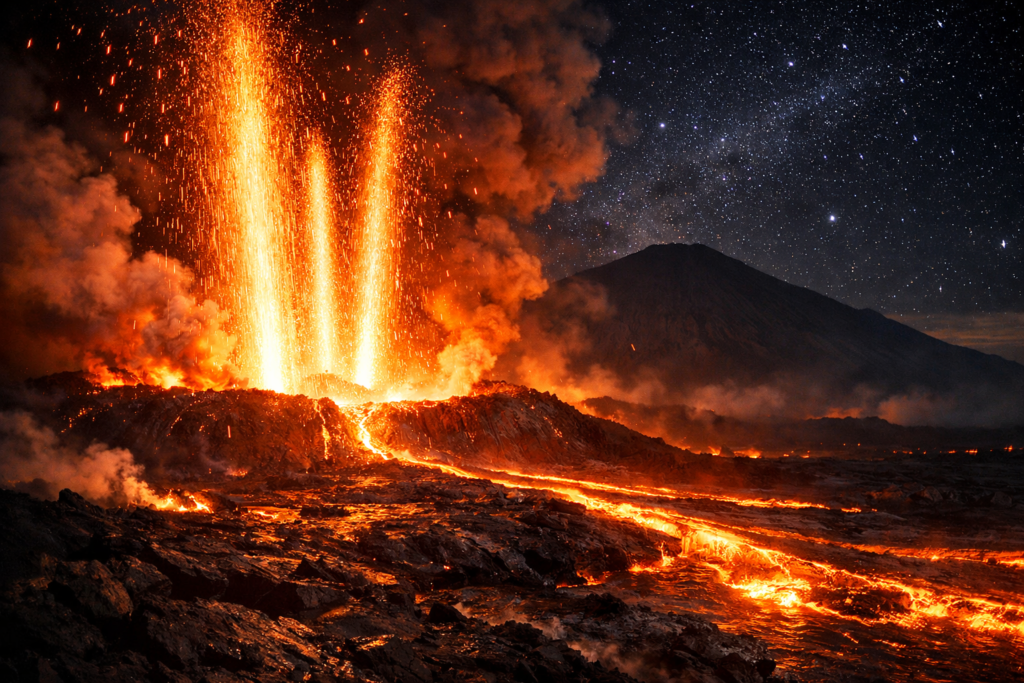
A dramatic eruption from Kilauea is once again capturing global attention after massive lava fountains shot hundreds of feet into the sky on Hawaii’s Big Island, creating a breathtaking — and potentially dangerous — natural spectacle.
The latest volcanic activity unfolded within Hawaii Volcanoes National Park, where jets of molten lava arched upward like fiery geysers, reaching heights close to 1,000 feet. Scientists monitoring the volcano say the eruption began suddenly and intensified quickly, sending glowing streams of lava and volcanic fragments high above the crater before cascading back down across the volcanic landscape.
For residents and visitors across the island, the eruption delivered a surreal mix of awe and concern.
Kilauea, one of the most active volcanoes on Earth, has been experiencing intermittent eruptive episodes since late 2024. This latest burst is part of that ongoing cycle, which experts say is driven by magma rising from deep beneath the Earth’s surface and escaping through vents inside the volcano’s summit crater.
According to scientists at the U.S. Geological Survey, the eruption originated from vents located inside Halemaʻumaʻu crater, a deep volcanic basin at the summit of Kilauea. As gas-rich magma surged upward through narrow underground channels, pressure built rapidly until molten rock burst into the air in powerful fountains.
These fountains formed towering arcs of glowing lava that illuminated the sky above the volcano. At their peak, some of the jets appeared to rival the height of a skyscraper, a reminder of the immense force driving the eruption.
Despite the dramatic visuals, experts say the lava flows remain largely contained within the summit crater and currently pose no immediate threat to residential communities.
Still, the eruption has triggered safety measures across parts of the island.
Park officials temporarily closed sections of Hawaii Volcanoes National Park and nearby roads after volcanic debris began falling across surrounding areas. Small fragments of rock, ash, and volcanic glass — collectively known as tephra — can be hazardous when blown by shifting winds.
Authorities warned that these particles can irritate the skin, damage eyes, and cause respiratory problems if inhaled. Drivers traveling through nearby areas were also urged to exercise caution due to reduced visibility and potential debris on roadways.
Emergency officials monitored conditions closely throughout the day, advising residents in downwind communities to remain indoors if volcanic ash or gases began affecting local air quality.
Another concern linked to the eruption is volcanic smog, commonly called “vog.” This haze forms when sulfur dioxide gas released from the volcano reacts with moisture and sunlight in the atmosphere. Vog can drift across large areas depending on wind patterns, sometimes affecting communities dozens of miles away.
Health experts warn that vog exposure can aggravate respiratory conditions such as asthma and bronchitis, particularly among vulnerable populations like children and older adults.
Despite these hazards, Kilauea’s eruptions continue to draw fascination from scientists and tourists alike.
The volcano has been erupting in cycles for decades and is widely studied as one of the most active and accessible volcanoes in the world. Located about 200 miles southeast of Honolulu on the island of Hawaii, Kilauea forms part of a vast volcanic system that includes neighboring volcanoes such as Mauna Loa.
What makes the current eruption particularly striking is the height of the lava fountains.
Volcanologists explain that these towering jets are caused by gas-rich magma erupting through narrow vents under intense pressure. As the magma rises, dissolved gases rapidly expand, forcing molten rock out of the crater in explosive bursts — similar to the sudden release of pressure when a shaken bottle of soda is opened.
While each eruptive episode tends to last only hours or days, scientists say they often occur in repeating cycles separated by quiet periods.
This pattern has been unfolding at Kilauea since late December 2024, with dozens of eruptive events recorded so far. Each episode varies in intensity, with some producing modest lava flows while others create spectacular fountains that light up the night sky.
Researchers are continuing to monitor seismic activity around the volcano to better understand what might happen next.
Volcanic tremors and ground deformation measurements suggest magma is still moving beneath the summit area, meaning additional eruptive episodes could occur in the coming weeks or months.
For now, scientists emphasize that Kilauea’s current activity remains confined within the national park’s volcanic crater system — a critical factor that significantly reduces the risk to nearby communities.
Even so, officials are urging visitors to respect safety closures and remain aware of rapidly changing conditions.
Volcanoes can shift behavior with little warning, and hazards such as falling rock fragments, toxic gases, and sudden lava surges can pose serious risks to anyone who ventures too close.
Yet for many observers watching from safe distances, the eruption serves as a powerful reminder of the dynamic forces shaping the Hawaiian Islands.
As night falls over the Big Island, glowing lava fountains continue to paint the sky with streaks of red and orange — a fiery display born from the restless energy deep within the Earth.
Whether the eruption fades quickly or builds toward another dramatic episode, scientists say one thing is certain: Kilauea is far from finished.
And for now, the volcano’s fiery spectacle remains one of nature’s most mesmerizing and unpredictable shows.