Israeli Fire Kills Two in Gaza as U.S. Pressures Both Sides to Advance Peace Deal
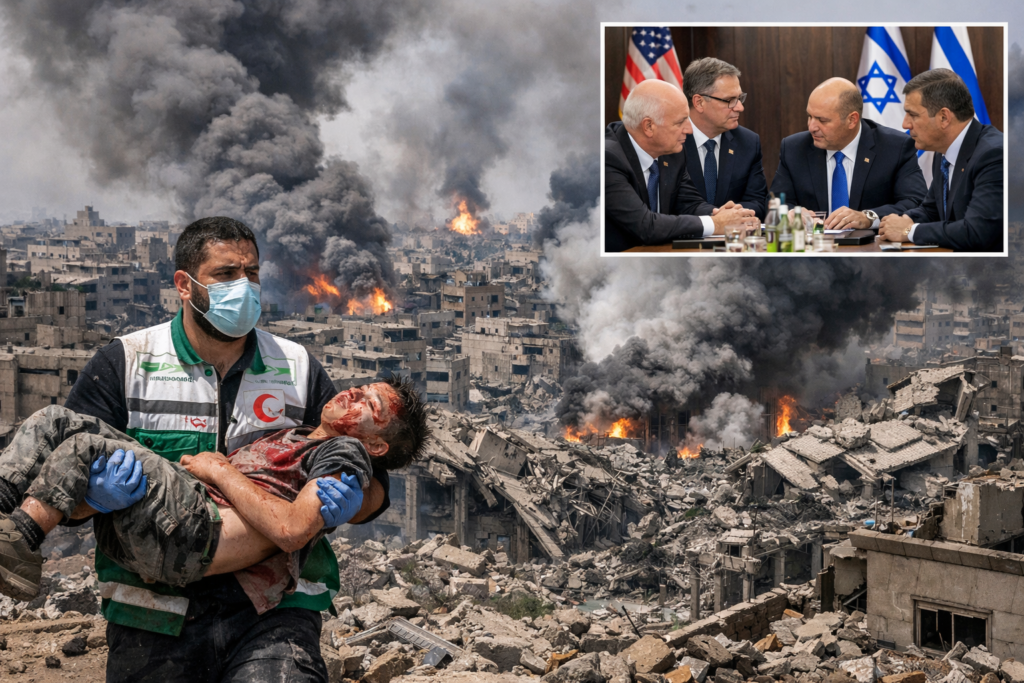
GAZA STRIP — In a stark reminder of how fragile the current pause in fighting remains, Israeli fire killed two Palestinians in the Gaza Strip on Sunday, even as U.S. envoys pressed both Israel and Hamas to advance a broader peace deal aimed at solidifying the all-important ceasefire and beginning long-term reconstruction efforts. Local health authorities in Gaza confirmed the fatalities and reported additional injuries from a separate Israeli drone strike, underscoring how tenuous daily life continues to be for civilians in the besieged territory.
These latest deaths — coming amid diplomatic pressure from the United States — highlight the grim reality on the ground: a ceasefire that remains fragile and frequently violated, with violence continuing to claim lives months after active hostilities temporarily eased.
Where the Violence Occurred
According to Gaza’s health ministry, two civilians were killed in the Tuffah neighborhood in northern Gaza City when Israeli forces fired on the area on Sunday. In a separate incident, an Israeli drone strike hit a rooftop in Gaza City, injuring four additional civilians below.
There was no immediate comment from the Israeli military about the specific incidents, a pattern that has become familiar in this conflict, where military operations are often followed by delayed or limited statements.
These casualties arrived as U.S. envoys — including Steve Witkoff and Jared Kushner — visited Israel to engage with leaders, including Prime Minister Benjamin Netanyahu, about the future of Gaza and next steps under the U.S.-brokered ceasefire framework. Washington’s peace efforts envision a phased approach that would, over time, include the withdrawal of Israeli forces from some areas and a transfer of administrative responsibilities away from Hamas leadership.
U.S. Diplomacy and the “New Gaza” Plan
U.S. special envoys have been meeting with Israeli officials in recent days to discuss long-term strategies for Gaza, tied closely to what Washington describes as a plan for reconstruction, economic revitalization and phased peace implementation. Critics and supporters alike call the initiative “New Gaza” — a vision that includes modern infrastructure, jobs, housing and economic growth for Palestinians after years of war.
Yet the violence on Sunday — and other recent flare-ups — underscores how challenging that vision remains as long as basic security conditions are unstable. The deaths of civilians, even under a ceasefire agreement, underline the persistent dangers faced by ordinary Palestinians living in areas where combat operations once dominated.
U.S. envoys have repeatedly stressed that progress on security and humanitarian access must go hand in hand with diplomatic negotiations. But Israel has insisted on certain conditions, including full cooperation from Hamas and adherence to security guarantees, before advancing to broader political concessions. Meanwhile, Pakistan’s role and that of other regional actors continue to influence the complex diplomatic dance.
Ceasefire: Fragile, Often Broken
Although a ceasefire has been in place since last October — brokered after a devastating period of intense conflict — violations remain common. Gaza’s health ministry and human rights groups regularly tally casualties that occur even under the truce, often blaming Israeli forces for most deaths and injuries.
Under the current ceasefire arrangement — which includes provisions for prisoner exchanges, limited Israeli troop withdrawals and monitored humanitarian corridors — both sides have accused each other of breaches. Israel says it often responds to militant activity, while Palestinian authorities and independent observers say many victims are civilians with no connection to fighting.
Since the start of the conflict in October 2023, more than 71,000 Palestinians have been killed, the vast majority from Israeli fire, according to Gaza’s health ministry — a figure that includes civilians, children and aid workers. At least 480 people are said to have died due to violence even after the ceasefire took effect in October.
The Human Cost: Lives Disrupted
Behind the numbers are real human stories: parents now without children, families that cannot safely travel to fetch water or access food supplies, and entire neighborhoods that know the sound of drones and shellfire all too well. Aid workers in Gaza say that even during lulls in fighting, fear remains pervasive and insecurity shapes every step of daily life. Stockpiles of food are low, fuel is scarce, and damaged infrastructure often blocks access to hospitals and clinics.
Residents of Gaza City recounted how the recent strike killed two men who were simply living in their homes, reminding the world that even in a supposed pause in hostilities, the risk of death from stray fire, misidentified targets or border engagements remains high.
Humanitarian and Political Implications
International humanitarian organizations warn that continued civilian deaths undermine trust in the ceasefire and weaken the prospects of long-term peace. At the same time, the U.S. pressure on both Israel and Hamas to resume and deepen negotiations is meant to achieve a more stable environment where reconstruction and economic recovery can begin in earnest.
Even as envoys talk and diplomats deliberate, the violence serves as a reminder that peace remains elusive and that substantive progress — including durable calm, a return of displaced families and reconstruction of Gaza’s shattered economy — may be years away.
Organizations such as the United Nations and various NGOs continue to call for greater protection of civilians, access for humanitarian aid, and an international role in monitoring any ceasefire compliance. Yet, for many in Gaza, the end of all violence feels distant, as residents endure a cycle of deadly strikes and diplomatic negotiations.
Looking Ahead: Diplomacy Versus Violence
As U.S. envoys finish their meetings in Israel, the world watches to see whether discussions will lead to a more enforceable ceasefire and a phased peace plan that prevents further civilian deaths. The death of two Palestinians on Sunday — even under a ceasefire — shows just how delicate the situation remains and how much work lies ahead for diplomats, negotiators and communities trying to rebuild.
Long-term peace will likely require a combination of robust international enforcement mechanisms, expanded humanitarian corridors, mutual security guarantees and concrete steps toward economic reconstruction — a complex and multifaceted peace process that few analysts deem straightforward.