Islamic State Affiliate Claims Deadly Suicide Bombing at Shiite Mosque in Islamabad, Pakistan
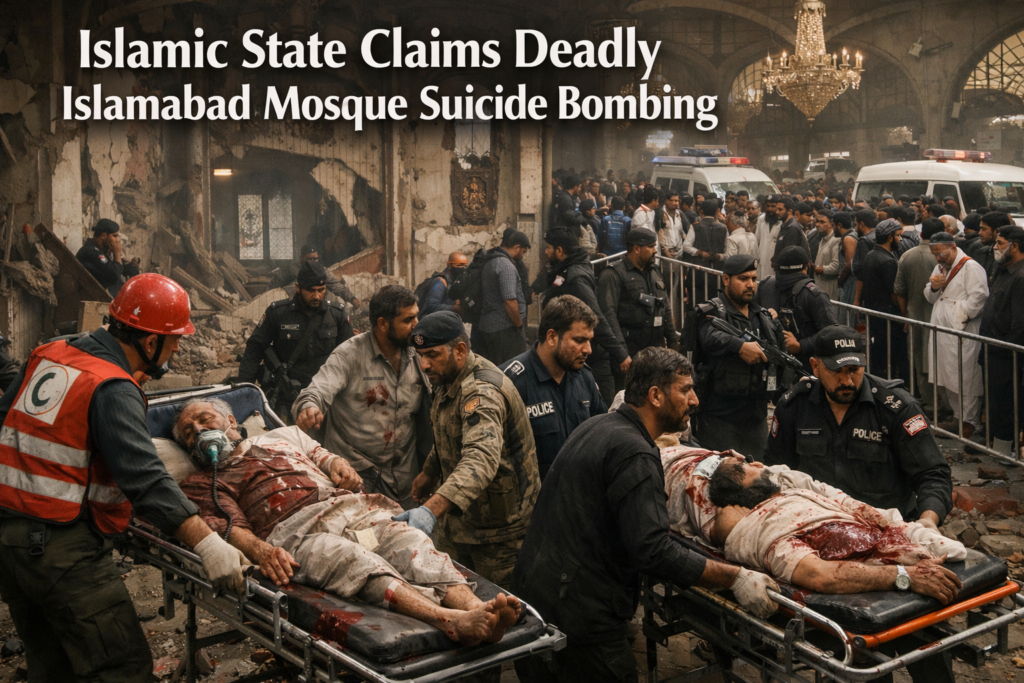
In a devastating act of sectarian violence that has shaken Pakistan’s capital and reverberated across the world, a suicide bombing at a Shiite mosque on the outskirts of Islamabad on Friday killed at least 31 worshippers and wounded around 169 others, authorities and local media reported. An affiliate of the Islamic State extremist group has claimed responsibility for the attack, which occurred during Friday prayer services and is one of the deadliest assaults in the city in years.
The explosion took place at the Khadija Tul Kubra mosque in the Tarlai Kalan district around 1:30 p.m. local time, just as congregants gathered for Jummah prayers, a weekly ritual attended by hundreds, including many families. The blast not only killed dozens but also left scores injured, with many in critical condition, according to hospital officials.
Sequence of Events: Gunfire Followed by Explosion
Witness accounts and official reports suggest the attack was carried out in two phases. As the attacker arrived near the mosque, he reportedly opened fire on security guards at the main gate, wounding or killing them, before making his way toward the inner gate of the mosque. Once inside the courtyard among the worshippers, he detonated his explosive vest, unleashing a massive blast that tore through the congregation.
Survivors described a terrifying scene of chaos and carnage. “We heard gunshots, and then there was this extremely powerful explosion,” one witness told local journalists after fleeing the site with injured friends. Bodies were strewn across the mosque floor and corridors, with survivors frantically trying to help the wounded and pull people from beneath debris.
Islamic State Claims Responsibility
The Islamic State in Pakistan, a regional branch of the broader Islamic State group, claimed responsibility for the bombing through its Amaq News Agency — the group’s communications arm. In its statement, the group referred to Shiite Muslims in Pakistan as legitimate targets, citing their opposition to its extremist ideology and linking them to Shiite militias fighting in Syria.
Security analysts note that such claims are part of a broader attempt by the Islamic State and its regional affiliates to exploit sectarian divisions and spread fear by targeting minority religious communities. Shiite Muslims make up a significant minority in Pakistan and have been targeted in past attacks by militants.
Casualties and Rescue Efforts
The reported death toll of 31 people includes men, women and possibly children, while 169 wounded were rushed to hospitals across Islamabad and nearby cities. Medical officials said that many of the injured were in serious or critical condition, overwhelming emergency rooms and prompting calls for blood donations.
Rescue workers and volunteers worked late into the evening to evacuate victims, coordinate medical care and recover bodies. Portions of the mosque and surrounding compound were cordoned off as police and emergency personnel searched for any additional explosives or secondary devices.
Official Response: Condemnation and Condolences
Pakistan’s political leadership strongly condemned the attack. Prime Minister Shehbaz Sharif and President Asif Ali Zardari issued statements mourning the victims, calling the bombing a cowardly and heinous act that targeted innocent civilians at a place of worship. They also vowed to bring those responsible to justice and strengthen counterterrorism efforts.
“Targeting innocent civilians and worshippers is a crime against humanity and an affront to Pakistan’s values,” President Zardari said, adding that the nation stands united with the bereaved families at this difficult time.
Interior Minister Mohsin Naqvi echoed these sentiments and said that security forces had launched comprehensive operations to arrest suspects connected to the bombing. Officials reported that several suspects — including the bomber’s family members — were detained during overnight raids in Islamabad and the northwestern Khyber Pakhtunkhwa region, though details remained limited.
Regional and International Condemnation
The attack drew condemnation from governments and international organizations around the world. The United States, European Union and United Nations all expressed sorrow over the loss of life and reiterated calls for unity against extremism. Many global leaders emphasized the importance of protecting places of worship and civilian lives.
Pakistan’s Defence Minister Khawaja Asif also suggested that the attacker had travelled recently to Afghanistan, a claim that escalated tensions between Islamabad and Kabul. The Afghan Taliban government denied responsibility and condemned the attack, calling violence against worshippers unacceptable.
Security Context: Rising Militancy in Pakistan
The Islamabad bombing comes amid a surge in militant attacks across Pakistan, particularly from groups such as the Islamic State’s regional affiliate and the Tehrik-e-Taliban Pakistan (TTP) — also known as the Pakistani Taliban — which have carried out a spate of deadly attacks in recent months.
This latest assault is the deadliest explosion in Islamabad since the 2008 Marriott Hotel bombing, which killed 63 people and wounded hundreds, underscoring long-standing security challenges that Pakistan continues to confront.
Security analysts warn that militants have taken advantage of porous borders, local grievances, and conflicting priorities within Pakistani security forces to expand their operations and strike high-profile targets. Friday’s mosque attack also highlights the specific vulnerability of sectarian minority communities to extremist violence.
Impact on Civil Society and Sectarian Relations
Beyond the immediate loss of life and injuries, the bombing has deepened fears among Pakistan’s religious minorities and sparked concern about sectarian tensions. Many Shiite community leaders called for calm and unity, urging that extremists not be allowed to divide the nation along religious lines.
Community organizers and religious figures held candlelight vigils and prayer services across the country on Saturday, urging collective action against hatred and violence. Thousands of mourners gathered at funeral prayers in Islamabad, often under heavy police presence, to honor those killed and show defiance against extremist aims.
Looking Ahead: Security Measures and Accountability
In the wake of the attack, Pakistan’s government announced plans to bolster protective measures at mosques and other vulnerable sites, especially during major religious gatherings. Increased intelligence sharing with foreign partners and stepped-up counterterrorism operations are expected as Islamabad seeks to prevent similar tragedies.
The investigation into the attack is ongoing, with police and intelligence agencies pursuing leads related to the bomber’s movements, training and possible co-conspirators. Amid global outrage and local grief, the Islamabad bombing stands as a stark reminder of the persistent threat posed by militant extremism and the urgent need for unified responses against violence targeting innocent civilians.