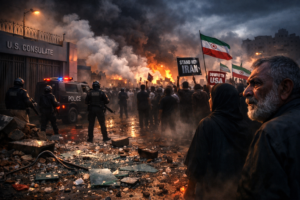
Iranian Americans Across U.S. Celebrate and Reflect After U.S.–Israel Strikes on Iran
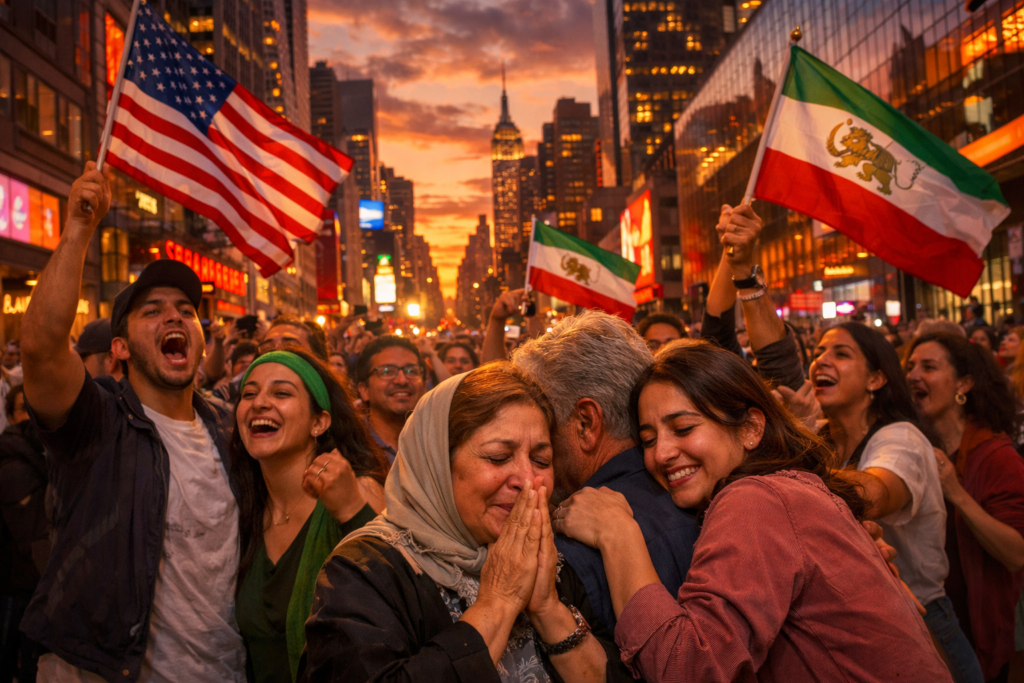
Across the United States this weekend, Iranian-American communities responded with a mix of joy, relief and deep reflection after the dramatic military strikes launched by the United States and Israel that killed Iran’s Supreme Leader Ayatollah Ali Khamenei and key regime figures. What unfolded on the streets of New York, Los Angeles, Miami and other cities was a powerful illustration of how far-reaching international conflict resonates in the heart of immigrant communities — sparking both celebrations and sober contemplation about the future of Iran and their own place in American society.
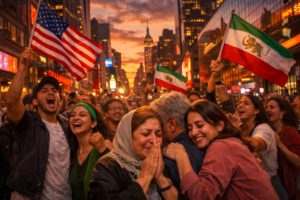
In New York City, groups of Iranian Americans gathered while chanting, waving flags and hugging on sidewalks in Midtown Manhattan. Many held long-banned pre-revolution Iranian Lion and Sun flags and spoke openly about a sense of hope for democratic change after decades of repression. “We were all crying together because we were so happy,” said one organizer, describing the emotional release that came with news of the regime’s top leadership being struck down. Participants said they hoped this moment could signal the beginning of meaningful reform and freedom for their homeland.
Los Angeles — home to the largest Iranian diaspora community in the country — saw similar scenes of celebration. Crowds played Persian music, sang, danced and waved both American and Israeli flags as cheers echoed through neighborhoods. Some expressed that the military action felt like a long-sought turning point after years of watching family and friends back in Iran endure repression and violent crackdowns during mass protests. Many held signs thanking the U.S. and former leadership for taking decisive action.
But these celebrations were not without complexity. In cities like Miami and South Florida, Iranian Americans spoke with reporters about a blend of relief and heartbreak. One organizer said the reaction was “relieved but heartbreaking,” acknowledging both the violent cost of decades under the Islamic Republic and the tragic toll of military engagement. “We are relieved today but deeply mournful for innocent lives lost,” one resident said, echoing a sentiment heard across multiple communities.
Across the country, some Iranian Americans expressed that the strikes were a necessary step in weakening a brutal regime that has tortured, imprisoned and killed its own citizens for years. Many spoke of relatives who still live in Iran and of widespread violence previously directed at protesters demanding change. Some locals said they saw the attack not solely in geopolitical terms but as part of a larger struggle for freedom and human rights — a moment when outside pressure, however painful, might catalyze internal transformation.
At the same time, other Iranian-American voices underscored caution. In places like Atlanta, some community members expressed concern about foreign military involvement, urging that real change must come from within Iran itself, rather than through external intervention. A spokesperson for an Iranian American group in Georgia said, “This is not a war between the Iranian people and the United States — our struggle is with the regime.” Many in this camp support regime change but emphasize the importance of an organic, internal movement leading to democracy without boots on the ground or prolonged conflict.
Even within the Bay Area’s Iranian community, the emotional landscape was complicated. Some applauded the strikes and expressed gratitude, seeing them as a slight cracking of the regime’s imposing power. Others called for careful reflection and warned against external military force leading to prolonged instability. These voices painted a nuanced picture of how hope and worry can coexist among those deeply connected to events unfolding thousands of miles away.
In New York’s Iranian enclave, celebrations were energetic yet grounded in years of grief over repression. Demonstrators chanted slogans hopeful of a future where Iranians would have political choice and basic civil liberties that have been denied for decades. Some called for leadership transitions led by figures like Reza Pahlavi — son of Iran’s former shah — as part of a transition toward a democratic and secular Iran.
Despite the festive scenes, several Iranian Americans also expressed deep concern for families still in Iran, unsure of their safety and future as war clouds gather over the region. Individuals noted that while they welcomed the end of Khamenei’s leadership, they feared the U.S. and Israeli military actions could trigger broader escalation and prolonged conflict. A New Yorker with relatives in Tehran described cheering with tears in his eyes — torn between relief and fear for loved ones living through the aftermath of strikes and potential reprisals.
These varied reactions — from jubilant rallies to cautious optimism and anxious reflection — illustrate the deep emotional and personal stakes that Iranian Americans carry as they watch the geopolitical landscape shift. For many, the past week has been a turbulent mix of celebration, hope for change, and concern for safety and stability both at home in the United States and in the land their families once called home.
In the days ahead, community leaders said there will likely be continued gatherings both in celebration and in protest, as Iranian Americans, like many Americans, seek to understand what this moment means for U.S. foreign policy, regional stability, and the future of Iran’s governance. The scene on the streets underscores a diaspora wrestling with decades of history, deeply personal loss, and the fragile yet powerful hope for a freer tomorrow.