Iran Faces New Waves of Protest as U.S. Builds Pressure During Crucial Nuclear Talks — The People and Politics at a Breaking Point
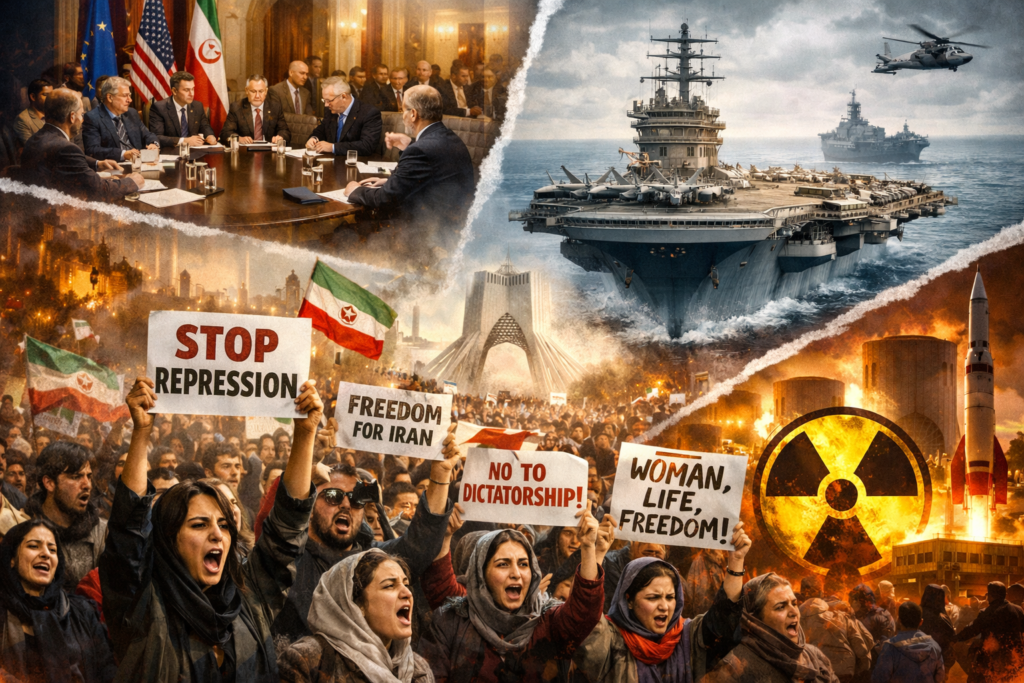
TEHRAN — All across Iran — from the nation’s capital to university campuses in Mashhad — the pulse of dissent is beating again. Young Iranians, bruised by months of turmoil and heartache, have taken to the streets in fresh rounds of demonstrations this week, even as their government battles mounting international pressure and crucial nuclear negotiations with the United States unfold in Europe.
This is not simply a story of geopolitical brinkmanship. It is also about a society weary of repression, hearts heavy from loss, and a population whose demand for change now collides with foreign pressure, looming military might, and the ever-present shadow of nuclear danger.
Students and Citizens Rally Again
For the second straight day, Iranian students — along with workers and ordinary citizens — took to the streets at universities and public squares, chanting slogans that mix anger at domestic repression with frustration at leadership and foreign interference. Videos circulating on social media show protesters vocally denouncing Supreme Leader Ayatollah Ali Khamenei, calling for rights and dignity, even as security forces respond with force, tear gas and arrests.
The demonstrations reignited public dissent that began last winter and escalated into the largest protests seen in Iran since the 1979 Islamic Revolution — a wave that resulted in deep national trauma and significant loss of life, with civilian death toll estimates ranging from several thousand to tens of thousands.
For many protestors, this moment is personal. Some have lost friends or family members in past crackdowns. Others are driven by a sense of betrayal — that promises of reform and progress have been replaced by a cycle of repression and disillusionment.
A Nation Under Pressure — From Within and Abroad
At the same time that Iranians are clashing with security forces at home, international attention is zeroed in on Tehran’s diplomatic behavior — especially its nuclear negotiations with the United States. A new round of talks is set for Thursday in Geneva, where both sides have been trying to find a way to settle decades of distrust over Tehran’s nuclear program.
This upcoming negotiating session is happening against a backdrop of sharp U.S. pressure, including a major military buildup in the Middle East and explicit warnings from American leaders about potential consequences if diplomacy fails.
The talks have already seen some progress on general principles to guide future agreement, but there is no final deal yet — and fundamental disagreements remain over how far Iran will limit its nuclear work and the extent of sanctions relief Washington will offer.
Iran Signals Willingness on Nuclear Concessions
Despite tough rhetoric, there are signs that Tehran is willing to explore diplomatic options — at least to a degree. According to senior Iranian officials, Iran has floated a proposal to send half of its highly enriched uranium abroad and dilute the rest, in exchange for sanctions relief and recognition of Tehran’s right to peaceful enrichment.
This kind of compromise — complicated and far from a final agreement — hints at Iran’s desire to avert military confrontation and reduce economic pressure. For ordinary Iranians whose daily lives are shaped by inflation, unemployment and social restrictions, the dream of a stable, peaceful future hangs in the balance.
Still, divisions persist. Iranian leadership has reiterated that certain demands — especially regarding ballistic missiles and regional policies — remain red lines and not open for discussion in these nuclear talks, even as the external pressure mounts.
Will Tehran “Bow” or Stand Firm?
Iran’s president Masoud Pezeshkian and Supreme Leader Ayatollah Ali Khamenei have both publicly stated that Iran will not submit to foreign pressure or capitulate to demands that threaten its sovereignty. Leaders have framed these negotiations and the military buildup as a test of national pride and independence — language that resonates with older generations shaped by national history and resistance.
In speeches and televised addresses, Iran’s leadership has accused the United States of psychological warfare — suggesting that threats only strengthen public resolve. By invoking imagery of strength and resistance, Tehran seeks to unify factions of the nation, even as protests and unrest challenge that narrative from within.
For many Iranians, the rhetoric of resistance rings hollow when families mourn lost loved ones, when internet access is restricted, and when economic hardship deepens every few months and inflation remains high. But the official line remains firm: Iran will protect its fundamental rights and dignity in negotiations with the outside world.
U.S. Levers of Pressure
On the American side, officials have made clear they are determined to prevent Iran from developing nuclear weapons — even if it means sustained diplomatic tension or continued military readiness. President Trump and his envoys have deployed aircraft carriers, naval defenses and additional military assets to the Gulf, sending a signal that Washington is prepared to take action if diplomacy collapses.
White House officials have pushed Tehran both publicly and privately to capitulate or offer concrete concessions that show Tehran’s commitments to non-nuclear ambitions. Yet Iran’s response has been guarded — a mix of cautious negotiating proposals balanced against a strong emphasis on national sovereignty.
For millions of Iranians — young and old alike — this geopolitical chess game is more than an abstract international conflict. It ties directly to their hopes for economic stability, freedom of expression, and a future free from cycles of repression and fear.
The Human Story Behind the Headlines
At the heart of this complex moment are ordinary Iranians — students, workers, mothers and fathers — whose hopes, frustrations and heartbreak cannot be measured in diplomatic briefs or military directives.
On Tehran’s streets, you can hear cries for change rooted in loss and resilience. In homes across the country, families remember friends who perished during earlier crackdowns and hold onto dreams of unity and prosperity. Outside Iran’s borders, students and diaspora communities in cities around the world rally in solidarity with those back home.
It’s a story of contradictions: a nation that refuses to yield to external demands, even as its youth demand change from within; a government seeking diplomatic breakthrough, even as it confronts anger and despair at home; and a world watching as moments of negotiation, protest and resistance collide on the global stage.