Inside the Epstein Files: Top Trump Administration Officials Appearing in Newly Released Justice Department Documents
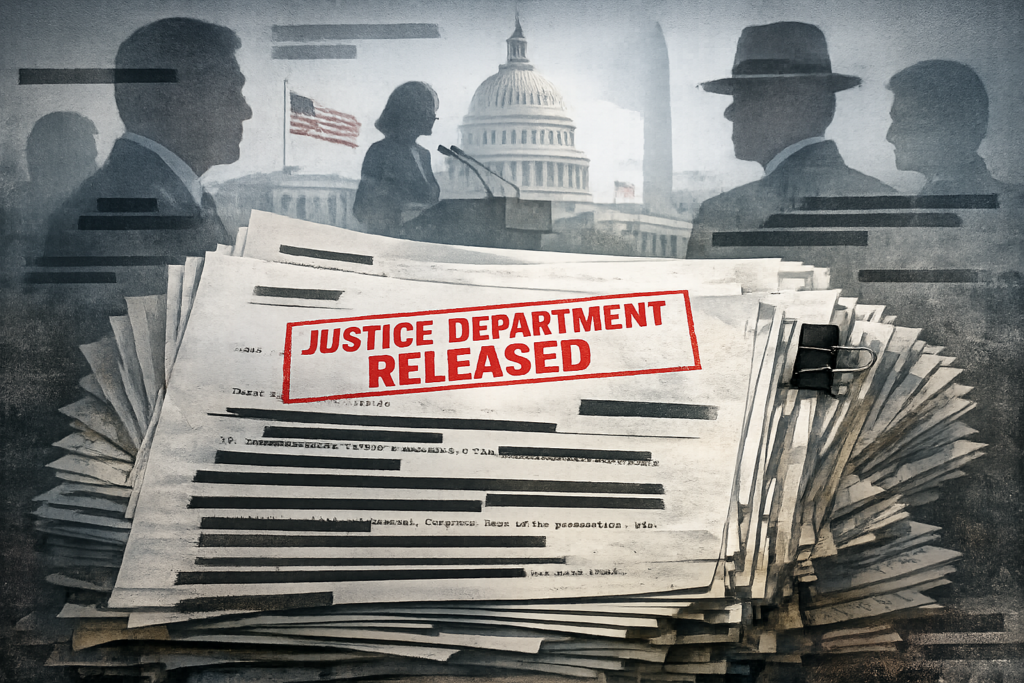
WASHINGTON, D.C. — The U.S. Department of Justice has released thousands of pages of previously unseen Jeffrey Epstein files, and one headline that immediately caught attention was this: at least half a dozen top officials in President Donald Trump’s current administration appear in the documents published so far. The revelations have triggered fresh political debates, questions about transparency and intense scrutiny from both sides of the aisle — even as authorities emphasize that appearing in the files does not equate to wrongdoing.
The broader release of these documents comes as part of Congress’s push for transparency under the new Epstein Files Transparency Act, which requires the Justice Department to publish unclassified material related to the notorious financier and his associates. The trove released so far represents only a fraction of what exists, but it’s already reshaping public conversations.
What the Epstein Files Release Means
The files in question are part of a massive cache of material related to convicted sex offender Jeffrey Epstein — who was accused of orchestrating a sex-trafficking network involving minors before his death in a federal jail in 2019. In late January 2026, the DOJ made a large tranche of this material publicly available, including emails, flight logs, communications and images.
The department has defended its approach, acknowledging that many documents remain redacted to protect privacy, victims and ongoing law-enforcement priorities. Officials said the release was intended to balance transparency with legal and ethical obligations.
However, the files that have been published include mentions of various prominent figures, and it was this part that drew intense attention — especially when seen alongside testimonies and hearings in Congress that have tested political alliances and rivalries.
Who’s Mentioned and Why It Matters
According to an NBC News review of the released documents, the degree to which each Trump administration official appears varies widely — from an occasional email to multiple references. Importantly, no one in the released files has been charged with any crimes related to Epstein’s criminal conduct.
Here’s a look at some of the names reported to appear in the files:
- President Donald Trump: Mentioned extensively throughout the files, though never accused by authorities of wrongdoing related to Epstein. Trump has previously said he ended his association with Epstein in the mid-2000s and labeled him a “creep.”
- Commerce Secretary Howard Lutnick: Documents show emails with Epstein as late as 2012, including planning a possible visit to Epstein’s private island — a detail Lutnick acknowledged in a Senate hearing while stating that children and family were present.
- Centers for Medicare & Medicaid Services Administrator Mehmet Oz: Appears in an email from 2016 that looks like an invitation to a Valentine’s Day party. The event’s context remains unclear, and Oz’s office did not respond to requests for comment.
- Deputy Secretary of Defense Stephen Feinberg: Listed in business-related documents that involve Cerberus Capital Management and a bank review. Why his name appears isn’t fully explained yet.
- Health and Human Services Secretary Robert F. Kennedy Jr.: Appears in flight logs and an email exchange referring to past leisure trips, but has said his interactions were limited and unrelated to Epstein’s criminal activities.
- Secretary of the Navy John Phelan: Also appears in older flight manifests from Epstein’s private jet, though the context of his inclusion isn’t fully clear.
- Federal Reserve nominee Kevin Warsh: His name appears in a 2010 email about a guest list for an event in St. Bart’s, but it’s not known if he attended.
- Former Department of Government Efficiency head Elon Musk: Friendly-sounding email exchanges with Epstein appear from 2012 and 2013, though Musk has said he never visited Epstein’s island and declined invitations.
- Former White House strategist Steve Bannon: Emails and texts with Epstein are shown leading up to Epstein’s 2019 arrest, though Bannon has said no wrongdoing and his communications have political context.
These mentions have sparked interest not just because of the names involved, but because they raise questions about how interactions between powerful people and Epstein were documented or contextualized in government records.
Politics, Protest and Public Response
In Congress, the appearance of these names has fueled fiery exchanges across party lines. Representative Ro Khanna (D-Calif.) and Representative Thomas Massie (R-Ky.) have both publicly pressed the Department of Justice about why certain redactions existed and whether more transparency should be required. Their efforts led to some names being unredacted — though subsequent clarifications showed that a few of those names had no known direct link to Epstein whatsoever.
Critics from both parties have described the release and redactions as either too opaque or too expansive. Some Republican lawmakers have argued that appearing in a file doesn’t necessarily mean misconduct, while others say the public deserves greater clarity about what’s in the documents. Democratic lawmakers have called for full compliance with transparency laws and demanded clearer context for every high-profile name.
How the Public Sees It
For everyday Americans, this story taps into a complicated mix of curiosity, distrust in political power and frustration over unanswered questions from major scandals of the recent past. Epstein’s case has long been a flashpoint in public debate about accountability, justice and the influence of money and elites.
Some observers say that naming powerful figures — even when no charges exist — can erode trust in institutions and raise fears about hidden networks of influence. Others argue that public awareness should not be conflated with guilt, especially when documents are raw and uncontextualized. Experts in law and media have warned against jumping to conclusions until verified evidence and legal findings emerge.
Why This Matters
This batch of files is still just a fraction of what the Justice Department has, and many pages remain heavily redacted, meaning the public is seeing only part of the picture. But as these documents gain scrutiny in hearings, media coverage and political debate, they are shaping public perception about how justice is applied — and how transparency is balanced with privacy, legal responsibilities and national sensitivities.
At its heart, this episode isn’t just about who appears in a document — it’s about the way we interpret power, documents, history and accountability in a democracy where both media and lawmakers demand answers.