Inside Texas ICE Detention: Children Report Nightmares, Inedible Food and No School at Dilley Facility
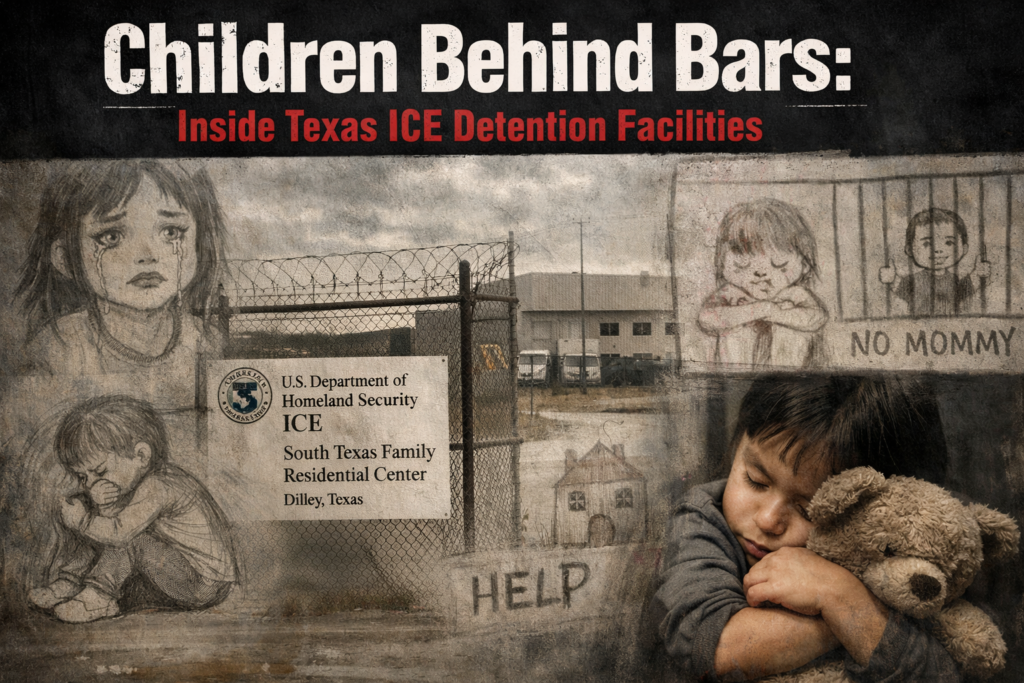
DILLEY, Texas — Shocking new accounts from families and court documents are painting a grim picture of life inside the South Texas Family Residential Center — an Immigration and Customs Enforcement (ICE)-run detention facility where children and their parents are being held during immigration proceedings. Detainees report inhumane and prison-like conditions, kids developing psychological trauma marked by nightmares and crying spells, inadequate food that many cannot eat, and almost no access to meaningful education — prompting national outrage, legal challenges and calls for reform.
The situation at Dilley has sparked fierce debate over how the United States treats migrant families — especially children — under current immigration enforcement policies. Reports from parents, lawyers and legal filings show that the very children the system is supposed to protect are enduring physical, emotional and public health harms while in federal custody.
Trauma and Regression: Children’s Nightmares Inside Dilley
Many detained families describe the facility as far removed from a temporary shelter or family residence — instead likening it to a prison environment with constant surveillance, harsh lighting, rigid schedules and unrelenting stress. Lawyers and parents told reporters that children as young as one year old have experienced severe distress, including regression in behavior, frequent crying, bed-wetting and persistent nightmares. In one declaration, a 5-year-old described a recurring nightmare of being chased by a large animal, unable to escape because he is “trapped in a cage.”
One mother reported that her daughter stopped eating the facility’s food entirely — a diet often described as greasy, heavily seasoned, inappropriate for young children, and even contaminated — leading to weight loss and malnutrition in some cases. Parents said that many children survived largely on crackers and juice because they refused to eat meals they found unpalatable or unsafe.
Children also reportedly have cognitive and emotional setbacks. Older children expressed concern about falling behind academically, with legal declarations noting that schooling was limited to an hour or less per day, consisting mostly of coloring, worksheets or unstructured activities. Some teens said they could lose entire years of schooling if detained long term.
Conditions Spark Public Outcry and Protests
The steady stream of stories about harsh conditions and child trauma helped fuel public protests and political pressure surrounding the detention center. Demonstrations took place outside the Dilley facility and at events across the country, particularly after the widely shared case of 5-year-old Liam Conejo Ramos and his father — detained after immigration officials apprehended them in Minneapolis and transported them more than 1,000 miles away to Texas.
The graphic image of Liam wearing a bunny hat during his detention became a rallying point for advocates and politicians, who have called for the release and reunification of children with their families and broader reforms to family detention practices. In many of these protests, lawmakers, legal advocates and community leaders criticized the facility as a “prison” for children and called out conditions that they argue violate humanitarian norms and U.S. legal protections.
Public Health Concerns: Measles Outbreak and Quarantine
Compounding the crisis, the facility has recently reported at least two confirmed cases of measles, prompting an internal quarantine and a halt to detainee movement inside the complex. Public health experts are concerned that detention centers — with large numbers of people living in close quarters — can rapidly spread infectious diseases, especially amid the broader measles resurgence in the United States, where outbreaks have surged in recent years due to declining vaccination rates.
The outbreak has drawn renewed attention to medical care conditions in the facility. While U.S. immigration officials maintain that detainees are receiving medical attention and that measures are being taken to contain the disease, parents and legal filings allege delays in treatment, limited access to medical screening and care, and a general lack of transparency about health risks.
Legal Battles and Court Challenges
Numerous families have filed declarations and documented complaints in ongoing legal actions that argue the facility’s conditions violate U.S. law, including the Flores Settlement Agreement, which requires that children in federal custody be held in safe, sanitary environments. Many say that daily life at Dilley is unsafe and deteriorating both physical and mental well-being.
Parents described crowded, dorm-style sleeping areas with little privacy, cloudy, foul-smelling water, and inadequate hygiene practices — conditions that some lawyers have compared to punitive detention rather than a protective and humanitarian setting. Most disturbingly, court filings include claims that children are refusing to eat, losing weight, and developing major emotional distress as a result of prolonged detention and uncertainty about their future.
Government Response and Official Statements
Federal authorities, including the Department of Homeland Security (DHS), have publicly asserted that the facility meets federal detention standards and regularly undergoes audits. DHS spokespeople emphasize that detainees receive three meals a day, clean water, clothing, showers and access to phones to contact family and legal counsel, and that diets are reviewed by certified dietitians.
Yet these assertions have done little to calm concerns. Critics argue that even if minimum standards are technically met, the lived experience of children and families at Dilley clearly falls short of conditions expected under U.S. law and international human rights standards.
Broader Context: Rising Child Detention Under Current Policies
The Dilley facility’s troubles have taken place amid a larger national surge in immigration enforcement, with thousands of children detained alongside adults under operations like Operation Metro Surge and expanded immigration raids across multiple states. Reports suggest that the number of detained minors has climbed significantly, renewing debate about whether family detention is an appropriate component of U.S. immigration policy.
While some families — like Liam’s — have been released by court order, many others remain at Dilley or similar facilities, far from home and schools, often without adequate legal representation or clarity about their immigration cases. Advocates argue that long-term detention — especially of children — inflicts long-lasting psychological harm and may violate constitutional protections.
Human Impact: Parents and Children Speak Out
Voices from inside the facility have helped personalize the crisis. Parents recounted trying to comfort their terrified children — reading familiar stories and holding them through nightmares — while grappling with their own sense of powerlessness. One father focused on reassuring his young child with memories of happier times, emphasizing the challenge of preserving emotional stability in a harsh environment.
Children’s drawings collected in legal filings — stick figures in bars, homes left behind — have become poignant symbols of their confusion and distress. Advocates say these expressions underscore the urgency of reevaluating how the U.S. treats families seeking asylum and navigating the immigration system.