Inside Iran’s Power Struggle: Mojtaba Khamenei Emerges as Key Figure as Regional Tensions with U.S. and Israel Intensify
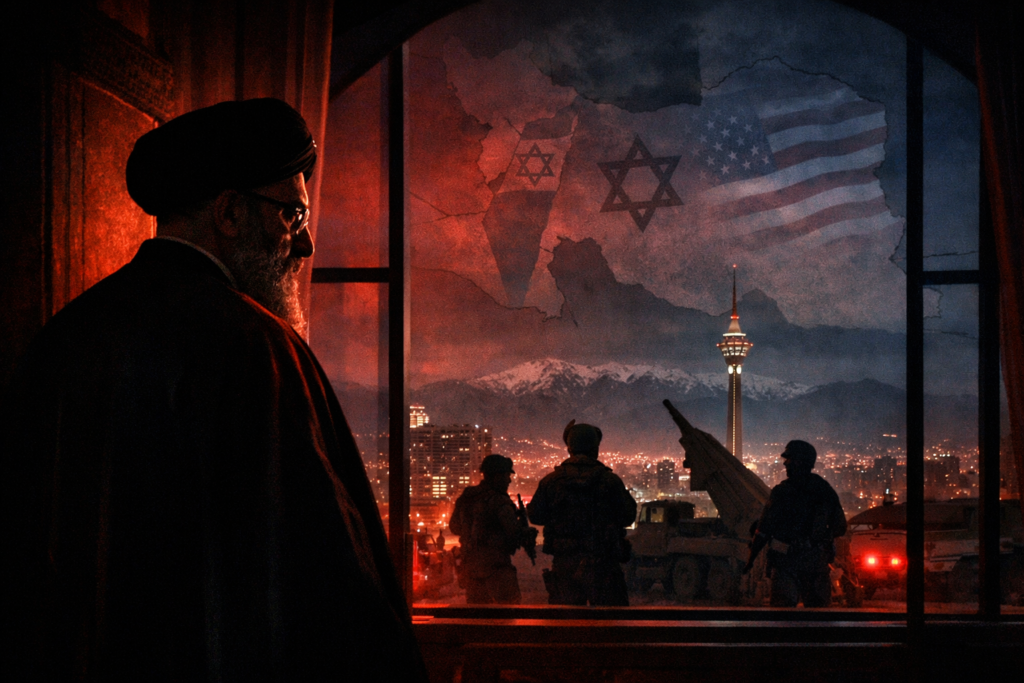
As tensions continue to rise across the Middle East, political attention is increasingly turning toward a powerful but often discreet figure inside Iran’s ruling establishment. Mojtaba Khamenei, the son of Iran’s supreme leader, has quietly become one of the most influential individuals within the country’s political and security structure.
While he rarely appears publicly, analysts and regional observers say his influence behind the scenes has grown steadily in recent years—especially as questions swirl about the future leadership of Iran and the direction the country may take during escalating regional tensions involving the United States and Israel.
With the Middle East already on edge due to military confrontations, diplomatic breakdowns, and proxy conflicts, Iran’s internal power dynamics are drawing intense global scrutiny.
The Quiet Rise of Mojtaba Khamenei
Despite holding no formal elected office, Mojtaba Khamenei has gradually built a reputation as a powerful figure within Iran’s political network.
He is the son of Ali Khamenei, who has ruled the Islamic Republic since 1989 and remains the country’s most powerful authority. As supreme leader, Ali Khamenei controls the military, judiciary, intelligence agencies, and the overall strategic direction of the Iranian state.
Over time, Mojtaba has developed close relationships with key security institutions, including the Islamic Revolutionary Guard Corps, widely known as the IRGC.
The IRGC is one of the most powerful institutions in Iran, responsible not only for military operations but also for significant political and economic influence. Its role extends beyond national defense into regional conflicts, intelligence operations, and strategic decision-making.
Observers say Mojtaba’s connections within the IRGC have helped expand his influence across Iran’s political system.
While he does not officially hold the title of supreme leader, many analysts believe he could play a crucial role in shaping Iran’s leadership in the future.
Questions About Succession
Ali Khamenei is now in his eighties, and speculation about who might eventually succeed him has grown more frequent.
Iran’s constitution states that the country’s supreme leader is chosen by the Assembly of Experts—a body of senior clerics responsible for selecting and supervising the position.
But in reality, succession decisions in Iran are deeply political and influenced by powerful networks inside the government and security establishment.
Some analysts believe Mojtaba Khamenei could emerge as a strong candidate in any future leadership transition.
Such a development would be controversial.
Critics inside and outside Iran argue that the leadership of the Islamic Republic is not meant to function as a hereditary system. Elevating the supreme leader’s son to the same position could raise accusations that the country is moving toward dynastic rule.
Supporters, however, argue that Mojtaba’s deep relationships with religious leaders and security institutions could provide stability during a sensitive transition period.
Regional Conflict Raises Stakes
These internal political discussions are unfolding during one of the most tense periods in Middle Eastern geopolitics in recent years.
Iran’s relationships with both the United States and Israel remain highly confrontational.
Tensions between Iran and Israel have escalated through a series of covert operations, cyberattacks, and military exchanges involving regional proxies.
Israel has repeatedly warned that it will not allow Iran to develop nuclear weapons capabilities. Iranian leaders insist their nuclear program is peaceful, but Western governments remain skeptical.
Meanwhile, the United States continues to maintain sanctions against Iran and has increased its military presence in parts of the region in response to rising security concerns.
Against this backdrop, any shift in Iran’s leadership could significantly influence the region’s strategic landscape.
The Role of the IRGC in Regional Strategy
Much of Iran’s regional policy is closely linked to the activities of the Islamic Revolutionary Guard Corps.
The IRGC plays a major role in supporting allied groups across the Middle East and overseeing operations that extend far beyond Iran’s borders.
These activities have made the organization a central player in conflicts throughout the region, including in Syria, Iraq, Lebanon, and Yemen.
Because of Mojtaba Khamenei’s ties to the IRGC, analysts believe he could have considerable influence over Iran’s military strategy if his political role expands.
That possibility has drawn attention from foreign governments trying to understand how Iran’s leadership might evolve in the coming years.
Limited Public Profile, Significant Influence
Unlike many political figures, Mojtaba Khamenei maintains an extremely low public profile.
He rarely gives interviews or speeches and is seldom seen at official government events.
This secrecy has contributed to his reputation as a behind-the-scenes power broker rather than a traditional political leader.
Yet people familiar with Iran’s political system say his influence within key institutions is widely recognized among insiders.
That influence could become increasingly important if Iran faces a leadership transition during a period of international tension.
The Global Impact of Iran’s Future Leadership
The question of who ultimately succeeds Ali Khamenei is not only important for Iran—it could reshape political dynamics across the Middle East.
Iran’s leadership decisions affect regional conflicts, energy markets, nuclear diplomacy, and global security.
If Mojtaba Khamenei were to rise to a formal leadership position, it could signal continuity in Iran’s current strategic direction.
On the other hand, internal political divisions could also produce a different outcome.
For now, Iran’s leadership structure remains unchanged, and Ali Khamenei continues to hold ultimate authority.
But as regional tensions persist and speculation about succession grows, the role of Mojtaba Khamenei is likely to remain a subject of intense global interest.
The future leadership of Iran—whoever ultimately assumes it—could shape the geopolitical landscape of the Middle East for decades to come.