India’s Supreme Court Rejects Bail for Muslim Activists Held Five Years Without Trial
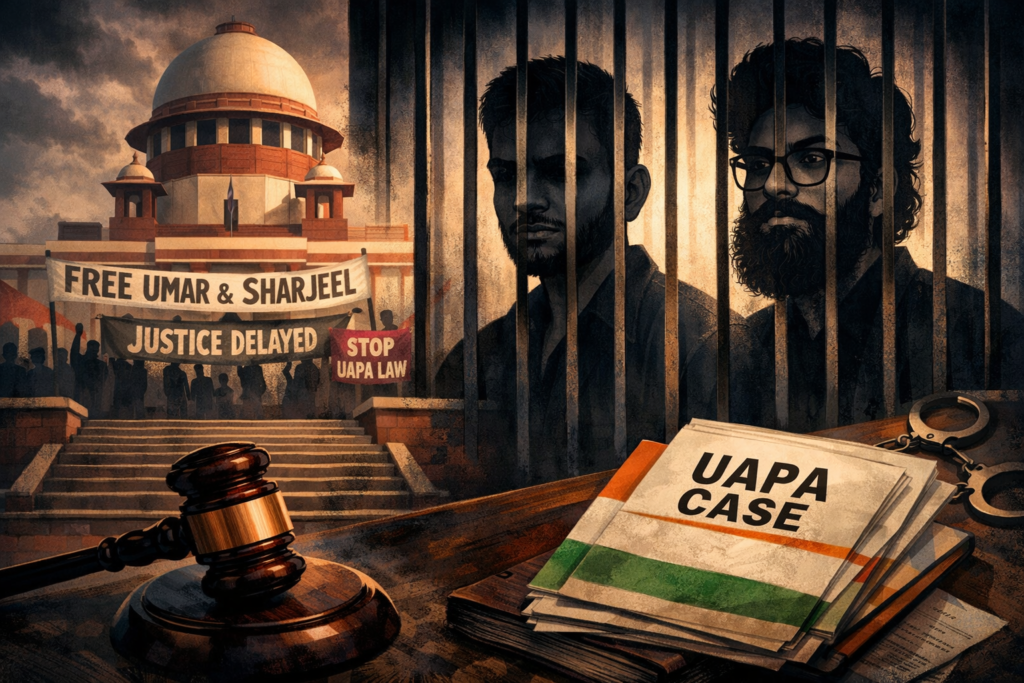
NEW DELHI — In a controversial legal decision, India’s Supreme Court on Monday refused to grant bail to two Muslim student activists who have spent nearly five years in jail without a trial in connection with one of the deadliest outbreaks of communal violence in the country’s recent history.
The court turned down the bail pleas of Umar Khalid and Sharjeel Imam, both of whom were arrested in early 2020 under India’s stringent Unlawful Activities (Prevention) Act (UAPA). The charges tie them to alleged conspiracy behind the Feb. 2020 northeast Delhi riots, where more than 50 people were killed amid bitter clashes linked to protests against the controversial 2019 citizenship law.
In its ruling, the Supreme Court emphasized that Khalid and Imam’s alleged “central role” in the conspiracy differentiated them from several co-accused, for whom bail was granted. The bench said that lengthy pretrial detention alone was not sufficient justification for bail under the tough anti-terror statute.
Khalid and Imam have become well-known voices in nationwide protests against the Citizenship Amendment Act (CAA) and have denied any role in inciting violence. Their prolonged detention without trial has sparked criticism from international human rights organizations and foreign lawmakers, who argue that the case highlights broader concerns over the use of anti-terror laws to suppress dissent.
Prosecutors for the Delhi Police maintained that the activists made speeches and comments that fueled tensions during nationwide demonstrations. Legal representatives for Khalid and Imam countered that there is no credible evidence directly linking them to the violence.
The case continues to divide opinion in India and abroad, with supporters calling for expedited justice and critics warning that prolonged detentions under UAPA undermine fair trial rights. The activists remain in custody as their trial progresses slowly through India’s legal system.