Hundreds of Tourists Stranded on Yemen’s Remote Island as Gulf Rift Grounds Flights
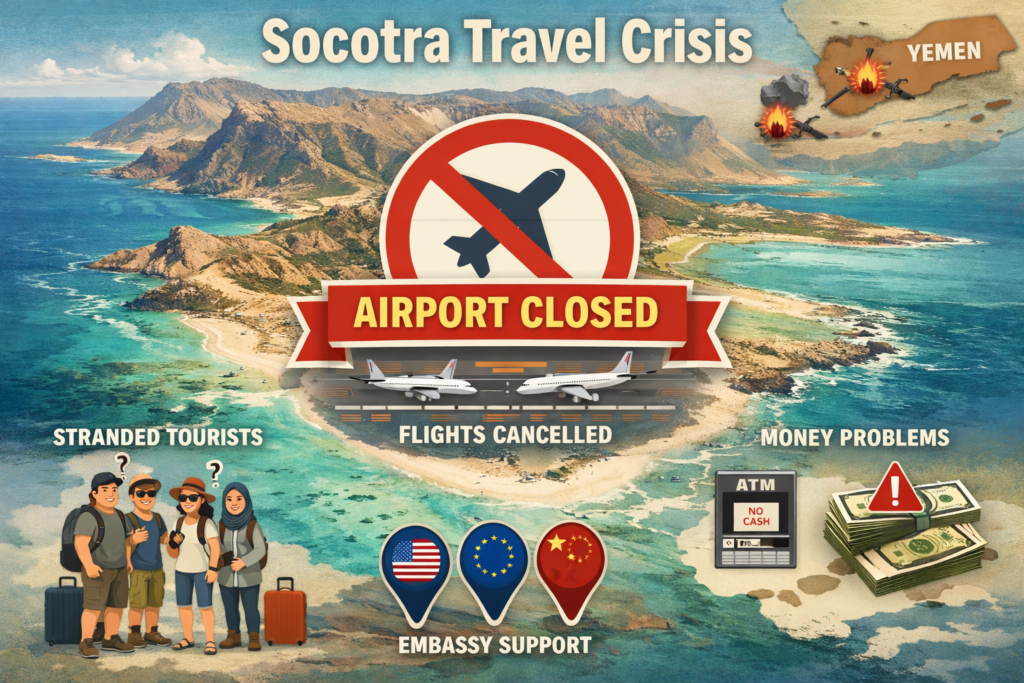
SOCOTRA, Yemen — Hundreds of foreign tourists who traveled to the once-peaceful Yemeni island of Socotra find themselves stranded after a deepening political rift between the United Arab Emirates (UAE) and Saudi Arabia brought air travel to a sudden halt, leaving visitors stuck far from home.
The crisis began last week when the UAE withdrew its troops from Socotra following growing pressure from Saudi Arabia, part of a broader dispute over influence in Yemen’s ongoing civil war. With Emirati forces leaving, control over the island’s airport shifted, and air traffic suddenly stopped, stranding an estimated 400–600 tourists from across Europe, the U.S., Asia and beyond.
Socotra — renowned for its stunning beaches, unique flora like the dragon’s blood tree, and exceptional biodiversity that earned it UNESCO World Heritage status — has become a niche tourism destination in recent years. Many travelers originally flew in from the UAE to enjoy New Year’s celebrations and adventurous excursions.
Now, with the airport closed and regular flights cancelled, visitors are left waiting for rescheduled departures or alternative travel arrangements. ATMs and digital payment systems are largely unavailable, and many tourists now face dwindling cash as they try to navigate the uncertainty. Some are considering sea routes to nearby countries like Oman in hopes of reaching international flights home.
Several foreign nationals have reached out to their embassies for assistance, but consular support is limited due to the diplomatic complexities of Yemen’s ongoing conflict. Many stranded travelers describe the situation as frustrating and unpredictable, with little clear information on when — or how — they may be able to leave.
Local officials and tourism representatives have appealed for the airport to be reopened and kept free from political disruption, emphasizing that Socotra’s peace and tourism appeal should be protected despite the evolving mainland conflict.