How a Harry Potter Villain Became China’s Year of the Horse Symbol — A Playful Twist on Tradition and Modern Festival Spirit
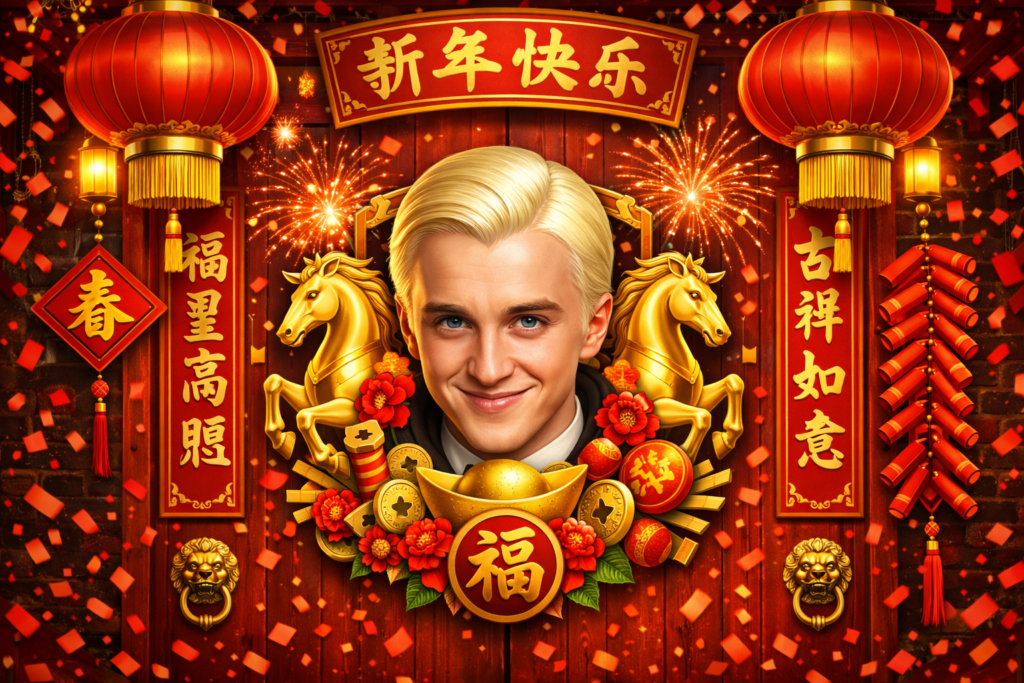
BEIJING — As the 2026 Lunar New Year draws near, something delightfully unexpected has captured the imagination of millions across China: Draco Malfoy — the blond‑haired rival from Harry Potter — has been embraced as an unlikely symbol of good luck for the Year of the Horse, transforming a centuries‑old tradition into a joyful blend of pop culture and cultural celebration.
Once known as the Slytherin antagonist in J.K. Rowling’s globally beloved fantasy series, Draco’s image is now popping up on New Year decorations, banners, stickers and digital art across Chinese cities, e‑commerce platforms and social media feeds — a testament to how language, symbolism and online playfulness can intersect in surprising ways.
A Name Turned Lucky Charm
At the heart of this cultural moment lies a linguistic twist. In Mandarin, Draco’s name is transliterated as 马尔福 (Mǎ ěr fú) — where 马 (mǎ) means “horse” and 福 (fú) means “fortune” or “good luck.” Because 2026 is the Year of the Horse on the Chinese zodiac calendar, this phonetic coincidence has led to a spontaneous and light‑hearted association: Draco Malfoy as a bringer of horse‑related good fortune.
In Chinese celebration tradition, imagery and wordplay matter deeply. Symbols that represent wealth, luck, prosperity and optimism are commonly displayed in homes, businesses and community spaces — especially during the Lunar New Year season. When people noticed the resemblance between “马 (horse)” and Malfoy’s Chinese name, the creative spark lit up online. Within days, images of Draco began spreading across platforms like Weibo, Douyin and Taobao, often paired with traditional red couplets and auspicious phrases inviting blessings for the new year.
From Hogwarts Hallway to Lunar Doorway
Social media feeds in China now show households and shops decorated with bright red banners featuring Draco’s face alongside traditional motifs like lanterns, “福” characters and poetry wishing luck and health in 2026. Videos of families sticking Draco‑themed decorations on doors, fridges and walls have gone viral, with many users jokingly insisting that “the horse brings great fortune this year.”
One Douyin clip, shared tens of thousands of times, showed a young family neatly placing a Draco‑faced “福” decoration upside down on their door — a Chinese tradition meant to symbolically “invite fortune to arrive.” Users responded with laughter and admiration for the quirky but affectionate twist on a classic custom.
Tradition Meets Memes in a New Year Remix
This phenomenon isn’t just about a fictional character turned festival mascot — it reveals something deeper about contemporary Chinese cultural expression. In China, wordplay and homophones have long been part of celebration culture. Items that sound like wealthy, healthy, or auspicious concepts are embraced because they feel lucky, even if the connection is humorous or unexpected.
Pop culture has increasingly become a canvas for this kind of creative reinterpretation. In previous years, other symbols have been given playful new meaning during major festivals, but Draco’s rise is especially striking because it comes from a Western work of fiction that has found a new kind of resonance thousands of miles from its origin.
International Pop Culture, Local Meaning
The popularity of the Harry Potter franchise in China plays a role too. Translated editions of the books and the films have been widely enjoyed across generations, making characters like Draco immediately recognizable — and “Ma Er Fu” a perfect canvas for New Year fortunes.
Chinese e‑commerce platforms have jumped on the trend, selling everything from Draco Malfoy stickers and magnets to Year of the Horse themed phone cases — all trotting along the playful prediction that seeing Draco’s face this year is akin to inviting good luck into the home.
Even Tom Felton, the British actor who portrayed Draco in the films, has taken notice. He shared photos of the phenomenon on his social channels, winning laughs and warm reactions from fans in both China and abroad.
What This Says About Cultural Exchange
In a world where traditions evolve, Draco’s Lunar New Year moment shows how cultural symbols can take on new life with a touch of creativity and collective imagination. For many people celebrating in China, it’s less about a character’s original story and more about the good‑hearted joy and optimism that come with wishing for a better year.
From ancient customs to modern fandom, the Year of the Horse has become a cultural bridge — a space where historical tradition and global storytelling meet to inspire celebration and good fortune.