Historic Trilateral Peace Talks Begin Between US, Ukraine and Russia in Abu Dhabi
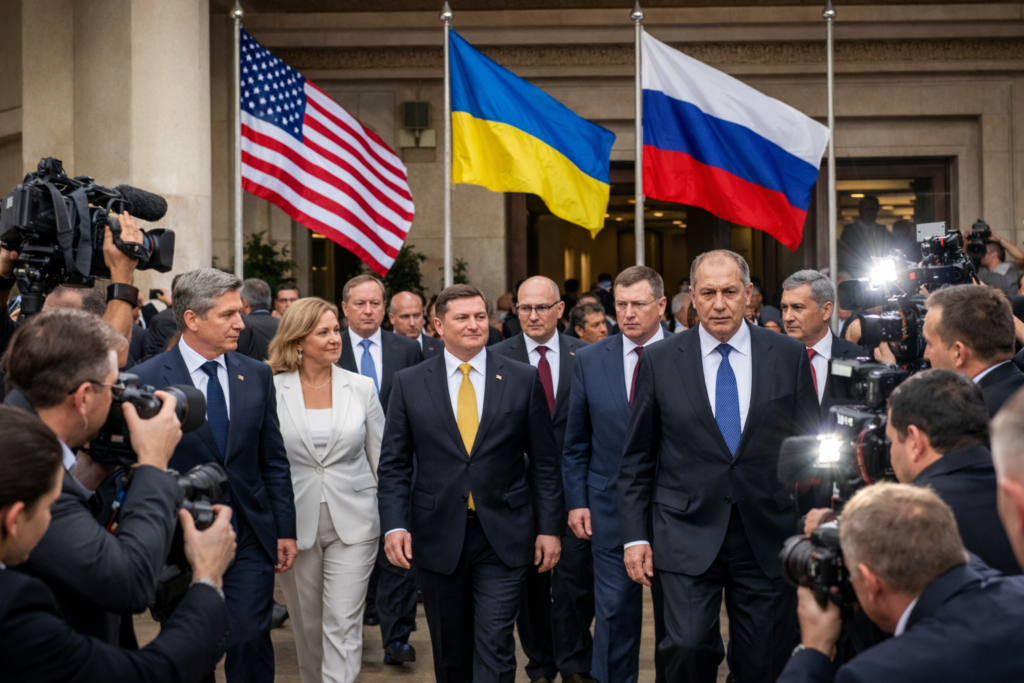
ABU DHABI, UAE — In a diplomatic moment many once considered improbable, the United States, Ukraine and Russia have launched their first formal trilateral peace talks aimed at negotiating an end to the nearly four-year war in Ukraine. The rare three-party negotiations opened in Abu Dhabi this week, following intense diplomacy that included high-level meetings between Russian President Vladimir Putin, U.S. peace envoys, and Ukrainian leaders. The talks represent a pivotal step in global efforts to forge a settlement to the conflict that has reshaped European security and cost hundreds of thousands of lives.
These negotiations come on the heels of a series of diplomatic engagements, including marathon discussions in Moscow between Putin and U.S. envoys Steve Witkoff and Jared Kushner, and earlier conversations between Ukraine’s President Volodymyr Zelenskyy and former U.S. President Donald Trump during the World Economic Forum in Davos.
A Diplomatic Breakthrough on the Horizon
For the first time since Russia’s full-scale invasion of Ukraine in February 2022, all three governments are seated — directly or through representatives — toward negotiating security and peace terms. The talks were formally confirmed by the Kremlin and Western officials after Putin met with Trump’s envoys in Moscow, where both sides described their interaction as constructive and potentially paving the way for a larger multilateral effort.
The trilateral meeting is scheduled to last two days in Abu Dhabi, focusing on security guarantees, territorial issues, and diplomatic frameworks for peace. Ukrainian representatives are expected to attend with U.S. officials mediating aspects of the discussions, though it has not been confirmed whether all delegations will meet jointly in a single room due to lingering tensions and diplomatic sensitivities.
The Core Issues at Stake
At the heart of the negotiations are territorial disputes and future security arrangements. Russian leaders have reiterated that a resolution to the conflict hinges on negotiations about territory — especially regions Russia currently occupies in Donetsk and other parts of eastern Ukraine. Putin and the Kremlin have made clear they see territorial concessions as central to any peace agreement, though Kyiv and its Western allies strongly reject these demands.
Ukraine has held firm that it will not relinquish sovereign territory, insisting any peace framework must respect its constitutional integrity and territorial borders. Volodymyr Zelenskyy, speaking at events preceding the talks, emphasized that Ukraine is ready for dialogue but not for settlement terms that undermine its right to self-determination.
A major sticking point remains the Donbas region, where Russia has pressured Kyiv to cede control as part of any ceasefire or peace formula — a demand repeatedly rejected by Ukraine on strategic and national-security grounds. Analysts say this issue alone could make or break any potential peace agreement.
Diplomatic Layers: Davos, Moscow, UAE
The peace talks in Abu Dhabi follow a series of diplomatic engagements earlier this month. At the World Economic Forum in Davos, Trump’s envoys described their meeting with Putin as “very positive” and “constructive,” though no deal was finalized.
Shortly afterward, a late-night diplomatic session in Moscow saw Putin hosting U.S. envoys, including Witkoff and Kushner, for marathon discussions lasting several hours. Russian officials said the sessions were open and frank, but stressed that significant disagreements remained — especially on territorial questions and future security guarantees.
Ukrainian President Zelenskyy also used his platform at Davos to criticize European allies for what he perceived as slow and inconsistent support, even as he urged continued international engagement toward peace.
International Reaction and Stakes
Global reaction to the trilateral talks has been mixed. European leaders urged cautious optimism, with many welcoming diplomatic engagement while stressing that any peace must uphold Ukraine’s sovereignty and not reward aggression with territorial gains. Many European capitals have emphasized the need for security guarantees, humanitarian relief, and long-term frameworks to prevent future aggression.
Critics of the negotiations warn that Russia’s participation — while historic — could serve as a strategic maneuver to divide Western alliances or to extract concessions without substantive commitments to cease hostilities. They point to previous rounds of bilateral talks that yielded no meaningful progress as evidence of Moscow’s reluctance to negotiate in good faith.
What Both Sides Hope to Achieve
For the United States and Ukraine, the goal of the trilateral diplomacy is to build momentum toward a lasting ceasefire and move closer to a peace settlement that can end years of warfare. Washington and Kyiv are also said to be discussing security frameworks that would deter future aggression and provide Ukraine with stronger guarantees from international partners.
From the Russian perspective, a peace deal that secures some form of recognition for territorial claims could be seen as a victory, though Russia’s leadership has so far couched its statements in broad language about national security and territorial integrity.
Senior diplomats and international observers caution that these negotiations — while historic — will not produce an immediate peace agreement. “There’s a lot of work left to be done,” one European diplomat noted, reflecting the complexity of reconciling battlefield realities with diplomatic aspirations.
The Larger Picture
The Abu Dhabi talks mark a rare moment of direct engagement between Russia and Ukraine alongside the United States since the invasion began in 2022. Previous discussions had often been bilateral or involved other intermediaries, but rarely in this trilateral configuration.
Whether these talks produce a substantive breakthrough or simply deepen understanding between the parties remains to be seen. The inclusion of major global powers in peace discussions underscores the international significance of the conflict and the enormous stakes involved — from human suffering and economic disruption to the future of European security architecture.
As negotiators continue their dialogue in Abu Dhabi, the world watches closely, hoping that this unprecedented diplomatic step could someday lead to a sustainable peace that brings an end to years of war and loss.