Gay Hockey Romance Heated Rivalry BecomesUnderground Phenomenon in Putin’s Russia
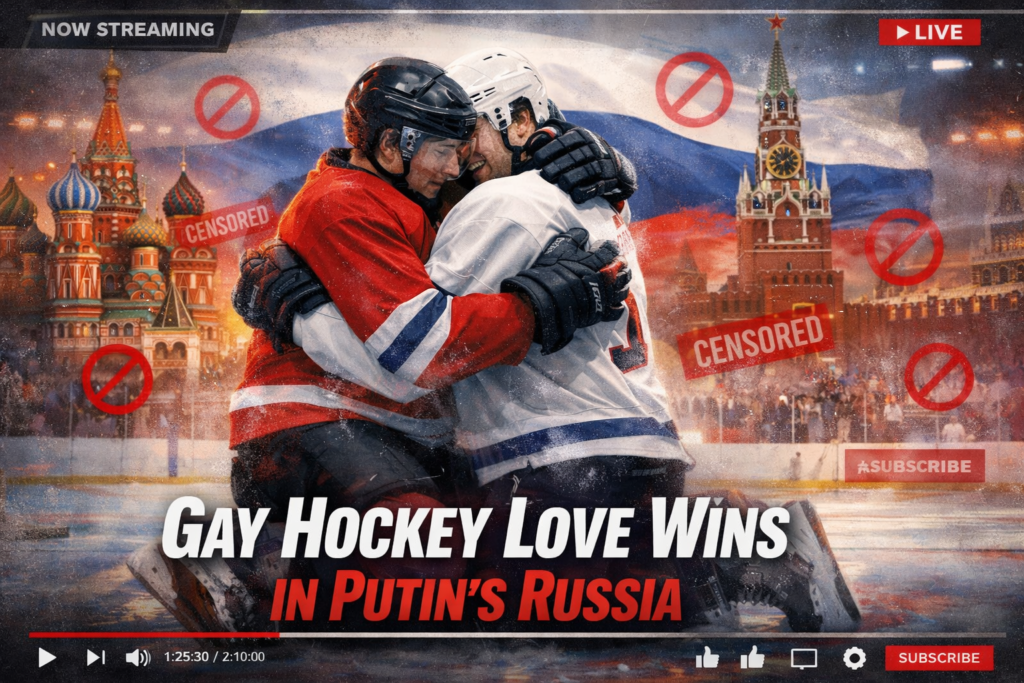
In a surprising cultural twist, a Canadian television drama about a secret gay romance between ice hockey rivals has become a viral phenomenon in Russia — despite strict state crackdowns on LGBTQ+ rights and extreme legal penalties for pro-LGBTQ+ expression. The show has struck a nerve with Russian audiences who are navigating some of the most repressive laws against sexual orientation and gender identity in the world, turning entertainment into an act of quiet resistance.
The series Heated Rivalry, adapted from Rachel Reid’s 2019 novel and released internationally in late 2025, follows the decade-long emotional and romantic arc between two elite hockey players — Canadian Shane Hollander and Russian Ilya Rozanov — as they balance professional rivalry on the ice with a hidden relationship off it.
What started as a popular romance series in North America and Europe has unexpectedly become one of the most highly rated shows among Russian viewers on the country’s top online platform, Kinopoisk — a remarkable feat in a nation where positive LGBTQ+ portrayal is legally banned.
A Hit in Russia Despite Legal Danger
Under Russian law, LGBTQ+ themes and “propaganda” are severely restricted. In 2023, the Supreme Court of Russia labeled the “international LGBT movement” a so-called extremist organization, exposing citizens and activists to harsh legal risks if they share or endorse such content — including fines, detention, and even prison time.
Homo-sexuality itself was decriminalized in Russia in 1993, but decades of political and legal backsliding have produced a hostile environment for LGBTQ+ people. Lawmakers have repeatedly tightened restrictions under the guise of defending “traditional family values,” and recent laws prohibit gender-affirming care and public acknowledgment of non-heteronormative relationships.
In this climate of repression, Heated Rivalry cannot be streamed legally in Russia. Yet viewers there are using VPNs, pirate sites, Telegram channels and social media file sharing to access episodes, pushing the series to one of the top three rankings on Kinopoisk — even surpassing global hits such as Game of Thrones.
One fan, who asked that her name be changed for safety, told The Moscow Times that the series “isn’t just a fairytale about two boys falling in love — it’s a serious social drama.” Fans are drawn to the emotional depth of its characters, especially Ilya Rozanov, whose struggle with identity and secrecy mirrors real-world challenges faced by many queer Russians.
LGBTQ+ Repression and Cultural Resistance
Russia’s crackdown on LGBTQ+ expression has been far-reaching and often brutal. Independent media and human rights organizations have documented destructive raids on gay bars, arrests of activists, and legal actions against those who display rainbow flags or other symbols deemed extremist.
In a 2010 European Court of Human Rights ruling, Russia was condemned for repeatedly banning gay pride marches as discriminatory — but the country’s domestic laws have continued to tighten, often violently silencing LGBTQ+ voices.
Despite that repression, Heated Rivalry shows that Russian audiences are hungry for more authentic stories — even if they must access them illegally to avoid state punishment. One young Russian told The Moscow Times that the story’s portrayal of closeted love and personal struggle resonates with a generation that has known ever-worsening legal and social conditions for queer people.
Telegram channels and fan groups have become hubs of community, where viewers share fan art, discussions, and clips — defying the ban and proving that censorship cannot unrealistically cordon off culture and human emotion.
Art as a Subtle Challenge to Oppression
For many Russians, watching and discussing Heated Rivalry is more than entertainment — it’s an act of resilience. One fan explained that many queer Russians feel they live in a world with two realities: the official, state-sanctioned narrative and the online, shared cultural space they create for themselves.
The storyline — a queer Russian athlete grappling with identity and secrecy — is particularly poignant for young viewers who grew up amid state hostility toward LGBTQ+ people, with little to no legal support, community resources, or representation in mainstream media.
Analysts say that the phenomenon reflects a broader truth about authoritarian censorship: restricting access to art often increases its appeal. In this case, the show’s popularity reveals both a thirst for stories about LGBTQ+ lives and an undercurrent of cultural resistance among Russians who quietly oppose state homophobia.
Global Reception and Cultural Impact
While Heated Rivalry is flying under the radar in Russia, its success elsewhere is undeniable. The series has gained international praise for its nuanced writing, compelling performances, and sensitive portrayal of queer romance within the traditionally hyper-masculine world of professional sports — a combination that Apple content analysts and cultural commentators have called groundbreaking.
The show has also sparked broader conversations about LGBTQ+ visibility in athletics. In real life, several professional hockey players have avoided public support for Pride events over fears of government reprisals — a potent reminder of how sports culture and politics can intersect.
Fans abroad have celebrated the series not just for its romantic elements but for the symbolic victory it represents: a story of love that defies borders and legal persecution alike — a theme that resonates with audiences far beyond Russia’s borders.
The High Stakes of Love in a Hostile State
The popularity of Heated Rivalry in Russia isn’t without risk. Under current laws, anyone sharing content that depicts LGBTQ+ relationships could face serious consequences, including arrest and imprisonment.
Yet the fan communities continue to thrive, showing that even strict censorship regimes cannot completely erase cultural longing for connection, representation, and human stories that reflect real lives. For queer Russians and their allies, the series has become a source of quiet courage and solidarity in the face of law-enforced silence.