Former Rap Star Turns Political Powerhouse as New Party Surges in Nepal’s Landmark Election
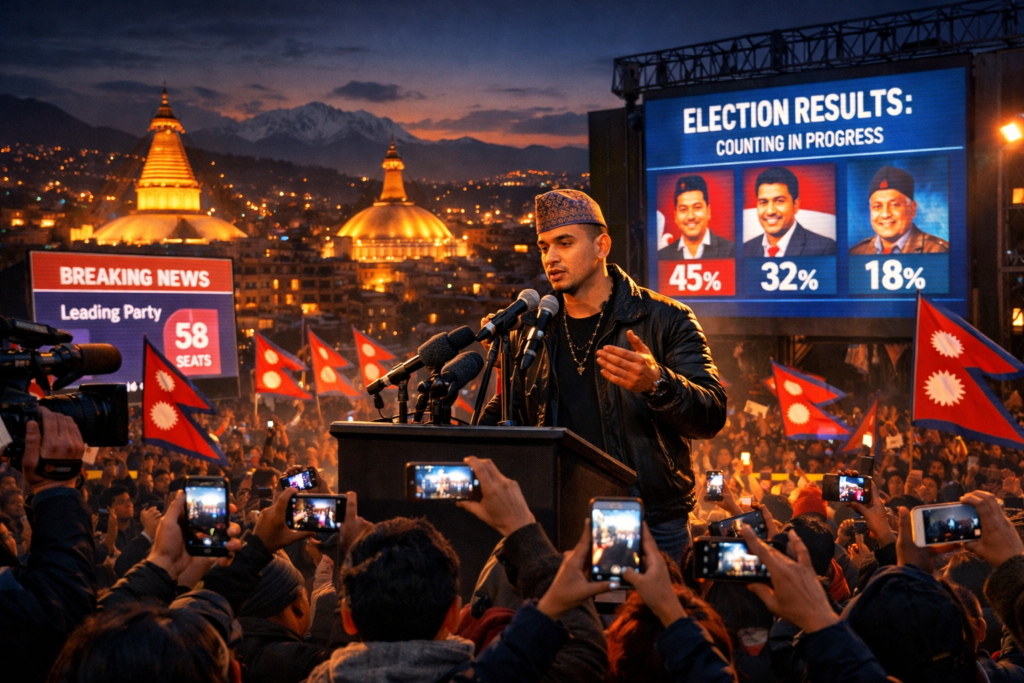
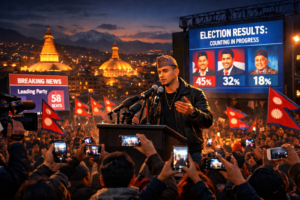
In a remarkable political twist that has captured attention across Asia and beyond, a former rap artist has emerged as one of the biggest surprises in Nepal’s latest national election. Early results show that the newly formed political movement led by Balen Shah is gaining significant momentum, reshaping the country’s political landscape and signaling a dramatic shift in voter sentiment.
The election marks a historic moment for Nepal, which is conducting its first major national vote since the country introduced a new system aimed at strengthening democratic representation. For decades, Nepal’s politics have largely been dominated by a small group of traditional parties. But the emergence of a new generation of political voices — including Shah — appears to be challenging that status quo.
A Political Outsider Gains Momentum
Shah, who once built a reputation as a rapper speaking about social injustice and youth frustration, has transformed himself into one of Nepal’s most recognizable political figures. His rise reflects growing frustration among many citizens who feel disillusioned with traditional leadership.
Early election results suggest that his political party, formed only recently, is performing far better than many analysts initially predicted.
Supporters say Shah’s appeal lies in his outsider status. Unlike career politicians, he entered politics with a message centered on transparency, anti-corruption reforms, and modernizing government institutions.
For younger voters in particular, that message has resonated strongly.
Nepal has one of the youngest populations in South Asia, and many voters have grown increasingly impatient with political gridlock, corruption scandals, and slow economic progress.
Youth Voters Driving Political Change
Across cities like Kathmandu, young voters lined up at polling stations in large numbers, hoping to usher in a new era of leadership.
Many of them say they are tired of the same political figures dominating power year after year.
Shah’s campaign capitalized on that frustration by presenting itself as a fresh alternative — one rooted in grassroots activism and social media outreach rather than traditional political machinery.
His background in music also helped him build a large following among younger generations.
Through his lyrics and public statements, Shah often spoke about social inequality, government inefficiency, and the everyday struggles of ordinary people.
Those themes carried over into his political campaign, which emphasized accountability and economic opportunity.
Nepal’s Complicated Political Landscape
Nepal’s political system has gone through major transformations over the past two decades.
The country abolished its monarchy in 2008 and adopted a federal democratic republic structure after years of political instability and civil conflict.
Since then, elections have been dominated by long-established parties such as the Communist Party of Nepal (Unified Marxist–Leninist) and the Nepali Congress.
These parties have deep organizational networks and strong influence across rural regions.
However, critics say their leadership has struggled to deliver consistent economic development or address widespread corruption concerns.
That frustration has created space for new political movements like Shah’s to gain traction.
Early Results Suggest a Political Shake-Up
While final election results are still being counted, early tallies suggest that Shah’s party could secure a meaningful number of seats in parliament.
Even if it does not win a majority, its performance could significantly reshape coalition negotiations and policy discussions.
Political analysts say the strong showing demonstrates that Nepalese voters may be increasingly willing to support nontraditional candidates.
“It’s a signal that the political landscape is evolving,” one regional political observer noted.
For the established parties, the results may serve as a wake-up call.
If younger voters continue to mobilize around reform-focused candidates, traditional power structures could face growing challenges in future elections.
The Influence of Social Media Campaigning
One factor contributing to Shah’s rise is the powerful role of social media.
Instead of relying solely on traditional campaign rallies or party networks, his campaign heavily used digital platforms to connect with voters.
Videos, livestream discussions, and online engagement allowed the campaign to reach younger citizens who often feel disconnected from conventional politics.
The strategy proved particularly effective in urban areas, where internet access and smartphone use are widespread.
By bypassing traditional political gatekeepers, Shah was able to build a direct relationship with supporters.
That approach mirrors political movements seen in other countries, where outsider candidates have used social media to mobilize voters and challenge established parties.
What Comes Next for Nepal
As vote counting continues, the full impact of the election remains uncertain.
Nepal’s parliamentary system often requires coalition governments, meaning multiple parties must work together to form a ruling majority.
If Shah’s party maintains its early momentum, it could become a key player in those negotiations.
That would represent an extraordinary achievement for a movement that only recently entered the political arena.
However, political success will also bring new challenges.
Campaign promises about transparency, economic reform, and government accountability can be difficult to implement once in power.
Observers say the real test for Shah and his allies will come if they transition from political challengers to governing leaders.
A Symbol of Political Transformation
Regardless of the final seat count, the election already appears to represent an important turning point for Nepal’s democracy.
The rise of a former rapper turned political leader highlights the shifting expectations of voters — particularly younger generations who want new ideas and fresh leadership.
For many supporters, Shah’s campaign symbolizes hope for a more responsive government.
For critics, it raises questions about whether outsider movements can effectively navigate the complexities of national politics.
But one thing is clear: Nepal’s political landscape is no longer defined solely by its traditional parties.
A new generation of leaders is emerging, and voters appear ready to give them a chance.
As the final results come in, the country — and the wider world — will be watching closely to see whether this unexpected political surge marks the beginning of a lasting transformation.