Former Flight Attendant Posed as Pilot, Scored Hundreds of Free Flights
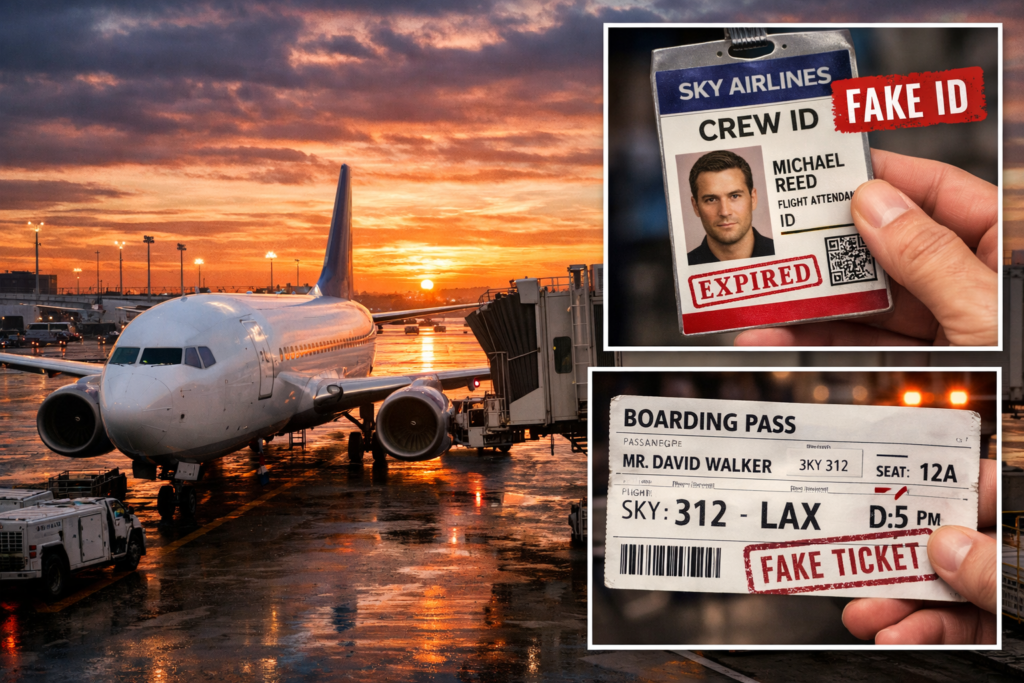
HONOLULU — In a case that sounds like something out of a Hollywood thriller, U.S. authorities say a 33-year-old former flight attendant from Canada used falsified airline credentials to pose as a commercial pilot and a current flight attendant in order to obtain hundreds of free flights across major U.S. airlines over several years. The extraordinary scam — involving **fraud, fake employee IDs, and jump-seat requests — has federal prosecutors calling it a brazen abuse of airline travel privileges.
Dallas Pokornik, a Toronto native who once worked as a flight attendant for a Canadian airline between 2017 and 2019, was arrested in Panama late last year after a federal indictment was filed in Hawaii charging him with wire fraud and related offenses. Authorities formally extradited Pokornik to the United States, where he pleaded not guilty in federal court this week.
How the Scheme Worked
According to court filings and statements from the U.S. Attorney’s Office in Hawaii, Pokornik used fake employee identification from his former Canadian airline to access airline travel benefits that are normally reserved for active airline crew members, including both flight attendants and pilots. These privileges often include complimentary or heavily discounted standby travel — known in the industry as “jump-seat” privileges — designed to help airline staff get to or from work assignments.
Prosecutors allege that Pokornik didn’t just access one airline’s system — he used identification tied to his Canadian airline to book free flights on three separate U.S.-based carriers over a four-year period. Although the indictment doesn’t name the airlines, their headquarters cities — Honolulu, Chicago, and Fort Worth — strongly suggest possible involvement of Hawaiian Airlines, United Airlines and American Airlines.
Federal authorities say he repeatedly booked flights exclusively available to pilots and flight attendants. On at least one occasion, prosecutors say, Pokornik even attempted to secure a seat in the cockpit jump seat, an extra seat typically reserved for off-duty pilots on flights between assignments. It is not yet clear whether he ever actually occupied the cockpit seat.
Airport Security and the Fraud Explosion
Despite the elaborate ruse, Pokornik still had to navigate through Transportation Security Administration (TSA) checkpoints like any other passenger. Officials told investigators that he went through standard security screening before flights, indicating that airport screening processes did not flag his fake credentials.
Federal prosecutors underscored how the scam exploited loopholes in airline travel benefits tracking systems — systems that rely on employee badge numbers and airline verification rather than real-time employment confirmation across carriers. The case highlights what government lawyers describe as systemic vulnerabilities that fraudsters could exploit if left unchecked.
Federal Charges and Court Proceedings
Pokornik was indicted last October in Hawaii on multiple counts of wire fraud and related offenses tied to the travel scheme, which allegedly spanned from 2019 to 2024. After his 2025 arrest in Panama, U.S. Marshals and federal prosecutors secured his extradition to the mainland.
At his arraignment this week, Pokornik pleaded not guilty and remains in federal custody under an order from a U.S. magistrate judge. His federal defensive counsel declined to comment on his behalf. Prosecutors have indicated that if Pokornik is convicted on the wire fraud charges, he could face decades in prison and substantial fines, reflecting how seriously the Justice Department views airline and travel fraud.
Experts say the case is unusually large in scope for travel benefit fraud, given the number of flights involved and the cross-carrier nature of the alleged scheme. Prosecutors have yet to provide a definitive total of flights obtained or the monetary value of those free trips, but court documents show the practice went on for years without airline systems catching the deception sooner.
‘Catch Me If You Can’ Parallels
The unusual nature of the case has drawn comparisons to the true-story of Frank Abagnale, the subject of the Oscar-nominated film “Catch Me If You Can,” in which the protagonist posed as a Pan Am pilot to travel the world for free and cash fraudulent checks. Like Abagnale’s exploits, prosecutors say Pokornik’s scheme involved false identities and deceptive documentation to secure benefits he was never entitled to receive.
Unlike the Hollywood version, however, U.S. authorities stress that the fraud has serious legal consequences, not just quirky air travel tales. “This is not a prank or a badge of honor — this is a planned and ongoing deception involving federal crimes,” a prosecutor noted at a recent hearing.
Industry — and Public — Reaction
Airlines contacted for comment have largely declined to respond to questions about the case, citing ongoing investigations and privacy concerns. Air Canada, the Toronto-based airline where Pokornik previously worked, also did not immediately respond to requests for comment.
Transport and aviation security experts say the case raises important questions about how employee travel privileges are vetted and monitored. While airlines routinely audit crew member travel, critics argue that stricter verification — potentially involving third-party employment databases — might be necessary to prevent similar fraud.
Travelers and frequent flyers have reacted with a mix of amusement, shock and concern on social media, with many comparing the case to the notorious Abagnale story and others calling for tighter airline security protocols. Some frequent fliers noted that free flight privileges are intended as an employee benefit to support airline operations and morale — not as a loophole for exploitation.
Broader Implications for Airline Security
Beyond the courtroom drama and potential prison time for Pokornik, the case underscores broader discussions about aviation security in the United States. If airlines and federal authorities cannot effectively track and authenticate employee travel privileges, there’s concern that bad actors could exploit these systems in ways that compromise security or result in financial loss.
While no safety breaches tied directly to this scheme have been reported, the Justice Department and aviation regulators say they are reviewing protocols to ensure that employee travel and “jump seat” access are tightly controlled going forward.
At the federal level, the case is also likely to influence how prosecutors pursue similar travel-related fraud and could prompt new airline-industry partnerships to close loopholes while maintaining legitimate employee travel benefits.