Former British Royal Prince Andrew Arrested by UK Police Amid Epstein Misconduct Investigation
In a dramatic and deeply unusual development that has captured global attention, Thames Valley Police in the United Kingdom arrested Andrew Mountbatten-Windsor — the former Prince Andrew — on Thursday on suspicion of misconduct in public office, linked to the sprawling Jeffrey Epstein investigation. The arrest marks a rare moment in modern British history and has reignited worldwide discussion about accountability, privilege, and justice at the highest levels.
Police confirmed the arrest came after a thorough assessment of allegations that Mountbatten-Windsor improperly shared sensitive information with convicted sex offender Jeffrey Epstein during his tenure as the UK’s trade envoy — a role he held in the early 2010s. Searches were carried out at multiple properties, including his Sandringham estate residence in Norfolk and a separate address in Berkshire. The former royal remains in custody as the investigation continues.
Arrest On His 66th Birthday
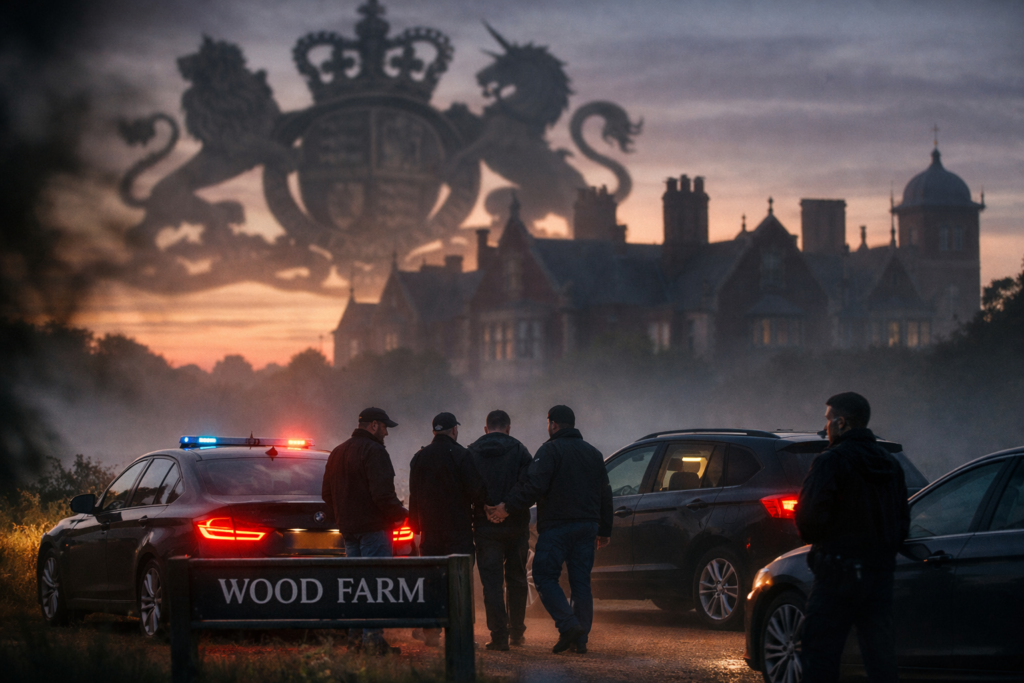
In an ironic twist of fate, Andrew was arrested on his 66th birthday, a date that should have brought celebration but instead heralded a moment of profound consequence and personal upheaval. According to UK police, officers arrived at Wood Farm — a private residence on the Sandringham Estate — early Thursday morning, supported by unmarked vehicles and plain-clothes detectives, as part of a fresh probe into possible wrongdoing in public office tied to his interactions with Epstein.
It’s important to note that under UK law police did not publicly name him at the time of arrest, a standard practice designed to avoid prejudicing ongoing proceedings. Still, numerous credible sources and official statements identify the arrested man as Andrew Mountbatten-Windsor, formerly known as Prince Andrew.
What UK Police Are Investigating
Police have said the investigation centers on allegations of misconduct in public office, a charge that suggests a serious breach of the responsibilities entrusted to someone in a position of public duty. Specifically, authorities are examining whether Andrew shared restricted or confidential information with Epstein — including trade briefings and official documents from diplomatic work he undertook as a representative of the United Kingdom.
The probe follows the release of millions of pages of newly unsealed documents connected to U.S. Justice Department files from the Jeffrey Epstein scandal, which have re-energized investigations into those who may have interacted with the disgraced financier in questionable ways.
Assistant Chief Constable Oliver Wright of Thames Valley Police said the force opened the investigation “following a thorough assessment” of the allegations and stressed their commitment to conducting the inquiry with complete integrity. Police emphasized the case is active and that they will provide updates when appropriate.
A Royal in Custody: Public Reaction and Significance
This arrest represents a watershed moment in British history: a senior member of the British royal family taken into police custody in an ongoing criminal investigation. While British royals have been subject to public scrutiny and civil actions before, it’s virtually unprecedented in modern times for a royal of such stature to be formally detained in this way.
Many British citizens reacted with surprise, anxiety and debate, reflecting the deep emotional and cultural ties the monarchy holds in the United Kingdom and across the Commonwealth. For some, the arrest signals a commitment to the principle that no one is above the law — a sentiment echoed by UK Prime Minister Keir Starmer, who has emphasized that everyone with relevant information should assist investigators and comply with the legal process.
At the same time, supporters of Andrew argue that he has consistently denied any wrongdoing and deserves due process and fairness, without assumptions of guilt based solely on headlines or leaks. As the investigation unfolds, the truth behind the allegations and their legal implications will be tested in court and through official inquiries.
The Epstein Ties: What Comes Next
Andrew’s ties to Epstein have been controversial for more than a decade. He previously faced civil legal action in the United States — including a high-profile settlement with a woman who accused him of sexual abuse when she was a minor, an allegation he has always denied. That settlement, and his friendship with Epstein, significantly damaged his reputation and led to him relinquishing public duties and royal patronages.
However, this new phase of investigation focuses not on those past allegations but on alleged official misconduct — the accusation that he may have used his government role to pass sensitive trade information to Epstein or his associates. Investigators are combing through documents, emails and testimony to determine whether any laws were broken and, if so, what charges may be appropriate.
Police are also conducting searches at multiple locations tied to Andrew’s life and career, including properties in Norfolk and Berkshire, as part of this ongoing inquiry. Authorities have stressed that no one should be treated as guilty before proven so in a court of law.
A Nation and Commonwealth Reflect
This case is generating intense discussion not just in the UK but around the world — especially in countries where the royal family remains a symbol of tradition, continuity and public service. Many commentators note that this moment challenges long-held perceptions of privilege and immunity that once seemed inseparable from royal status.
For the public, the arrest raises questions about transparency, accountability and the responsibilities of those who represent nations abroad. Whatever the outcome, the investigation into Andrew Mountbatten-Windsor’s conduct will be watched closely by millions and may have long-lasting effects on how public office, royal service and the rule of law are understood in the modern age.