Families of Three American Women File $100 Million Lawsuit After Belize Resort Carbon Monoxide Deaths
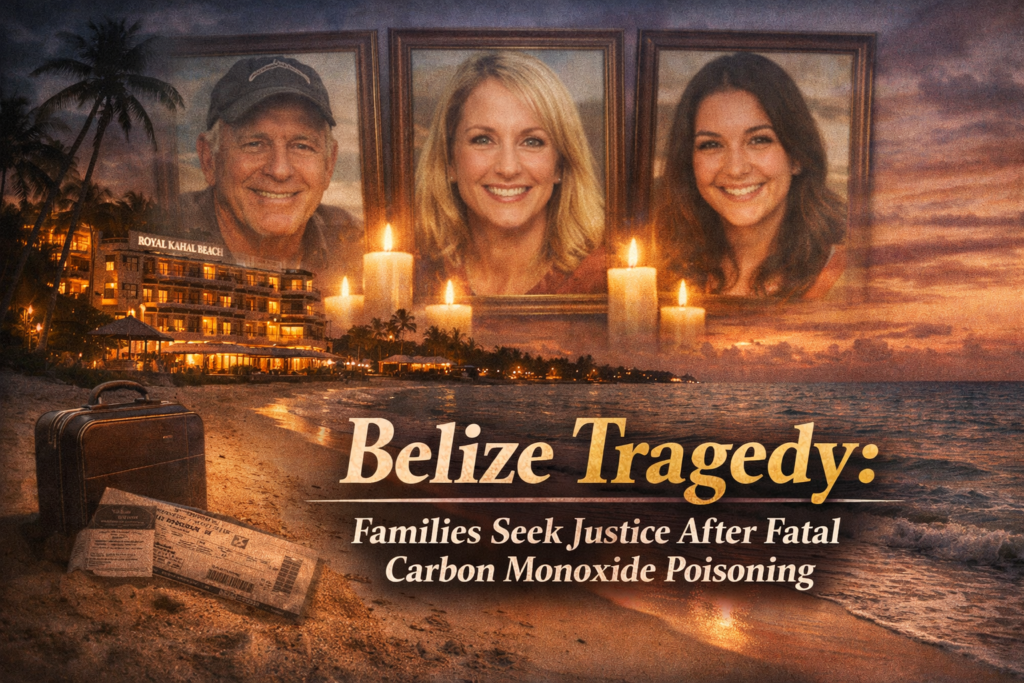
SAN PEDRO, Belize / BOSTON — Almost a year after three young American women died unexpectedly while vacationing at a beach resort in Belize, their families have taken legal action, filing a federal wrongful death lawsuit seeking $100 million against the hotel where the tragedy occurred and major travel companies that marketed the trip to them. The case is raising questions about travel safety, corporate responsibility and accountability when preventable accidents claim lives abroad.
The lawsuit was filed in U.S. District Court in Boston by the families of Wafae El-Arar (26), Imane Mallah (24) and Kaoutar Naqqad (23), all from Revere, Massachusetts, who were found dead in their hotel room at the Royal Kahal Beach Resort in San Pedro, Belize on Feb. 22, 2025 after they failed to check out the day they were scheduled to return home.
Fatal Vacation: What Happened to the Three American Tourists
When staff at the Royal Kahal Beach Resort attempted to reach the women after they did not respond to calls and messages, housekeeping used a master key to enter their unit. There, they found the three unconscious and unresponsive inside the beachfront suite. Initially, local officials considered multiple causes, including drug overdose, after they found alcohol and “gummies” in the room — but toxicology later made it clear that none of the women had illicit drugs in their systems.
Days later, forensic experts in Belize determined that the trio had died from acute carbon monoxide poisoning, a lethal outcome of inhaling the odorless, colorless gas that can build up rapidly in enclosed spaces — especially if a gas-powered appliance like an instant water heater is malfunctioning or improperly ventilated.
Carbon monoxide (CO) poisoning can cause acute pulmonary edema, a buildup of fluid in the lungs that deprives the body of oxygen and leads to unconsciousness and death if not detected quickly — something particularly dangerous because the gas gives off no smell and can affect victims while they sleep.
At the time of the tragedy, Belizean authorities said the deaths were likely linked to a faulty gas-powered water heater inside the suite that released carbon monoxide into the room.
Their Families Fight Back With a Lawsuit
Last year’s tragedy left families and the community in shock — daughters and sisters who had traveled overseas for sun, sand and celebration instead died in a resort staffed by people they trusted with their safety. In early February 2026, the women’s loved ones filed a detailed complaint in federal court, alleging the deaths were the result of negligence, defective equipment and a catastrophic failure of safety systems, not an unavoidable accident.
The lawsuit names multiple defendants, including:
- Royal Kahal Beach Resort and its owners and managers, accused of failing to provide a safe environment and ignoring previous warnings about carbon monoxide hazards.
- Expedia, the travel website the women used to research and book the trip, which allegedly continued to endorse the resort in targeted advertisements even after guests left warning reviews.
- Navien, the U.S.-based manufacturer of the instantaneous water heater believed to have leaked the carbon monoxide, claiming the product was defectively designed and improperly installed.
- Contractors and technicians who installed and serviced the equipment without qualified oversight.
The complaint seeks $100 million in damages, including compensation for pain and suffering, loss of companionship, and punitive damages meant to deter other companies from valuing profits over guest safety.
Voices of Grief: Families Speak Out
In a joint statement, the families said the lawsuit is “first and foremost about honoring the lives of our daughters and making sure their deaths were not in vain.” They described the loss as “unimaginable” — a vacation that should have been joyful ending in heartbreak.
“We trusted that the places and companies inviting families to stay with them cared about safety as much as they cared about profit,” the plaintiffs wrote. “We now know that trust was misplaced. We are here because accountability matters, because it can prevent future tragedies, and because our daughters’ lives mattered.”
Attorneys for the families emphasized that previous guests had reported symptoms of carbon monoxide exposure and that reviews on travel platforms contained warnings about safety issues — concerns, they say, that were ignored by the resort and by travel companies promoting it.
Safety Failures Behind the Tragedy
At the center of the lawsuit is an alleged lack of functioning carbon monoxide detectors in the suite where the women were staying — a violation of basic safety standards in many countries, though not always uniformly enforced on international hotel properties. According to the complaint, warning signs were allegedly reported by prior guests and available to platforms like Expedia but were not addressed by the resort management.
The water heater linked to the poisoning was later removed and replaced with an electric model — but only after the deaths occurred, the lawsuit claims.
Family attorneys say that a “catastrophic failure of safety systems” and “negligence that put profit before human lives” ultimately led to the women’s deaths — and they want the court to hold all responsible parties to account.
Background: Belize, Carbon Monoxide and Traveler Risks
Carbon monoxide poisoning remains one of the most deadly travel-related hazards because victims often show few or no early symptoms, especially while asleep. CO arises when fuel-burning appliances — such as gas water heaters, stoves or generators — are not properly vented. Because the gas is odorless and colorless, victims often never realize they are being poisoned.
Travel safety experts often recommend travelers carry portable carbon monoxide detectors when visiting destinations where fuel-burning appliances may be present in hotel rooms, vacation rentals, or remote lodges — a precaution many travelers never consider.
Legal and Travel Industry Implications
The lawsuit will be closely watched by consumer safety advocates, travel industry professionals, and legal observers alike because it tests whether companies that profit from American tourists can be held accountable in U.S. courts for preventable tragedies that occur abroad.
If successful, the case could influence hotel safety standards worldwide, especially in countries heavily reliant on tourism, by compelling greater enforcement of international safety measures like CO detectors and regular inspections.
Remembering the Victims
Wafae El-Arar, Imane Mallah and Kaoutar Naqqad were described by friends and family as vibrant, thoughtful young women whose lives were just beginning. Their tragic deaths in a foreign resort during what was meant to be a joyful vacation have deeply affected their community in Revere and Malden, Massachusetts, as well as travelers and safety advocates across the United States.
Through this legal battle, their families hope to transform grief into accountability, ensuring future travelers are protected more rigorously from similar dangers.