Elon Musk and Prediction Markets: Polymarket & Kalshi Odds Explained
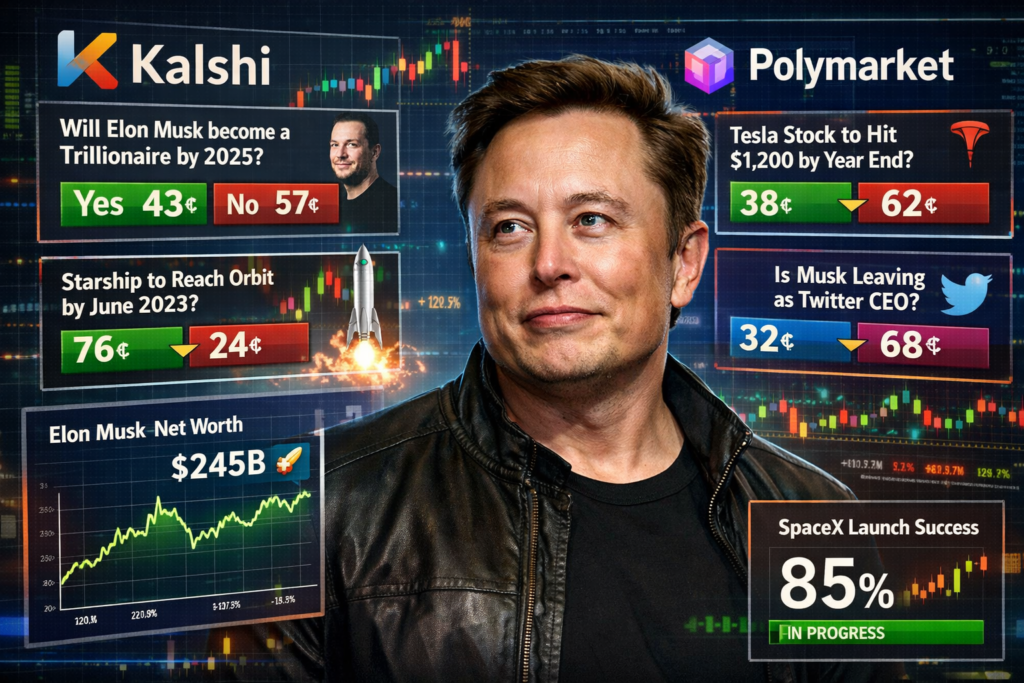
In the swirl of markets, memes, tech fortunes and high-stakes betting, a surprising phenomenon has taken shape: prediction markets — most notably Kalshi and Polymarket — are now placing real-money odds on decisions and outcomes involving Elon Musk, one of the most influential and divisive figures in global business. Once the domain of political wagers and weather forecasts, these markets have rapidly evolved into a powerful real-time barometer of investor sentiment and public expectations about the future of technology, corporate leadership and the billionaire class itself.
At the heart of this trend are questions that used to belong in boardrooms, strategy memos, or corporate earnings calls — but that are now being hashed out in a vibrant marketplace where users bet on events like SpaceX’s IPO timing, whether Tesla will launch robotaxis by mid-2026, and even if Musk will one day become the world’s first trillionaire.
Prediction Markets: The New Frontier of Forecasting
Prediction markets such as Kalshi and Polymarket allow users to trade contracts on the outcome of future events. These aren’t traditional stocks or bonds — instead, they behave like event contracts where prices reflect the collective probability that a given outcome will happen. As traders buy and sell, those probabilities rise and fall — in essence turning collective belief about the future into real-world odds.
Kalshi, based in New York City and regulated by the Commodity Futures Trading Commission (CFTC), offers prediction markets that are fully accessible to U.S. investors, including sports betting, politics and economic events. Polymarket, on the other hand, built initially on blockchain technology, has historically operated globally — using stablecoin USDC — and has only recently gained more traction amid regulatory clarity and strategic partnerships.
This evolution of so-called “event contracts” into mainstream financial forecasting tools is both fascinating and controversial. Supporters say it harnesses the collective wisdom of crowds, creating a dynamic way to weigh the likelihood of future events. Critics warn that turning real-world outcomes into tradable bets can distort public conversation and blur the line between news and gambling.
Musk in the Markets: Bets on Wealth and Influence
Elon Musk — the billionaire CEO of Tesla and SpaceX, leader of xAI and powerhouse in global tech media — has become an outsized presence in prediction markets. Kalshi’s data shows traders placing meaningful odds on Musk becoming the world’s first trillionaire within the next few years — with some markets estimating better than even chances of hitting that milestone by 2029 based on company performance and wealth accumulation potential.
Even broader than wealth speculation, platforms like Polymarket list active contracts on potential outcomes such as SpaceX’s IPO valuation, whether Musk will launch commercial robotaxi services, and even scenarios tied to future legal or business developments involving Musk’s ventures.
These odds frequently update in real time and reflect a blend of public sentiment, insider anticipation and social media momentum — especially for outcomes closely tied to Musk’s frequent tweets and high-profile public behavior. Their existence signals a major shift in how markets interpret the influence of a single individual on the tech and investment landscape.
More Than a Game: Real-Time Public Sentiment
What once might have been relegated to financial analysts’ models or long-term forecasts is now embedded in the pricing of prediction markets. Kalshi and Polymarket effectively crowdsource probability — allowing users to put real capital behind their beliefs, whether about economics, technology or the future of an industry titan.
For example, contracts that track whether Tesla reaches certain delivery milestones in 2026 or if SpaceX’s stock comes public before a specific date see significant trading volume — telling real-time stories of market confidence and doubt alike.
Similarly, wagers on Musk’s net worth — including whether it will exceed $1 trillion — embody a broader narrative about the future of tech wealth concentration, corporate growth trajectories, and global economic power dynamics.
These markets have begun to show up in mainstream financial news coverage; major outlets such as CNBC are integrating Kalshi data into broadcast segments, and outlets like Polymarket are regularly shared or discussed on investor platforms — providing new layers to financial journalism itself.
Debate, Regulation and Ethical Questions
Despite their popularity, prediction markets raise complex questions about regulation and ethics. Kalshi’s regulatory status has been challenged in some jurisdictions — including rulings that classify parts of its operation under state gambling laws — while nationally it remains regulated as a financial instrument.
Polymarket, for many years, operated offshore due to earlier legal restrictions on U.S. users and has faced scrutiny from regulators concerned about derivatives laws and unregistered trading.
Critics argue that prediction markets can inadvertently reward use of insider information, and in some cases lead to unsettling situations where people profit from speculation on humanitarian events or geopolitical conflict — blurring lines between analysis and exploitation.
Industry defenders counter that prediction markets can outperform traditional polling — capturing sentiment and expectation rather than mere opinion — and even provide early signals about election outcomes, economic data releases, and other major events.
A Broader Trend in Financial Forecasting
The inclusion of Musk-related contracts is part of a broader trend showing how prediction markets are moving beyond niche tech circles into the business and political mainstream. Polymarket’s ties with Elon’s social media connections and Kalshi’s recent partnerships with major financial news networks underscore a seismic shift in how investors and analysts gauge future probabilities.
From geopolitical outcomes and economic reports to corporate milestones and individual wealth achievements, these markets now serve as an active layer of real-time public forecasting — one where money rather than survey responses shows how people actually bet on the future.
Why It Matters in 2026 and Beyond
The fact that prediction markets now assign real odds to outcomes tied to Elon Musk’s career and influence — including business milestones like IPOs, tech product rollouts and his position among the world’s wealthiest — says as much about modern investor psychology as it does about Musk himself.
These markets reflect global sentiment, blending financial speculation with cultural commentary. In doing so, platforms like Kalshi and Polymarket are reshaping how we measure expectations about future events — from boardrooms to social media timelines.
Whether you view them as powerful forecasting tools or controversial betting arenas, one thing is clear: prediction markets are no longer on the fringe — they’re firmly part of how the world thinks about what comes next.