DeSantis Doubles Down on AI Skepticism, Trying to Carve Out a 2028 Political Identity
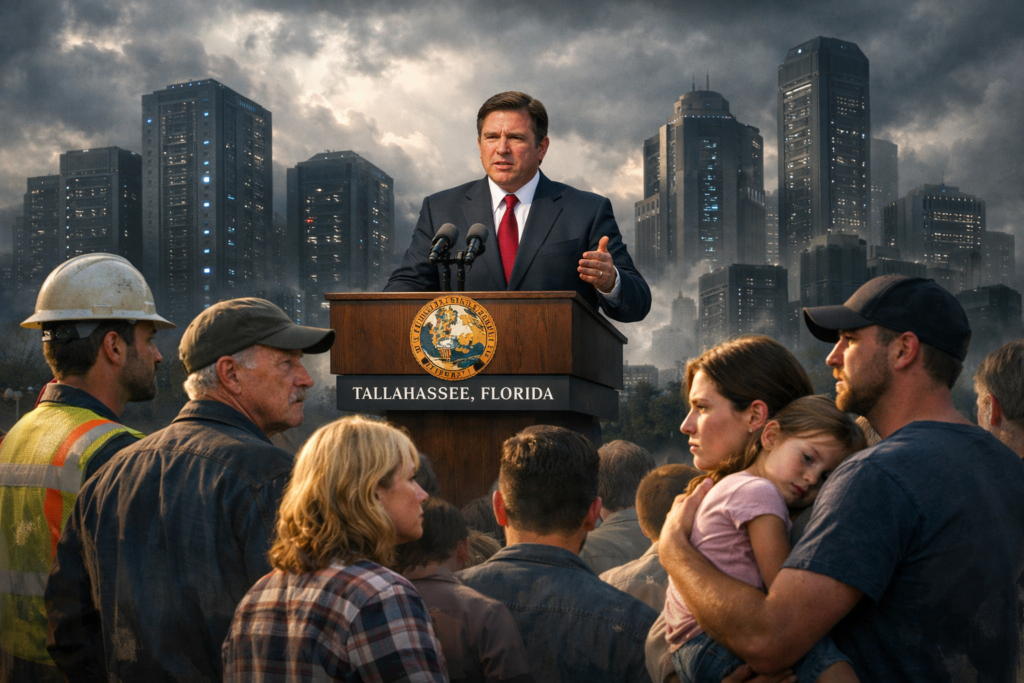
In the fast-moving world of American politics, where technology and election strategy increasingly collide, Florida Gov. Ron DeSantis is charting a bold course on artificial intelligence, staking out a position that sets him apart from many Republican peers and could shape the early contours of the 2028 Republican presidential race.
DeSantis, the term-limited governor of Florida, has emerged as one of the GOP’s most prominent AI skepticism voices among national politicians, pushing back against widespread enthusiasm for rapid AI expansion and the building of massive data centers. While many in his party, including Vice President JD Vance and Secretary of State Marco Rubio, have embraced AI’s potential to fuel economic growth, DeSantis has sounded a note of caution that blends policy concerns with political calculation.
At public events and in private discussions with allies, DeSantis worries aloud about how artificial intelligence and sprawling tech infrastructure might impact everyday Americans — especially when those impacts involve rising energy costs, job displacement, and community strain from giant data centers. “We don’t want to see them building a massive data center and then sending you the bill,” DeSantis said recently, arguing that these facilities can demand as much power as a city of half a million people, potentially driving up utility costs for households.
This skepticism is not emerging in a vacuum. Across the country, Americans are growing more wary of how AI affects daily life. Recent polls show a significant portion of voters believe artificial intelligence could bring more harm than good to the economy, and many communities actively oppose data center construction near residential areas — a trend that has cropped up in places from Virginia to the Midwest.
For DeSantis, this sentiment represents a political opening. In the wake of his 2024 Republican presidential campaign — which saw him challenge former President Donald Trump before ultimately suspending his bid — DeSantis has been searching for issues that could distinguish him from other GOP figures as the party turns its gaze to 2028. By embracing a more cautious approach to AI development, he hopes to appeal to voters who feel left behind by rapid technological change and uneasy about the promises of Silicon Valley.
His critics, however, argue this puts him at odds with the pro-innovation wing of the party. Vice President Vance, widely seen as a leading Republican contender for 2028 and known for his tech-friendly positions, has in the past spoken about AI’s potential to bolster the economy and expand opportunities. At a global AI summit last year, Vance emphasized that carefully balanced, pro-growth policies are needed so that AI can “make people more productive, more prosperous, and more free,” a message that resonates with voters who see technology as a future economic driver.
In contrast to Vance’s embrace of AI as an engine of innovation, DeSantis has leaned into AI regulatory debate in 2026 politics as a core concern, warning that uncontrolled expansion could burden working-class Americans long before its promised benefits are felt. Several aides close to the governor describe his stance as both principled and strategic: principled because he believes AI should be subject to stricter oversight; strategic because it gives him a distinct policy lane in a crowded Republican field.
The divide between DeSantis and other top Republican figures highlights a broader tension within the GOP about technology policy. While the Trump administration has shown support for AI developers and pro-growth frameworks, DeSantis has advocated for state-level regulations that would give local communities more say over how and where AI infrastructure grows. This includes efforts in the Florida Legislature to consider rules governing AI and the energy demands of data centers — bills that have faced pushback from industry advocates and federal allies but reflect grassroots concerns about the local impact of technology.
That tension has even spilled over into disputes with the administration itself. Some policymakers in Washington argue that a patchwork of state regulations could fragment the national approach to AI, while DeSantis insists that local voices deserve a seat at the table. This debate mirrors a national conversation about AI governance and worker protections that has captured the attention of voters across partisan lines.
As DeSantis continues to sharpen his message, he frames his AI skepticism not just as opposition to technology but as advocacy for ordinary Americans. “There are some people who almost relish the idea that AI will replace human workers and control society. Count me out on that,” he says at public forums, tapping into a broader undercurrent of worry among voters who see artificial intelligence as a threat to jobs, privacy, and community stability.
If the governor decides to mount another run for national office, his position on AI could become one of his clearest policy identities, distinguishing him from potential rivals who have been more enthusiastic about the industry’s opportunities. It also taps into the growing phenomenon of AI’s political influence in American democracy, where technology policy has become a flashpoint in debates about jobs, economic fairness, and national security.
For now, the Republican Party is watching to see how this philosophical split plays out as speculation mounts over who will step forward for the 2028 presidential race. Vance remains a strong contender with tech-savvy messaging, Rubio holds sway among establishment conservatives, and DeSantis is betting that concern about AI’s unchecked rise can carve out a unique constituency of voters who feel unsettled by the pace of change.
But questions remain: Will AI skepticism resonate with enough voters to propel someone into a national nomination? Can concerns about data centers, job displacement, and energy costs translate into a coherent platform that appeals beyond Florida? And can DeSantis — who has been a master of political reinvention in the past — turn this issue into a defining thread of his next chapter on the national stage?
As the political calendar edges closer to 2028, artificial intelligence may well be not just a tech issue, but a central fault line in the evolving debate over America’s future direction.