Deadly Clashes in Pakistan After Protests Over U.S.–Israeli Strikes on Iran
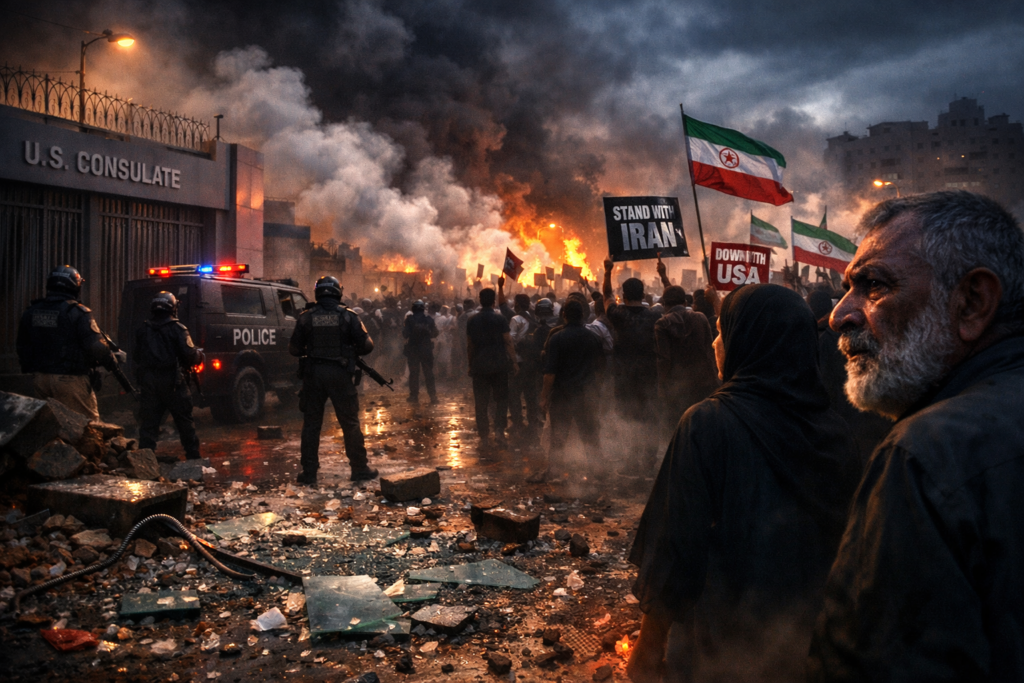
Across Pakistan on Sunday, a wave of protests turned violent and deadly after U.S. and Israeli airstrikes against Iran ignited a fierce backlash among demonstrators — especially in the Shiite-majority regions of the country. At least 22 people were killed and more than 120 wounded in clashes between protesters and security forces, marking one of the deadliest episodes of civil unrest in Pakistan in recent memory.
The unrest erupted as anger spread over the U.S.–Israeli military action that killed Iran’s Supreme Leader Ayatollah Ali Khamenei, a figure seen by many Pakistanis as a powerful voice for Shiite communities across the region. Major demonstrations flowed from Karachi in the south to Gilgit-Baltistan in the north, and even to the capital city of Islamabad, where chants against the United States and Israel echoed through crowded streets.
In Karachi, Pakistan’s largest city and economic hub, hundreds of protesters gathered outside the United States Consulate General early Sunday. Many attempted to forcefully enter the compound, smashing windows, burning a police post and confronting security personnel with shouts of anti-American and anti-Israeli slogans. Tensions escalated quickly when security forces opened fire and deployed tear gas to stop the crowd from breaching diplomatic grounds. By evening, police confirmed that at least 10 people had been killed there, with dozens more suffering serious injuries.
Those clashes in Karachi were mirrored in the northern Gilgit-Baltistan region, where confrontations between protesters and law enforcement left another 12 people dead and scores wounded. In that area, demonstrators also targeted government and international facilities, with local reports of a United Nations office being set on fire and other public buildings vandalized by the enraged crowds.
The violence was not confined to these two regions. In Islamabad, authorities attempted to control large crowds a short distance from the heavily fortified Diplomatic Enclave, where embassies and foreign missions sit. Police fired tear gas and used baton charges to disperse thousands of demonstrators who defied restrictions on public assembly. Clashes near the capital claimed the lives of at least two more people, with dozens injured amid the chaos.
Officials reported that over 120 people were wounded nationwide as security forces tried to contain the protests and block demonstrators from approaching sensitive foreign installations. Many of the injured were treated for gunshot wounds, lacerations from clashes, and breathing issues caused by tear gas. Hospitals in multiple cities were overwhelmed by the influx of victims throughout the day.
Pakistani authorities responded swiftly to the unrest. A three-day curfew was imposed in regions like Gilgit and Skardu, and troops were deployed in multiple urban centers to restore order and prevent further escalation. The government also restricted public gatherings in key areas and stepped up security around U.S. diplomatic facilities to forestall more violent confrontations.
President Asif Ali Zardari publicly expressed “profound sorrow” over Khamenei’s death and conveyed condolences to the Iranian people, even as he urged citizens to protest peacefully and avoid unlawful conduct. Interior Minister Mohsin Naqvi also appealed for calm, asking citizens to channel their grievances through lawful, nonviolent means.
Yet, despite those official pleas, the wave of anger proved hard to contain. In the northern city of Peshawar, reports surfaced of police firing tear gas at protesters who had gathered near the U.S. Consulate, drawing chants and slogans in solidarity with Iran. Other urban centers, including Multan and Lahore, witnessed smaller but emotionally charged rallies as crowds demanded justice and condemned Western actions.
Experts say the scale and intensity of the protests reflect underlying friction in Pakistan’s political and religious landscape, where tensions often rise quickly in response to events in the broader Middle East. Millions of Pakistanis, especially within the Shiite Muslim community — one of the largest in the world — feel a deep cultural and religious kinship with Iran, and the killing of its supreme leader reverberated as a deeply personal affront.
International diplomatic missions in Pakistan responded cautiously. The U.S. Embassy in Islamabad issued safety advisories urging American citizens to avoid crowded demonstrations and remain alert amid the ongoing unrest. Several consulates, including those in Karachi and Lahore, temporarily suspended public services as the situation deteriorated.
Beyond Pakistan’s borders, the international response was mixed. Some governments called for restraint and urged all parties to de-escalate tensions, warning that violence could spread beyond national boundaries. Meanwhile, in countries like Iraq, smaller protests also broke out near the U.S. Embassy in Baghdad, where security forces used tear gas to disperse crowds chanting anti-American slogans.
For many in Pakistan, what began as an expression of grief and solidarity quickly transformed into a full-blown crisis that underscored deep divisions and simmering frustrations. Witnesses in Karachi described ambulances weaving through smoke and chaos, while family members searched for loved ones amid wailing sirens and frantic crowds. Local residents talked about the fear that grips ordinary citizens when days of mourning turn into dangerous confrontations with state forces.
As investigations into the deaths and injuries continue, Pakistani authorities face the delicate task of balancing security with citizens’ constitutional right to protest. Questions remain about how the government will address the anger that has erupted nationwide and whether more violent clashes could occur in the days ahead — particularly as regional tensions over Iran’s future remain unresolved and volatile.