Chuck Schumer Introduces Resolution to Force DOJ Full Release of Epstein Files After Partial Redacted Document Dump
WASHINGTON, D.C. — Senate Minority Leader Chuck Schumer on Monday introduced a resolution aimed at compelling the Justice Department to fully release all documents related to convicted sex offender Jeffrey Epstein, after the department’s partial and heavily redacted disclosure drew widespread criticism for failing to meet the deadline mandated by last month’s law.
Schumer’s resolution, if adopted by the Senate, would authorize lawmakers to pursue legal action against the Department of Justice (DOJ) to enforce compliance with the Epstein Files Transparency Act, a bipartisan law signed by President Donald Trump that required the full disclosure of unclassified records tied to Epstein, his associates, and related investigations.
“This law is crystal clear: all unclassified Epstein files must be released so the American people can see the full truth,” Schumer said in a statement. “Instead of transparency, the Justice Department released only a fraction of the documents and slathered massive sections with black ink. That is a blatant disregard for both the letter and the spirit of the law.”

Background: Law Requires Full Epstein Files Release
In November, Congress passed the Epstein Files Transparency Act nearly unanimously, directing the DOJ to publish “all unclassified records, documents, communications and investigative materials” related to Epstein, his late associate Ghislaine Maxwell and their network. The law gave the Department of Justice 30 days to complete the task.
However, when the Dec. 19 deadline arrived, the DOJ released a substantial trove of files — including documents and photos — with significant redactions and omissions. Some entire pages were blacked out, and lawmakers and survivors of abuse expressed outrage over the heavy censorship and slow rollout of materials.
Deputy Attorney General Todd Blanche defended the department’s approach, saying the agency was working to protect the identities of survivors and carefully review records before release. But critics argue that the partial disclosure violates both the legal deadline and the law’s intent to ensure full public transparency.
Schumer Pushes Legal Action Against DOJ
Schumer’s resolution directs the Senate to consider filing or joining a lawsuit to force the DOJ to produce the complete set of unclassified Epstein files. The resolution is seen as a formal escalation of the transparency fight and a response to what many lawmakers describe as an unfolding cover-up of critical evidence.
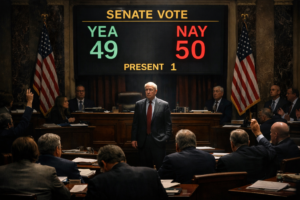
While the Senate is currently in recess until early January, Schumer has said he plans to push for a vote when lawmakers return. Even if the measure faces political hurdles — including limited support from some Senate colleagues — the resolution serves to heighten public attention on the issue.
Supporters of the full release include lawmakers who helped pass the transparency act, such as Representatives Ro Khanna and Thomas Massie, who also called for stronger enforcement and possible contempt actions against officials if noncompliance continues.
Criticism and Calls for Transparency
Survivor advocates and some members of Congress have echoed Schumer’s frustration, saying that the redacted files fail to provide meaningful insight into Epstein’s network, financial records, flight logs or potential connections to other high-profile individuals. Many have demanded detailed explanations from DOJ officials about why certain materials remain withheld.
Some lawmakers have even discussed additional accountability measures, including impeachment or fines for officials responsible for failing to comply with the law, though experts caution those routes present complex legal and political challenges.
Next Steps and What It Means
The resolution introduced by Schumer marks the newest chapter in a contentious battle over how much of the Epstein archive should be made public and how aggressively Congress can enforce transparency laws against the Justice Department. If successful, supporters of the measure say it could set a precedent for congressional authority to compel federal agencies to comply with disclosure statutes.
As lawmakers prepare to return from recess in early January, the political and legal momentum around this fight is expected to intensify, with hearings, debates and potential litigation shaping the next phase of the Epstein files controversy.