China Becomes Big Winner After U.S. Supreme Court Strikes Down Trump’s Tariffs
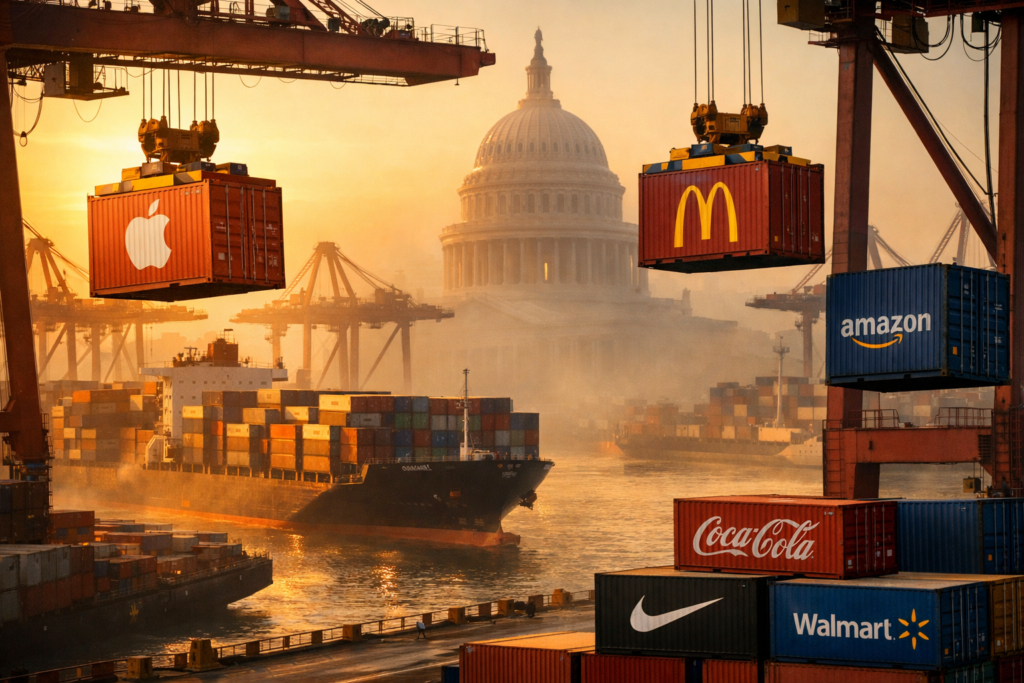
A major legal decision out of the U.S. Supreme Court has dramatically reshaped the global trade landscape, effectively undercutting one of former President Donald Trump’s flagship economic policies and elevating China to an unexpected position of advantage in world markets. The court’s ruling against the legality of sweeping tariffs has sparked a cascade of reactions from governments, businesses and investors, making 2026 a consequential year for U.S.–China trade relations and global supply chains.
At the heart of the controversy was Trump’s use of the International Emergency Economic Powers Act (IEEPA) to impose broad tariffs on imported goods from nearly every country — a move meant to exert leverage in economic disputes and address the U.S. trade deficit. The court, however, found that IEEPA did not give the executive branch the authority to enact such sweeping measures unilaterally, effectively striking down those tariffs and sending shockwaves through global commerce.
Almost overnight, the legal foundation for levies that had reached as high as 20 percent against Chinese exports collapsed. In its place, Trump quickly announced a new temporary tariff under Section 122 of the Trade Act of 1974, initially set at 10 percent and swiftly raised to 15 percent on all imported goods. But even this stopgap measure does not fully replicate the breadth or intensity of the duties that were just invalidated.
For Beijing, the ruling is being interpreted as a diplomatic and economic setback for Washington — and a chance to recalibrate trade ties. China’s Commerce Ministry said it was conducting a “full assessment” of the decision and reiterated its longstanding position that unilateral tariffs harm both sides and should be lifted. Chinese officials emphasized that cooperation, not confrontation, was the best way forward in U.S.–China economic relations.
Economists and trade strategists quickly parsed the implications. With the most extreme tariffs thrown out, effective duties on Chinese imports to the United States have dropped significantly from their peak levels, narrowing the cost gap between Chinese goods and those from other exporting nations. According to recent analysis, the average effective tariff rate on Chinese products could fall to levels not seen since before the “Liberation Day” tariff escalations began last year — a dramatic tailwind for Chinese exporters.
That shift is crucial because Trump’s original tariff strategy had aimed to shield U.S. industries and reduce the trade deficit by making foreign imports more expensive. When tariffs soared — at times exceeding 100 percent on certain categories under emergency powers — China and other trading partners retaliated in kind, imposing levies on U.S. goods and complicating export markets for American producers.
Now, with those tariffs voided, analysts say Beijing’s exporters are likely to benefit in the short term, boosting shipments to the United States at more competitive prices. Some economists describe China as the “big winner” from the tariff reversal, noting that its manufacturing supply chains have remained resilient and diversified even during periods of heavy duties.
China isn’t alone. India, Brazil and other nations that had borne high tariffs under Trump’s emergency authority are also seeing relief. With the court ruling, countries that were hardest hit by U.S. tariff policy are suddenly in a stronger position to expand exports to American markets.
That doesn’t mean all tariffs have disappeared. Many duties imposed under separate U.S. trade laws remain in place — including tariffs imposed under Section 301 to counter unfair trade practices, and Section 232 on national security grounds. These targeted levies on products like steel, aluminum, and certain technology goods continue to shape the global market.
Still, the legal reset has introduced uncertainty into what was already a fraught economic relationship. Global markets reacted with caution following the news, reflecting concerns that the United States and China — the world’s two largest economies — could see increased strain or renewed conflict even as tariff pressure eases. Some investors fear that Washington might shift toward other tools, including trade investigations and national security tariffs, to maintain leverage without violating judicial constraints.
Geopolitical tensions also loom large. China has warned that it may respond if the United States pursues tariffs through alternative legal mechanisms, raising the prospect of fresh rounds of cross-border duties. At the same time, both sides are preparing for high-level talks later this spring, with President Trump scheduled to visit Beijing — a trip that could redefine the next chapter in U.S.–China trade diplomacy.
For American businesses and consumers, the net effects are mixed. Import-heavy companies that can source parts and finished goods from abroad at lower effective tariffs may see cost relief, potentially reducing prices for consumers. On the other hand, U.S. manufacturers facing foreign competition without the cushion of steep duties might find themselves navigating a more crowded and competitive marketplace.
Policymakers in Washington now face a complex calculus: how to uphold legal norms, protect strategic industries, and manage political expectations all at once. The Supreme Court’s decision underscored that while the White House can pursue trade policy with vigor, it cannot do so without clear statutory authority from Congress — a reminder of the constitutional balance of power in economic policymaking.
As U.S.–China relations stand at a crossroads, the ruling serves as a watershed moment — one that could reset how trade disputes are fought, how global supply chains are structured, and how both nations balance economic interests with broader diplomatic priorities. For China, it may indeed feel like a rare win in a long and contentious trade battle — but the ultimate direction of the relationship remains uncertain as negotiations and political agendas continue to evolve.