Carbon Monoxide Leak Triggers Hazmat Emergency in Northeast Philadelphia, Forcing Evacuations and Urgent Response
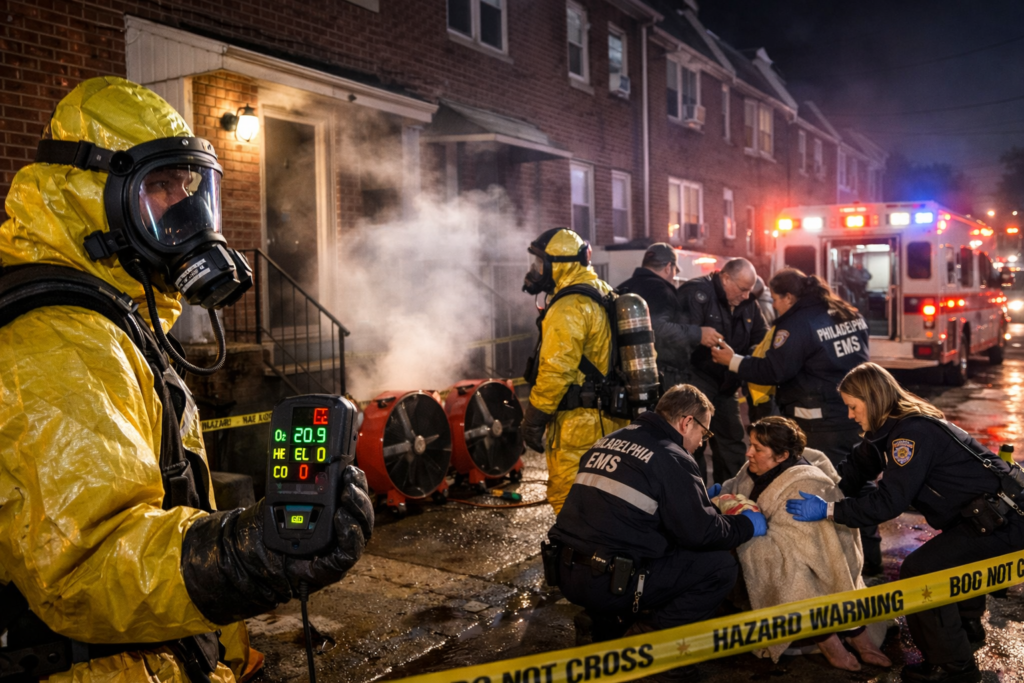
A dangerous carbon monoxide leak sparked a large emergency response in Philadelphia after authorities discovered hazardous gas levels inside a building in the city’s Northeast section. Firefighters, hazardous materials specialists, and emergency crews quickly rushed to the scene to secure the area and protect residents from exposure to the invisible but potentially deadly gas.
The incident unfolded during the morning hours in a busy neighborhood in Northeast Philadelphia, where emergency dispatchers received reports of a possible gas leak and people experiencing symptoms consistent with carbon monoxide exposure.
Within minutes, units from the Philadelphia Fire Department arrived on site and began assessing the situation.
What they discovered prompted an immediate escalation of the emergency response.
Dangerous Gas Detected Inside Building
Carbon monoxide detectors used by firefighters began registering elevated levels of the toxic gas inside the structure. Because carbon monoxide is colorless and odorless, it can accumulate without warning, posing serious health risks to anyone nearby.
Emergency crews quickly identified the situation as a potential hazardous materials incident.
Authorities immediately evacuated occupants from the building and secured the surrounding area to prevent additional exposure. Firefighters wearing specialized protective gear entered the structure to locate the source of the leak and measure gas levels throughout the building.
Carbon monoxide poisoning can occur quickly when the gas accumulates in enclosed spaces. Even moderate exposure can cause symptoms such as dizziness, headaches, confusion, nausea, and shortness of breath.
Higher concentrations can become life-threatening.
Because of the danger, emergency officials treated the incident with extreme caution.
Hazmat Teams Mobilized
As the situation developed, a specialized hazardous materials team was called to the scene to assist with detection and mitigation efforts.
Hazmat crews conducted detailed air monitoring inside the building and surrounding areas to determine how far the gas had spread.
Emergency responders also set up safety perimeters around the site while investigators worked to identify the origin of the leak.
Preliminary assessments suggested that the carbon monoxide may have been linked to a mechanical system or heating-related equipment inside the structure, though officials said a full investigation would be required to confirm the exact cause.
Utilities and building systems were shut down as a precaution while crews worked to ventilate the space.
Large industrial fans were brought in to help clear the gas and restore safe air quality.
Medical Evaluations for Potential Exposure
Several people who were inside the building during the early stages of the incident were evaluated by emergency medical teams.
Paramedics from Philadelphia Fire Department and local medical services conducted on-site health assessments to determine whether anyone had been exposed to dangerous levels of carbon monoxide.
Individuals reporting symptoms were treated at the scene and monitored carefully.
In incidents involving carbon monoxide, medical professionals often use oxygen therapy to help remove the gas from a patient’s bloodstream.
Fortunately, early reports indicated that no life-threatening injuries had occurred, though officials continued monitoring those affected as a precaution.
Emergency responders emphasized that quick evacuation and detection likely prevented a more serious outcome.
The Hidden Danger of Carbon Monoxide
Carbon monoxide is often referred to as the “silent killer” because it cannot be seen or smelled.
The gas is produced when fuel-burning devices—such as furnaces, water heaters, stoves, generators, or vehicles—do not burn fuel completely.
If these systems malfunction or operate in poorly ventilated areas, carbon monoxide can accumulate indoors.
According to public health experts, exposure to the gas can rapidly become dangerous, especially in enclosed spaces.
Symptoms may initially resemble flu-like illness, which sometimes delays recognition of the danger.
Authorities regularly stress the importance of functioning carbon monoxide detectors in homes and commercial buildings.
These devices can provide early warnings before gas levels become dangerous.
Community Impact and Response
The hazmat incident caused temporary disruptions in the surrounding neighborhood as emergency vehicles and safety crews filled the streets near the affected building.
Residents and nearby workers were advised to avoid the immediate area while emergency crews completed their operations.
Authorities worked quickly to reassure the public that the situation was under control.
Ventilation efforts continued for several hours until monitoring equipment confirmed that carbon monoxide levels had dropped to safe limits.
Officials later allowed residents and workers to reenter the building once safety checks were completed.
Investigation Into the Cause
Investigators are now examining the mechanical systems inside the structure to determine what caused the gas leak.
Possible sources could include faulty heating equipment, malfunctioning appliances, or ventilation issues.
City inspectors may also review maintenance records and safety systems inside the building as part of the investigation.
Identifying the cause will help ensure that similar incidents can be prevented in the future.
Officials say building safety checks and proper maintenance of fuel-burning equipment are critical in preventing carbon monoxide hazards.
A Reminder About Safety
While the emergency in Northeast Philadelphia ended without major injuries, officials say it serves as an important reminder about the dangers of carbon monoxide exposure.
Public safety experts recommend installing carbon monoxide detectors on every level of homes and near sleeping areas.
Regular maintenance of heating systems and appliances can also help reduce the risk of dangerous gas leaks.
For many residents in the area, the swift response from emergency crews provided reassurance that the situation was handled quickly and effectively.
Firefighters and hazmat teams remained on scene until all safety checks were complete, ensuring that the building and surrounding environment were safe once again.
Though the incident ended without tragedy, it highlighted how quickly an invisible hazard can turn into a major emergency—and how critical rapid response and public awareness can be in preventing disaster.