California Drops Lawsuit Against Trump Over $4 Billion High-Speed Rail Funding Cut
WASHINGTON — California has abandoned its federal lawsuit challenging the Trump administration’s decision to rescind more than $4 billion in federal funding for the state’s long-delayed high-speed rail project, officials said Friday, signaling a shift in strategy for the controversial bullet train initiative.
The California High-Speed Rail Authority originally filed the lawsuit in July, contesting a federal decision to revoke the funding — which represented roughly 18 % of the overall project budget — after concluding that the state had failed to meet key milestones and compliance requirements. But authorities now say legal action is no longer a productive path forward.
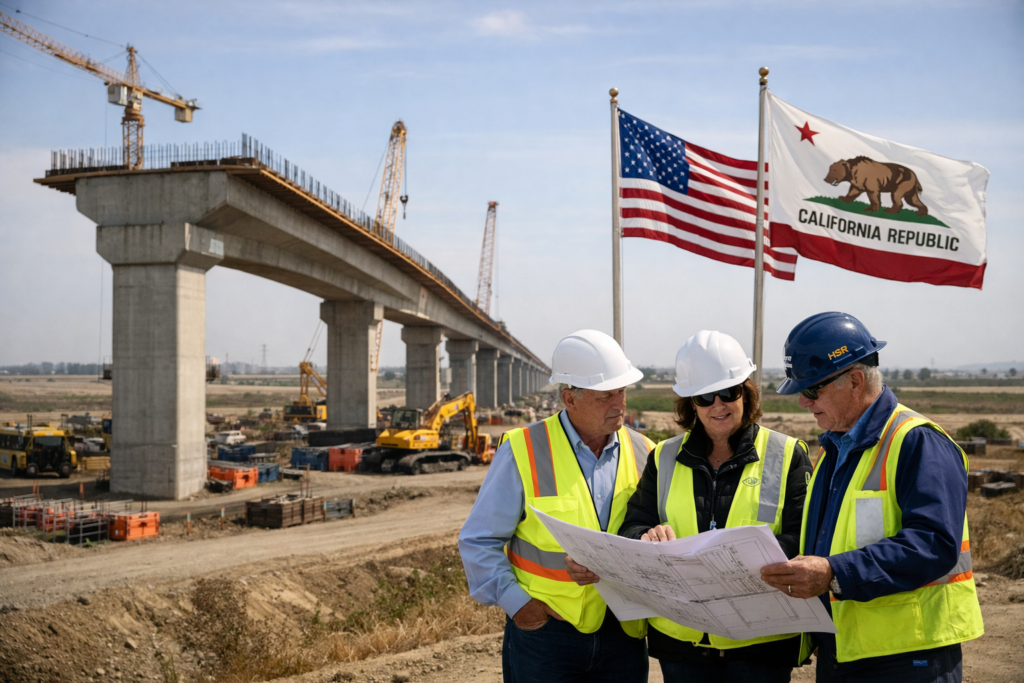
In a statement, state rail officials said that withdrawing the lawsuit reflects their conclusion that the federal government is not a reliable partner on the project, and that litigation would be both costly and unlikely to restore the lost grant money. Instead, the authority said it has begun pursuing private investment and alternative funding sources to continue construction on the rail system linking Los Angeles and San Francisco.
The high-speed rail project — first approved by voters in 2008 — has been plagued for years by major delays, skyrocketing costs and logistical setbacks. What was once envisioned as a roughly $33 billion transportation corridor has ballooned to an estimated $89 billion to $128 billion build-out, with limited operations now projected to begin by 2033, far later than initial forecasts.
In 2025, the U.S. Transportation Department and the Federal Railroad Administration cancelled the roughly $4 billion in federal grants, arguing the California High-Speed Rail Authority missed strategic deadlines and lacked a viable plan to complete key segments of the project. The authority strongly disputed that assessment but ultimately determined that continued legal battles would distract from construction.
California Governor Gavin Newsom, a Democrat who endorsed the bullet train as a cornerstone of the state’s environmental and transit policies, called the federal funding cut a political stunt earlier in the dispute. But state officials now appear focused on using funds secured by recent state legislation — including $1 billion a year from cap-and-trade revenue through 2045 — to support the effort alongside new capital partners.
With the lawsuit dismissed, the rail authority plans to seek private investment partners by mid-2026, aiming to attract global rail developers and infrastructure funding groups to help finance and build the nation’s most ambitious passenger rail network.
Despite the setback of losing federal support, California officials emphasize that the project’s momentum and long-term goals remain intact, with state resources and private capital now seen as the way forward for America’s first real high-speed passenger rail line.