Biden Takes Aim at Trump in South Carolina, Capitalizing on Faltering Favorability
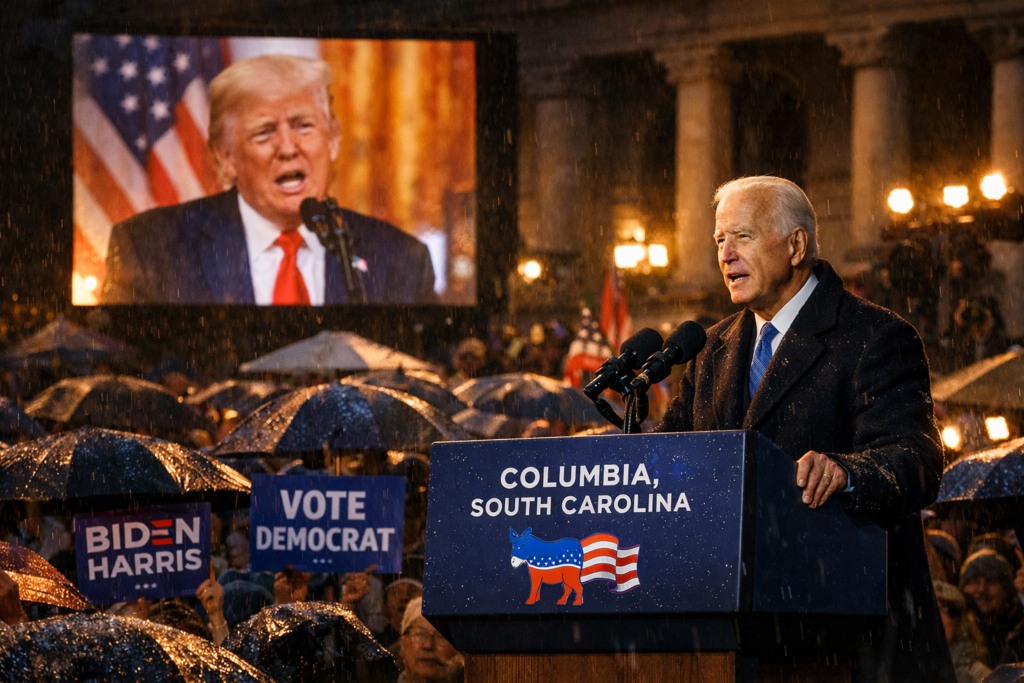
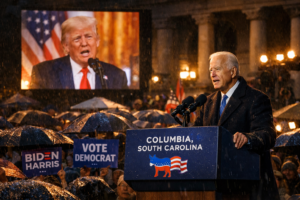
COLUMBIA, South Carolina — On a rainy Friday night in this historic Southern state, President Joe Biden delivered a combative speech aimed squarely at President Donald Trump — tapping into what his allies see as rising concerns about Trump’s declining favorability and seeking to sharpen the contrast between the two leaders as political tensions continue to mount.
Standing before a large crowd of Democratic Party loyalists and donors — many of whom helped rescue his political career six years ago — Biden lit into Trump’s recent State of the Union address and broader record with a level of sharpness rarely seen in his post-presidency remarks. His appearance in South Carolina was a rare public return to the spotlight, and he used the moment to wrap together criticism of Trump’s leadership style, policy priorities, and personal conduct.
Biden began the speech with a bit of political levity — even poking fun at the length of Trump’s nearly two-hour address — but quickly shifted to a more pointed critique. “Is he still talking?” he asked to laughter, before pivoting to a broader narrative about Trump’s leadership choices.
The former president lamented what he sees as Trump’s efforts to reshape American institutions, accuse him of trying to “steal the election” by encouraging tactics critics fear will suppress voter participation in the upcoming midterms, and claimed Trump’s priorities are focused more on political survival than on substantive governance. Biden even took direct aim at what he called Trump’s “obsession with Barack Obama,” a jab meant to highlight what Biden’s team believes is Trump’s fixation on past administrations rather than present challenges.
At times, Biden’s tone took on a heavier edge. He invoked the words “dark days” as he spoke about a recent immigration incident in Minnesota that resulted in the deaths of two U.S. citizens and criticized Trump for failing to acknowledge the victims during the State of the Union. He spoke passionately about leadership and empathy, suggesting that a true leader should not shy away from the human cost of policy decisions.
Beyond policy critique, Biden sought to reframe the broader political moment, arguing that Trump’s growing attacks on institutions — from elections to educational curriculums — indicate a president more interested in consolidating power than in serving all Americans. In South Carolina, a state with deep historical ties to Democratic involvement in presidential politics, that message found a receptive audience.
Longtime Democratic power broker Rep. Jim Clyburn, who introduced Biden to the cheering crowd, framed the evening as more than a typical political gathering. “South Carolina did what South Carolina does best,” Clyburn said, referencing the state’s role in boosting Biden’s 2020 presidential bid. The atmosphere was part celebration, part rallying cry — a reminder of Biden’s past victories and a wallop at Trump’s present missteps.
Critics of Trump have seized on recent polling data showing that his public approval has remained shaky among independent voters and across key demographics. Polls leading up to the speech revealed widespread dissatisfaction with his leadership on issues like the economy and immigration, even as his core supporters remain loyal. A Washington Post-ABC News-Ipsos poll released just days before Biden’s remarks found that a majority of Americans disapproved of Trump’s performance, with more than half of independents and Democrats expressing discontent.
Biden’s speech was also shaped by his own personal narrative. Attendees were reminded of his return to this state — crucial in his 2020 campaign — and his recent health challenges, including a public battle with prostate cancer. Biden wove those experiences into his address, arguing that leadership requires resilience in the face of real struggles, not just political posturing.
South Carolina’s position as a bellwether for national political sentiment cannot be overstated. The state’s early primary victory helped establish Biden’s viability as a candidate in 2020, and its diverse electorate made it a key battleground in that year’s Democratic nomination process. This weekend’s event — both a political tribute and a challenge to Trump — underscored how both parties continue to view the Palmetto State as central to future electoral strategy.
Trump’s recent State of the Union address, delivered earlier in the week, was an effort to consolidate support by emphasizing economic achievements such as job growth and regulatory rollbacks, and many Republicans rallied behind his optimistic tone. However, opponents say that the glowing portrayal contrasted starkly with many Americans’ lived experiences — especially those struggling with cost of living pressures and healthcare challenges. Polls have shown persistent concerns among voters about inflation and the economy, even as Trump touts gains.
Biden, tapping into that sentiment, argued that leadership must be measured not by how long a speech runs or how loud the applause is, but by whether policy decisions improve everyday life for working families. That message resonated with parts of the South Carolina crowd, many of whom have personal ties to Biden’s political history here.
As the 2028 election cycle begins to take shape and both men position themselves as symbols of competing visions for America, the contrast struck in Biden’s South Carolina speech reflects a broader national divide. On one side, Trump remains popular among a core Republican base, but grapples with substantial disapproval from independents and swing voters. On the other, Biden — though no longer in office — continues to wield influence among Democrats and mobilize support by challenging his successor’s record and rhetoric.
Whether this combative speech will shift public sentiment in measurable ways remains an open question. But what is clear is that both leaders understand the political stakes: America remains deeply polarized, and messaging that resonates emotionally with voters on issues like leadership, trust, and lived experience has become central to the ongoing battle for public opinion.