Belgium Summons U.S. Ambassador After Heated Dispute Over Antisemitism Remarks and Religious Circumcision Case
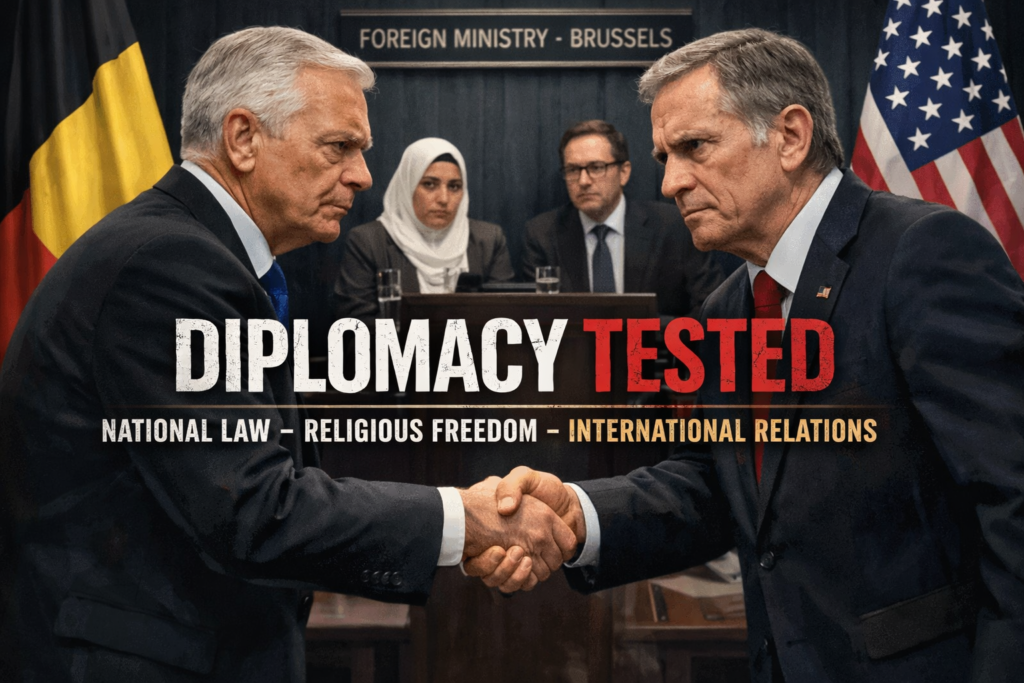
BRUSSELS — A rare diplomatic confrontation has emerged between longtime allies Belgium and the United States after the U.S. ambassador to Belgium publicly accused the Belgian government of antisemitism over its handling of a sensitive legal matter involving religious circumcision. The sharp rebuke — delivered in a social media post — prompted the Belgian Ministry of Foreign Affairs to summon the U.S. ambassador for an official meeting, underscoring the strain between supporting religious freedoms and respecting another nation’s legal process.
The dispute centers on a judicial investigation in the city of Antwerp into three Jewish religious circumcisers, known as mohels, who are accused of performing circumcisions without certified medical training — a charge that has put Belgium’s legal obligations to public health and religious freedom into fraught balance.
What Sparked the Diplomatic Row?
At the heart of the controversy is a series of public posts on the social platform X (formerly Twitter) by U.S. Ambassador Bill White, in which he called on Belgian authorities to end what he described as the “ridiculous and antisemitic prosecution” of the three mohels. White’s remarks were pointed directly at Belgium’s Minister of Health, Frank Vandenbroucke, accusing him of failing to secure protections for Jewish religious practice and of obstructing the rights of a minority community.
White’s post referenced the ongoing investigation into circumcision practices, urging Belgium to adopt legal provisions explicitly allowing Jewish clergy to carry out ritual circumcision without fear of prosecution — a call he framed as a defense of religious freedom and Jewish heritage.
But Belgium saw it differently.
Belgium’s Government Pushes Back
Belgian Foreign Minister Maxime Prévot quickly denounced the ambassador’s statements, calling them “false, offensive and unacceptable.” Prévot publicly stated that Belgium vehemently rejects antisemitism in any form and takes the fight against all hatred seriously — but he also reiterated that the accusations were grounded in misunderstanding and misrepresentation of Belgium’s legal system.
In a social media post, Prévot emphasized that Belgian law allows ritual circumcision only if performed by a qualified medical professional under strict health and safety standards, and stressed that the case in question is part of a judicial investigation, not discriminatory policy. He underscored that accusations of antisemitism amounted to “dangerous disinformation” that could undermine genuine efforts to combat hatred and protect minorities.
Prévot also highlighted that diplomats must respect Belgium’s institutions, judiciary and sovereign legal processes, and said that personal criticisms of Belgian officials over an ongoing court matter violated basic diplomatic norms.
The Case Behind the Controversy
The legal dispute began last year after Belgian police conducted raids on the homes of three mohels in Antwerp, as part of an investigation into whether the religious ceremony of bris milah — Jewish ritual circumcision — was being performed without appropriate medical oversight. Belgium has no specific law governing circumcision itself, but its health regulations require that surgical procedures be executed by licensed medical professionals — a detail that triggered the probe.
Supporters of the mohels have maintained that ritual circumcision is a deeply rooted practice in Jewish religious life, passed down through generations of trained practitioners. They argue that the ability to perform bris milah is essential for religious identity and community continuity.
Critics of the prosecution, including various Jewish advocacy groups and religious leaders, say the investigation reflects a broader challenge faced by Jewish communities across Europe, where traditional practices sometimes clash with modern legal requirements. White’s intervention was applauded by some Jewish organizations as a defense of religious liberty and minority rights.
A Balancing Act: Religion, Law and Sovereignty
Belgium’s response focused on the rule of law and judicial independence, describing legal oversight of medical procedures as a public safety necessity rather than an attack on faith. Officials have stressed that any criminal charges or judicial decisions must be made strictly on legal grounds and through Belgium’s court system.
Conner Rousseau, leader of the Flemish socialist party Vooruit, also criticized the U.S. ambassador’s statements, saying Belgium’s courts must operate independently and free from external pressure. He said foreign interference undermines trust in national institutions and the legal rights of all Belgian citizens, regardless of religious affiliation.
Belgium has been clear that its government is open to dialogue, but that diplomatic norms prohibit public criticism that appears to influence judicial proceedings or stereotype an entire nation.
Reactions from Jewish Communities
International Jewish organizations and local Belgian Jewish leaders have reacted strongly on both sides of the debate. Some communities welcomed the U.S. ambassador’s advocacy for religious freedoms and saw it as a necessary gesture in a climate where Jewish practices are increasingly scrutinized across parts of Europe.
Others, however, caution that framing the prosecution as antisemitic without full context complicates diplomatic relations and may fuel tension rather than foster understanding between Belgium’s Jewish citizens and authorities.
Jewish leaders have said they want Belgium to uphold freedom of religion while also respecting legal norms designed to protect children and public health, requiring a balanced discussion that neither dismisses tradition nor ignores legal safeguards.
Why This Matters for U.S.–Europe Relations
The diplomatic spat is unusual because Belgium and the United States share close historical ties — including joint NATO membership and cooperation on global security. Summoning an ambassador over public comments is a marked step that signals strain, even if temporary, in relations.
Experts say the incident highlights the complex interplay between diplomatic advocacy, domestic law and cultural sensitivities, especially when allegations of discrimination are part of the narrative. Countries must walk a fine line between supporting human rights broadly and respecting the sovereignty of a partner’s legal system.
This episode also reflects broader debates in Europe and North America about religious freedom, medical oversight and the role of foreign diplomats in domestic legal matters — themes that could shape discussions far beyond Belgium’s borders.