Belarus President Meets Kim Jong Un in Rare Visit, Signaling Deepening Global Alliances
In a move that is drawing significant international attention, Belarusian President Alexander Lukashenko has traveled to North Korea for a high-profile meeting with leader Kim Jong Un—an encounter that signals a potential shift in geopolitical alignments at a time of rising global tensions.
The visit, marked by formal ceremonies and tightly controlled imagery, highlights the growing ties between two nations that have long been isolated from much of the Western world. While official statements have emphasized cooperation and mutual respect, analysts say the meeting carries deeper implications for global security and diplomacy.
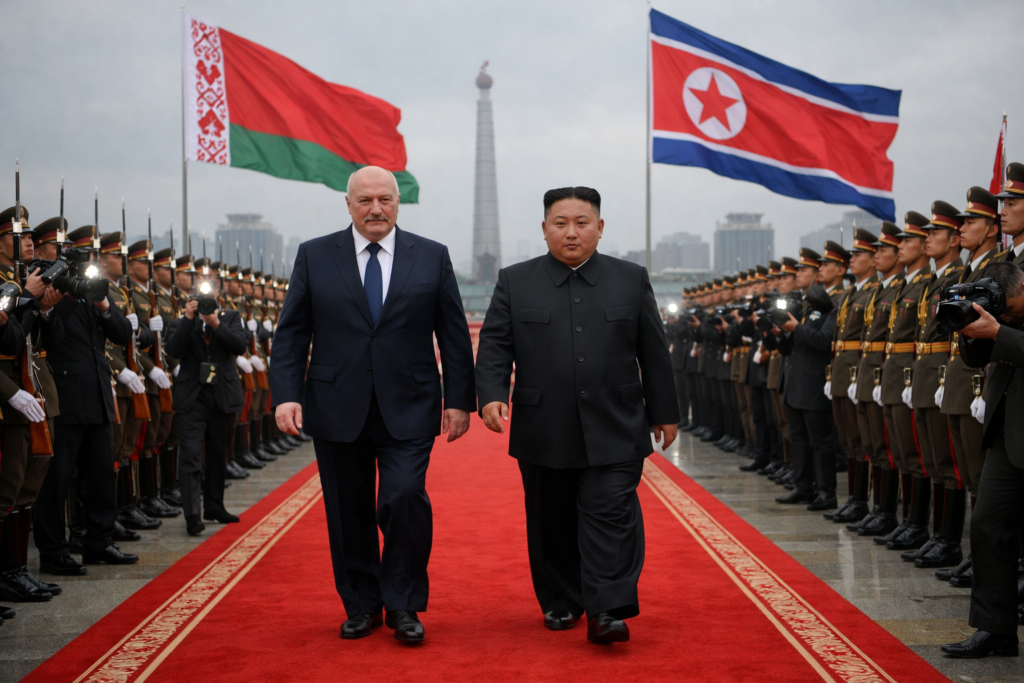
Lukashenko’s arrival in Pyongyang was accompanied by elaborate displays of military precision and symbolic unity. State media portrayed the visit as a reaffirmation of shared values and a commitment to strengthening bilateral relations. However, behind the pageantry lies a complex web of strategic interests.
Experts believe the meeting could revolve around economic cooperation, defense collaboration, and shared resistance to Western sanctions. Both Belarus and North Korea have faced significant economic and political pressure from the United States and its allies, making partnerships like this increasingly valuable.
The development comes amid growing geopolitical alliances between sanctioned countries, a trend that has been gaining momentum in recent years. As global power dynamics continue to evolve, nations facing isolation are seeking new partnerships to maintain stability and influence.
While details of the discussions remain limited, there is speculation that the leaders may explore avenues for trade, technology exchange, and possibly even military coordination. Such possibilities have raised concerns among Western policymakers, who are closely monitoring the situation.
The timing of the visit is particularly notable. It comes at a moment when tensions in multiple regions—from Eastern Europe to East Asia—are already heightened. Observers say that North Korea diplomatic relations with Belarus expanding could add another layer of complexity to an already fragile international landscape.
For Kim Jong Un, the meeting represents an opportunity to strengthen ties beyond his traditional allies. North Korea has historically relied on a small network of partners, but recent developments suggest a broader strategy aimed at diversifying its diplomatic relationships.
Lukashenko, on the other hand, appears to be seeking support and solidarity as Belarus navigates its own challenges. By engaging with North Korea, he may be signaling a willingness to align more closely with countries that share similar geopolitical positions.
The visit also underscores the role of symbolism in international diplomacy. The carefully choreographed events, including official receptions and public appearances, are designed to convey unity and strength. These images are likely intended not only for domestic audiences but also for the global community.
At the same time, the meeting has sparked discussions about international response to authoritarian leaders meeting. Critics argue that such engagements could embolden regimes that are already under scrutiny for their policies and actions. Supporters, however, suggest that dialogue—even among controversial leaders—can play a role in maintaining global stability.
Security analysts are particularly interested in any potential agreements that could emerge from the visit. While there has been no official confirmation of specific deals, the possibility of cooperation in areas such as defense technology or resource sharing cannot be ruled out.
The broader implications of the meeting extend beyond the two countries involved. As global power shifts and strategic alliances forming, events like this can influence how nations position themselves on the world stage. The ripple effects may be felt in diplomatic negotiations, economic policies, and security strategies.
For the United States and its allies, the visit serves as a reminder of the evolving nature of international relations. It highlights the need for a nuanced approach to diplomacy, one that takes into account the changing dynamics and emerging partnerships.
Public reaction to the meeting has been mixed. Some view it as a natural progression of global politics, while others see it as a concerning development that could exacerbate existing tensions. The lack of transparency surrounding the discussions has only fueled speculation.
Despite the uncertainty, one thing is clear: the meeting between Lukashenko and Kim Jong Un is more than just a diplomatic visit. It is a reflection of a world in transition, where traditional alliances are being reevaluated and new ones are being formed.
As the visit continues, attention will remain focused on any announcements or outcomes that could provide insight into the future direction of this partnership. For now, the images of the two leaders standing side by side serve as a powerful symbol of shifting global dynamics.
In the coming days, analysts and policymakers alike will be watching closely, seeking to understand what this meeting means for the broader geopolitical landscape—and what it could signal for the future of international relations.