Behind the Silence: Iran’s Brutal Crackdown on Protesters Leaves Thousands Dead and Families Grieving
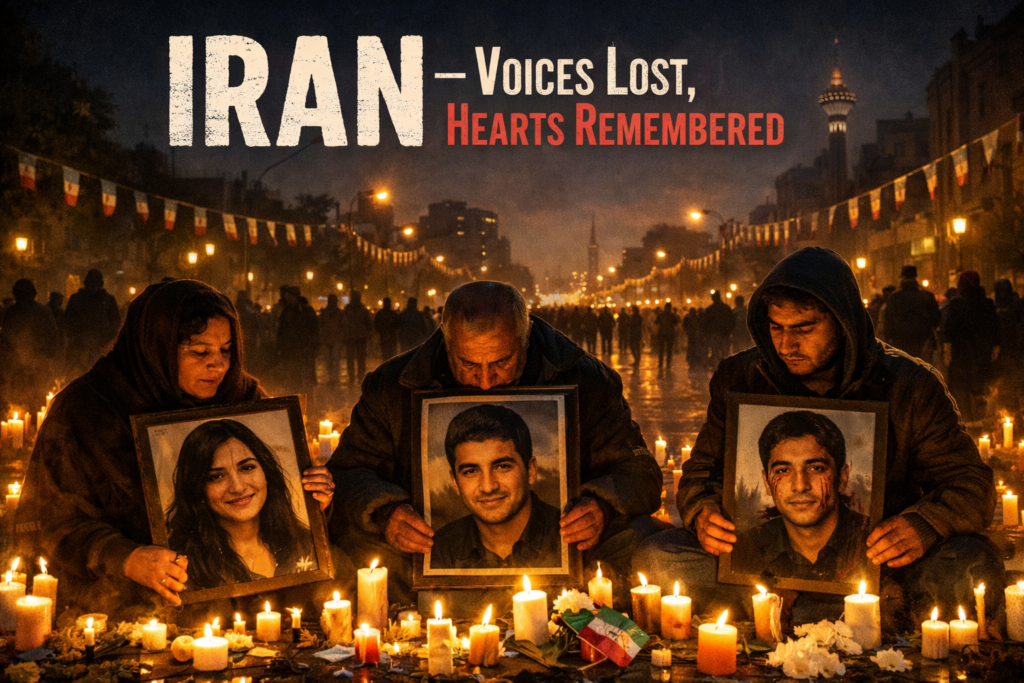
TEHRAN & DUBAI — In the closing weeks of 2025 and the first weeks of 2026, Iran erupted in what has become one of the most bloody and repressive crackdowns in its modern history — a wave of nationwide protests born of economic frustration that was met with overwhelming force by the Islamic Republic’s security apparatus. The resulting loss of life is staggering, leaving families in mourning, communities shattered, and the world watching with grief and disbelief.
Exact figures remain elusive due to widespread internet blackouts, severe restrictions on communications inside Iran and fierce information control by authorities. But multiple independent tracking groups and activist networks now estimate that more than 7,000 people have been killed in the Iranian government’s violent suppression of protests, with tens of thousands more arrested, injured, or missing — and the toll could be even higher.
From Economic Anger to National Outcry
The protests began in late December 2025 amid worsening economic hardship, rising inflation and mounting frustration with daily life under hardline rule. Frustration quickly morphed into defiance, with demonstrators across cities like Tehran, Rasht, Mashhad and Isfahan taking to the streets to demand change.
What started as economic anger soon took on deeper meaning. Young men and women, families and neighbors, poured into public squares and boulevards, chanting for rights, dignity and accountability. As the rallies swelled, security forces responded brutally. Amnesty International and other rights organizations have described the state response as among the deadliest in decades in Iran — possibly worse in scale than earlier crackdowns in 2009 or 2022.
How the Crackdown Unfolded
On January 8 and 9 alone, thousands of protesters were reportedly killed in mass violence when security forces opened fire, cleared streets and cracked down on demonstrations with military force. Activists and eyewitnesses in cities like Rasht said entire squares looked like scenes of battle, with bazaar shops torched, armored vehicles patrolling, and unarmed civilians gunned down in broad daylight.
One harrowing account shared with international media described the aftermath in Rasht’s main cemetery, where families, searching desperately for missing loved ones, encountered body after body dumped at a corner of the cemetery with little explanation or support.
Security forces used live ammunition, crowd-control weapons, mass arrests, and a nationwide internet shutdown that cut off communication with the outside world. Authorities blocked access to social media and global news services, making independent verification of events inside Iran extremely difficult.
Disputed Yet Devastating Death Toll
Iran’s own state media offered a formal count of around 3,117 deaths, a figure officials have said included civilians and security personnel. But rights groups and independent networks place the real toll much higher.
According to the U.S.-based Human Rights Activists News Agency, the number of confirmed deaths in the nationwide crackdown has risen to at least 7,002 people, including protesters, bystanders and security personnel — and this figure is expected to grow as more information slowly emerges.
Other estimates — including hospital and leaked counts — suggest that the true number could be a multiple of thousands beyond reported figures, with local officials and health workers telling outside media that in some cities alone death counts ran into the tens of thousands on the worst days of violence.
Human Tragedy Behind the Numbers
Behind every statistic is a human story. Parents mourn teenagers killed in street clashes. Children search for fathers who never came home. Siblings wait in corridors of hospitals for news that never comes. In a country where some families fear being watched or arrested for speaking out, the grief has been compounded by silence and isolation.
Reports from activists and families paint a chilling image: loved ones taken to hospitals only to vanish, corpses stripped and delivered with little explanation, and funerals threatened with arrest by authorities who fear any gathering might turn back into protest.
One protester’s relative, speaking through a proxy for safety reasons, described how she combed morgues and police stations for days in hopes of finding her son’s body — only to face bureaucratic walls and fear-filled corridors. The emotional toll is immeasurable.
International Alarm and Response
Global reaction has been intense. On January 23, 2026, the United Nations Human Rights Council adopted a resolution condemning the killings, demanding unrestricted internet access and an independent investigation into violations of basic rights.
Human rights observers, legal scholars, and diplomatic voices worldwide have called Iran’s crackdown a violation of international law, urging accountability and peaceful dialogue. However, the regime in Tehran has repeatedly blamed foreign interference and external forces for stoking unrest, while justifying its actions as necessary for “security and stability.”
Families, Fear and the Search for Justice
Inside Iran, fear and grief mingle daily. Many families are reluctant to speak out publicly, fearing arrest, disappearance, or worse. Children have lost parents. Workers have lost brothers and sisters. Entire neighborhoods appear hollowed by loss.
At the same time, eyewitnesses have shared videos and testimonials with international broadcasters that show streets empty under martial law, hospital corridors filled with injured protesters, and citizens standing vigil — quietly, defiantly — despite the risks.
One young activist told a reporter, voice trembling, that “we wanted a better future, but we were met with bullets instead of answers.” These words echo across war-torn neighborhoods, school courtyards and quiet living rooms where the Iranian diaspora mourns from afar.
What Comes Next
The crackdown has unquestionably reshaped Iranian society — and shaken the international community. As diplomacy churns around nuclear talks with the United States and regional powers, the human cost of repression has become impossible to ignore.
Many analysts fear that without genuine political dialogue, justice reform and accountability for state violence, the emotional wounds will deepen, feeding cycles of resentment and unrest. Families of the dead and detained say they will not quiet their calls for justice, even under threat of persecution.