Americans Shift Drinking Habits: Bar Spending Up While Liquor Store Purchases Fall
In a surprising twist to America’s drinking habits, new consumer spending patterns show U.S. drinkers are increasingly choosing social nights out at bars over stocking up at liquor stores — even as overall alcohol consumption continues to decline. This shift highlights deeper changes in U.S. alcohol spending trends among younger generations and reflects how lifestyle choices and experiences are reshaping where Americans put their money.
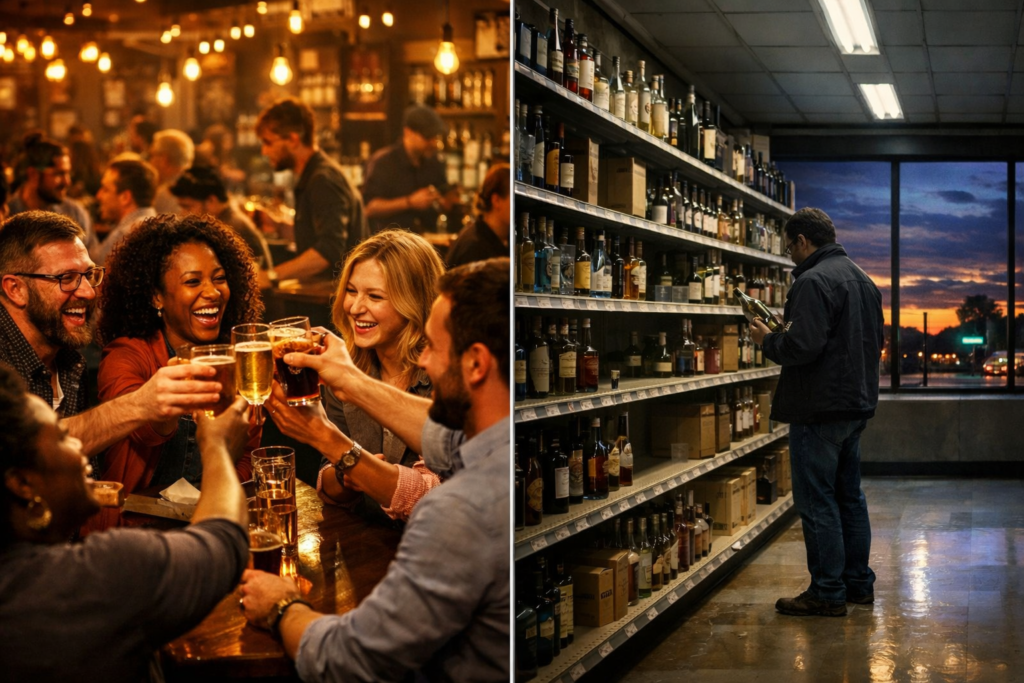
Recent bank card data reveals a clear divergence: spending at bars and drinking establishments has climbed in recent months, while purchases at liquor, wine and beer stores have steadily declined. According to the latest figures, spending at bars increased nearly 4% year-over-year, while liquor store sales have shrunk by about 5% in the same period. This pattern suggests that more Americans are opting to drink in social settings or are moderating their drinking overall — but choosing experiences over stocking up at home.
The reason for this change isn’t simply a matter of price. At bars, drinks typically cost significantly more than purchasing alcohol from a retailer. The increase in bar spending, even as at-home purchases fall, underscores a broader cultural shift toward socializing and communal experiences rather than casual drinking alone.
Economists point to several factors driving this trend. One major influence is generational change. Younger Americans — especially Gen Z and millennials — are drinking less than previous generations and are more mindful about health and wellness. Surveys show a significant drop in binge drinking among adults aged 21 to 34 over the past decade. Younger drinkers are also more likely to prioritize fitness, travel and activities such as gym memberships, golf, or other social hobbies over routine alcohol consumption at home.
This cultural shift is visible in places where nightlife and social gatherings are central to local economies. Urban bars, breweries and gastropubs in cities like Austin, Denver and Boston report steadier foot traffic and stronger drink sales even as retail alcohol outlets report fewer purchases. Some bartenders describe evenings full of patrons ordering drinks, food and even non-alcoholic cocktails, suggesting that the bar experience itself — not just drinking — is part of what people are seeking.
In contrast, liquor stores nationwide are feeling the impact of declining at-home alcohol spending. The data showing a multi-year decline in retail alcohol purchases reflects not just seasonal trends, but fundamental changes in how Americans view drinking. Notably, spending on beer, wine and spirits at home has fallen by about 15% from 2019 to 2024, even as general inflation rose sharply during that period.
This doesn’t necessarily mean Americans have stopped drinking entirely. Rather, many are drinking less frequently and are more selective in their choices. Some young adults say they enjoy the social aspect of a night out with friends or colleagues but are less inclined to keep a fully stocked liquor cabinet at home. Others report that being active and maintaining their health has become a higher priority than regular alcohol consumption.
The trend toward moderation has also fueled interest in non-alcoholic drinks — a rapidly expanding category that includes mocktails, alcohol-free beers and spirits, and functional beverages designed for wellness-minded consumers. Bars and restaurants have responded by expanding menus to include high-quality non-alcoholic options alongside traditional cocktails, and patrons are increasingly ordering these alternatives with equal enthusiasm. This shift contributes to on-premise spending even when bar sales of traditional alcoholic beverages are steady or modestly increasing.
Industry experts believe the bar over liquor store trend could reflect a combination of social, economic and behavioral shifts in post-pandemic America. Although the economy has faced pressures from inflation, wage stagnation and uncertainty, consumers seem willing to invest in experiences that they value most, including nights out, entertainment and shared dining and drinking occasions.
Bars and restaurants themselves have adapted to this evolving landscape by creating spaces that offer more than just drinks. Many establishments now emphasize ambience, food pairings and unique events like live music, trivia nights and themed gatherings that draw customers for reasons beyond alcohol. For some regulars, the bar has become a community hub, a place to unwind after work or to celebrate milestone events — with or without heavy drinking.
At the same time, liquor stores are facing headwinds, even as the overall American spirits market remains large. Industry sales data shows the U.S. liquor and retail alcohol business amounts to tens of billions of dollars annually, but the recent decline in at-home purchases signals challenges for retailers. They must compete not only with bars but also with changing consumer priorities, including healthier lifestyles and the rise of alcohol-free beverage categories.
Some liquor stores have adapted by diversifying offerings, including expanded selections of craft beers, premium wines and even hosting in-store tasting events to draw customers. Others have partnered with apps and delivery services to make purchasing more convenient. However, the baseline trend of declining retail alcohol spending — particularly among younger age groups — suggests the industry may need to continue evolving to stay relevant.
Demographic shifts also play a role. Older adults, particularly those over age 50, are increasing their drinking frequency, which contrasts with younger adults’ moderation or reduced use. This generational divide underscores the complexity of alcohol trends in the United States.
At a broader level, the change in where Americans spend their beverage dollars also reflects the ways people are finding connection and value in shared experiences rather than solo consumption at home. Bars, lounges and similar venues are uniquely positioned to capture this trend, as they offer social spaces that appeal to a broad mix of ages and lifestyles.
Whether this spending pattern will persist or evolve further remains to be seen, but for now, the data paints a picture of Americans drinking differently — favoring social experiences and moderation over traditional at-home consumption. From bustling bar stools in lively neighborhoods to quieter living rooms where alcohol is increasingly optional, the story of American drinking is changing, one credit card swipe at a time.