Amazon Pulls Back Commercial Drone Delivery Plans in Italy After Regulatory Review
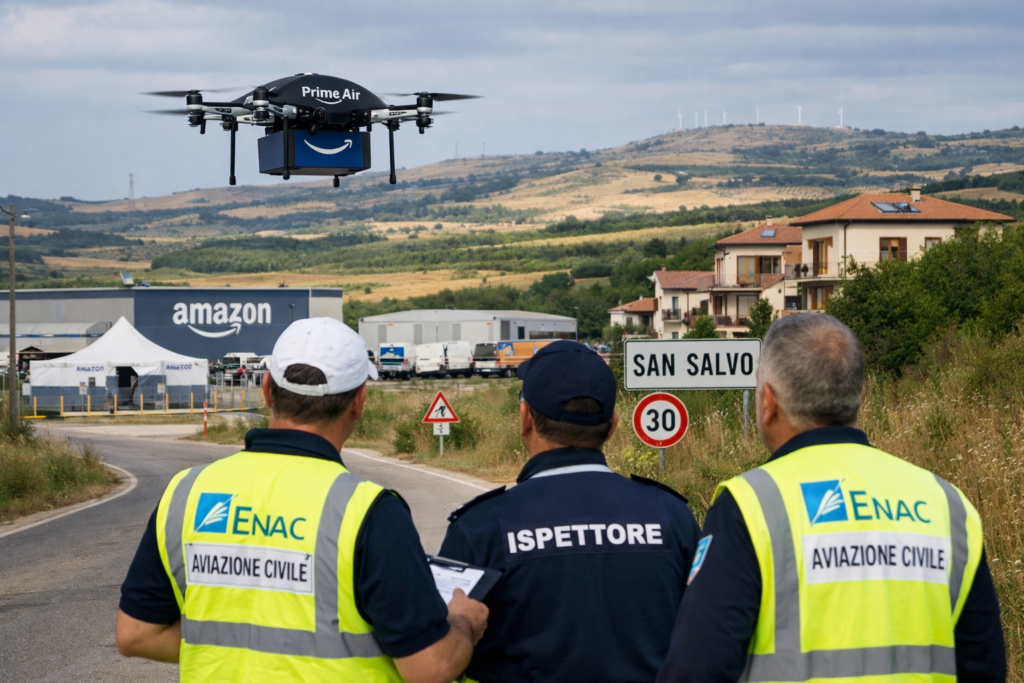
ROME — Amazon announced on Sunday that it has formally halted its plans to launch commercial drone deliveries in Italy, citing regulatory and business challenges that make the program unsustainable under current conditions. The decision marks a significant shift for the company’s Prime Air drone delivery initiative, which had been tested successfully in Italian skies last year but will now be shelved as Amazon evaluates its long-term strategy in the European market.
In a statement to Reuters, the e-commerce giant said it conducted a strategic review of its drone delivery ambitions in Italy and concluded that the broader regulatory environment and business framework in the country do not currently support the project’s long-term goals. Amazon had previously engaged with Italian aerospace authorities and completed initial test flights, but officials say the company’s internal policy and recent financial considerations influenced the decision.
The Italian Civil Aviation Authority (ENAC) described the announcement as “unexpected,” noting that Amazon had made “good progress” with regulators during earlier phases of the program. Initial tests carried out in San Salvo, located in the Abruzzo region, had shown promise for drone deliveries of small packages, generating optimism among industry observers about the future of automated parcel delivery in Europe.
Amazon’s Prime Air service — which aims to use autonomous drones for speedy delivery of lightweight packages — has already made commercial inroads in several U.S. locations such as parts of Texas and Arizona. The company had signaled intentions to expand the service internationally, with Italy and the United Kingdom targeted as early rollout locations. However, now only the tests in Italy remain on record without immediate commercial deployment plans.
Industry analysts say the company’s withdrawal from drone delivery plans in Italy highlights the complex interplay between innovation and regulation, especially in European markets with strict civil aviation rules. While drone delivery promises rapid service and reduced emissions compared with traditional delivery trucks, authorities must balance innovation with airspace safety, privacy considerations, and air traffic controls — challenges that have slowed broader adoption worldwide.
Amazon made clear that this decision does not affect other drone delivery programs currently active or in development, stating that operations in other countries like the United States and the U.K. will continue as planned. The company also reaffirmed its long-term commitment to logistics innovation even as it steps back from execution in Italy.
Experts say the development could prompt other companies to rethink how they approach drone delivery in Europe and may accelerate talks between industry players and regulators about creating a harmonized framework that better supports autonomous flight and technology adoption across national borders.