Amazon Cuts 16,000 Jobs Globally Amid AI Push and Corporate Restructuring
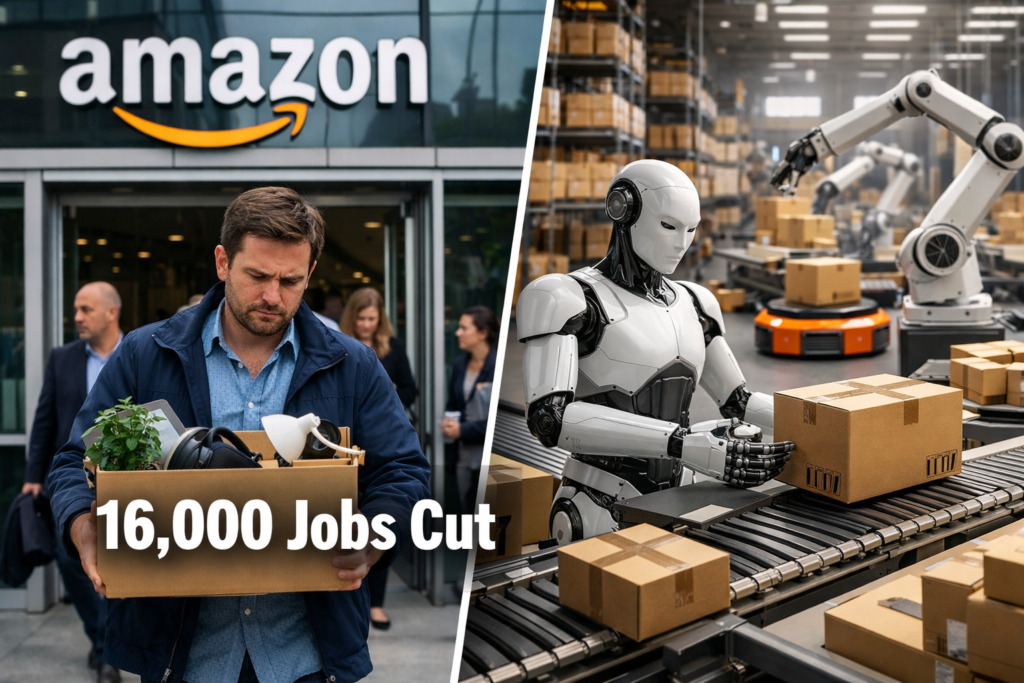
SEATTLE — Amazon.com Inc., one of the world’s most influential tech and e-commerce giants, has announced a massive workforce reduction affecting approximately 16,000 corporate employees globally, marking one of the company’s largest layoffs in its history. The move comes as the company continues to reshape its operations in an era dominated by artificial intelligence (AI), automation, and post-pandemic workplace restructuring.
The layoffs, confirmed on Wednesday by senior leadership, represent the second major round of cuts in just three months — following roughly 14,000 job eliminations in October 2025 — and signal a broader transformation in how Amazon is organizing its global workforce.
Why Amazon Is Cutting Jobs Now
In an internal memo shared with employees, Beth Galetti, Amazon’s Senior Vice President of People Experience and Technology, explained the layoffs are part of a strategic restructuring aimed at streamlining operations, reducing bureaucracy and increasing organizational efficiency. She emphasized that the company is focused on building a “leaner, more agile workforce” that can respond faster to changing business needs.
While Amazon’s official statements referenced organizational shifts, analysts note that artificial intelligence and automation technologies have played a key role in reshaping work processes across corporate divisions, from administrative tasks to data analysis and customer support. Enhanced AI tools have enabled automation in areas previously handled by human employees, accelerating job redundancies, particularly among white-collar staff.
The company has been ramping up AI deployment for years, both in its logistics and digital services, and CEO Andy Jassy has pointed to AI’s transformative potential — even as some of his more recent internal comments suggest Amazon’s decisions are rooted in both culture and efficiency, not solely technology.
Behind the Numbers: What’s Changing
The latest job cuts affect key corporate units, including Amazon Web Services (AWS), retail, Prime Video, human resources, and technology teams. While Amazon’s total workforce still exceeds 1.5 million people worldwide, most foreground layoffs are concentrated among roughly 350,000 corporate employees — a group that historically handled strategic, managerial and administrative responsibilities.
This round of 16,000 eliminations follows the October reduction of 14,000 roles, bringing the combined cuts to a staggering 30,000 corporate positions in a span of months — one of the largest workforce reductions Amazon has ever undertaken.
Affected employees, particularly those based in the United States and other major markets, will have 90 days to explore internal opportunities or find roles in other teams. Those who do not secure new positions will receive severance pay, outplacement services and continued health benefits — standard practices in major corporate layoffs.
A Shift from Pandemic Hiring to Post-Pandemic Reality
Amazon’s employment landscape looks very different from the pandemic years, when the company rapidly expanded its workforce to meet surging online demand. At the height of COVID-19, Amazon hired aggressively across warehouses, logistics, corporate offices, and technology units — a spree that saw tens of thousands of jobs added in a short period.
But the demand surge has since leveled off, and with macroeconomic uncertainties in the background — including inflation pressures, supply chain disruptions, and shifting consumer behavior — Amazon has recalibrated its hiring strategy. Technology leaders say the company is transitioning from a people-intensive model to one that leans more heavily on AI, automation and streamlined digital processes.
Industry observers argue that tech companies like Amazon are not alone in these trends. Several major firms, including Meta and Microsoft, have also cut positions after expansive pandemic hiring, as they pivot toward more AI-centric business models and seek to balance efficiency with innovation.
Regional and Workforce Impact
Reports also suggest that Amazon teams outside the U.S., including large groups in India, where AWS and Prime Video divisions are heavily staffed, may feel significant effects from the layoffs as well. Cities such as Bengaluru, Hyderabad and Chennai — major tech hubs for Amazon — are expected to see reductions in corporate headcount as part of this global contraction.
While corporate roles are the focus of these cuts, Amazon’s broader employment footprint — particularly in fulfillment centers, warehouses and delivery operations — remains largely intact, meaning frontline logistics staff are less impacted by this particular round of job eliminations.
Leadership and Corporate Culture Shifts
CEO Andy Jassy and senior executives have framed the layoffs not just as cost-cutting, but as part of a broader effort to reinforce Amazon’s internal culture, reduce bureaucracy and empower employees with greater ownership and decision-making. In some internal discussions reported in the press, Jassy downplayed the AI narrative in favor of cultural transformation, describing the restructuring as a means to restore startup-like agility within a large global enterprise.
Business analysts believe this messaging aims to reassure investors and employees that the company’s long-term growth strategy remains focused on innovation — including AI and cloud services — even as it sheds redundant roles.
Broader Economic Context
The layoffs come amid stagnation in U.S. hiring and broader economic uncertainty, with many sectors exercising caution in workforce planning. As big tech companies recalibrate hiring, smaller firms and mid-sized employers have also slowed new job creation, contributing to persistent anxieties in labor markets worldwide.
Experts warn that while AI and automation bring efficiency gains, they also present ethical and economic challenges, particularly for workers displaced by technology. Economists say that reskilling programs, government workforce initiatives and corporate transition support will become increasingly important as the workforce landscape evolves.
Despite the layoffs, Amazon has reiterated its commitment to continue hiring in strategic growth areas, such as AI research, cloud infrastructure, and next-generation logistics technologies. The company’s investments in these fields signal that while workforce size may shrink in parts of its corporate structure, its strategic ambitions remain robust.