U.S. Warns Iran Over Planned Live-Fire Naval Drills in Strait of Hormuz
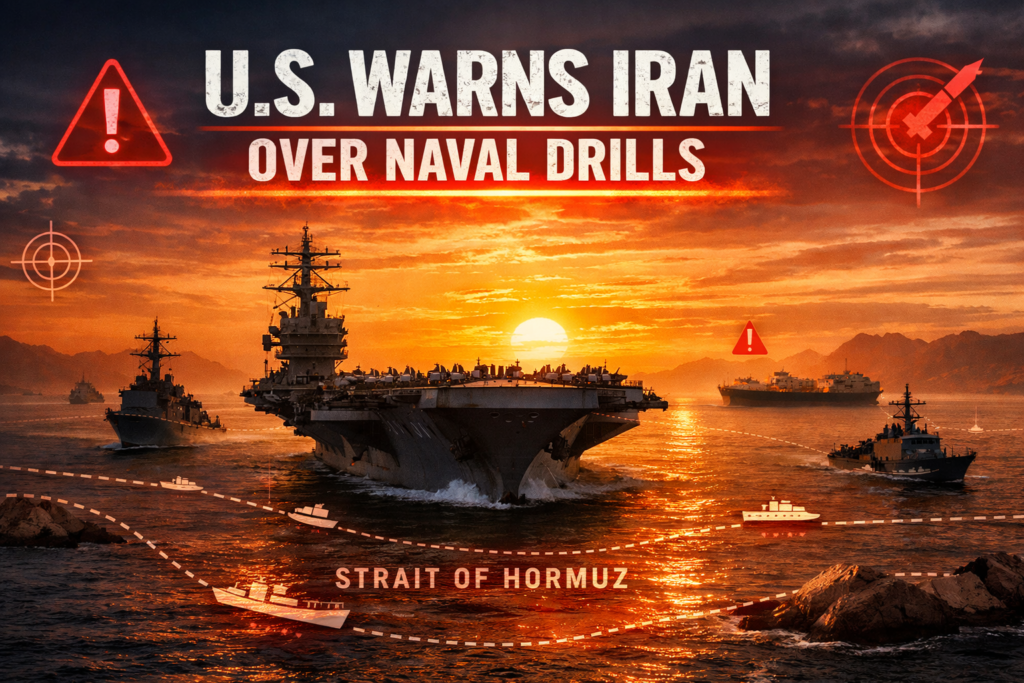
WASHINGTON, D.C. — The United States military has issued a stern warning to Iran ahead of planned live-fire naval exercises in the strategically vital Strait of Hormuz, stressing that Tehran must conduct its drills in a safe, professional manner and avoid any behavior that could endanger U.S. forces, international shipping or regional stability.
The announcement by U.S. Central Command (CENTCOM) comes as tensions between Washington and Tehran intensify amid a growing U.S. military build-up across the Middle East, heightened diplomatic pressures, and ongoing geopolitical disputes over Iran’s nuclear program and internal unrest.
The Strait of Hormuz — a narrow waterway between Iran and Oman — is one of the world’s most important choke points for oil and natural gas shipments. Roughly one-fifth of all globally traded petroleum passes through this corridor, making its security essential not just to regional economies but to global energy markets.
Washington Signals Red Lines as Tehran Plans Live-Fire Drills
On Friday, CENTCOM released a forceful statement addressing Iran’s Islamic Revolutionary Guard Corps (IRGC) — the branch of the Iranian military responsible for the upcoming naval exercises. The command warned that it “will not tolerate unsafe actions” during the drills, which are scheduled to begin this weekend and last for two days in the Strait of Hormuz.
CENTCOM emphasized that Iran has the right to operate in international waters, but it must adhere to international maritime law and conduct activities in a non-provocative, professional manner.
The warning was specific about what the U.S. military considers unacceptable behavior, including:
- Low-altitude or armed overflights of U.S. vessels engaged in flight operations;
- High-speed approaches toward U.S. warships on a collision course;
- Weapons trained on U.S. forces or allied naval assets.
CENTCOM also insisted it will continue to ensure the safety of U.S. personnel, ships, and aircraft operating in the region and affirmed America’s commitment to maintaining freedom of navigation for all international maritime traffic.
Context: Why This Matters in U.S.–Iran Relations
The warning follows weeks of mounting tensions between the United States and Iran. Washington has deployed additional military assets to the Middle East — including the USS Abraham Lincoln aircraft carrier strike group — in response to concerns about Iran’s nuclear ambitions and its violent crackdown on nationwide protests, actions that have drawn international criticism.
In response to the U.S. military presence and diplomatic pressures, Iranian officials have publicly stated they are open to negotiations but only under conditions they describe as fair and non-coercive — and have reiterated their stance that they will defend their national sovereignty if attacked.
Meanwhile, key U.S. allies in the Arab world — including Saudi Arabia, Qatar, Oman and Turkey — have urged both sides to exercise restraint, warning that an escalation could destabilize the entire Middle East and disrupt global energy markets.
The Strategic Importance of the Strait of Hormuz
The Strait of Hormuz has long been a geopolitical flashpoint because of its outsized importance to the global energy supply. Even short disruptions there can send oil prices surging worldwide and trigger economic ripple effects across multiple industries.
Previous confrontations between U.S. and Iranian naval vessels in the area — often involving fast-attack boats from the IRGC — have underscored how quickly routine encounters can escalate into dangerous standoffs. CENTCOM’s warning reflects a U.S. intent to avoid miscalculations that could inadvertently spark a broader conflict.
Analysts also see the upcoming drills as a symbolic move by Tehran — a demonstration of military capability near a vital maritime lifeline at a moment when Washington is flexing its own military muscle in the region. The timing highlights the deep mistrust between the two powers and the fine line between military signaling and confrontation.
Iran’s Response and Regional Repercussions
Iranian officials have not publicly detailed how they will respond to the U.S. warning, but past statements suggest Tehran may view Washington’s military activities as pressure tactics aimed at curbing its defense capabilities or forcing concessions on nuclear and missile programs.
In recent weeks, Iran’s leadership has reiterated its willingness to engage in dialogue with the U.S., but only on terms it deems equitable and without preconditions that would compromise its defense posture.
Regional powers like Turkey have offered to mediate tensions, signaling that neighboring countries are increasingly concerned that a confrontation could have spillover effects across the Middle East and beyond.
What Comes Next: Diplomacy or Escalation?
The coming days will be critical. As Iran moves forward with its naval drills and the U.S. military maintains a strong presence in the Middle East, both sides face a challenging balancing act: projecting strength without crossing a threshold that could spark a larger conflict.
For now, the U.S. warning is a clear message to Tehran and the world that Washington is monitoring the situation closely and will respond to any perceived threats or unsafe actions that jeopardize maritime security or U.S. forces.
Diplomats, military experts and energy markets will all be watching how the situation unfolds in the Strait of Hormuz — a strategic maritime artery whose stability affects not just regional geopolitics but global economic conditions.