Deadly Landslide on Indonesia’s Java Island Kills 8, Leaves Dozens Missing
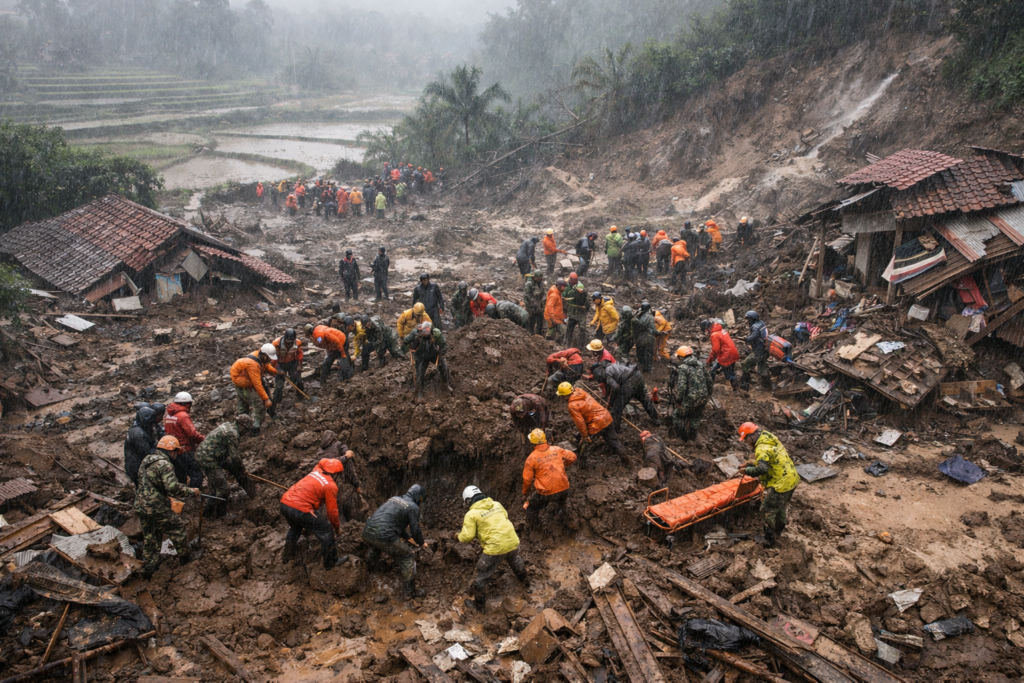
JAKARTA, Indonesia — A powerful rain-triggered landslide struck a rural community on Java Island in Indonesia early Saturday, killing at least eight people and leaving more than 80 others missing as rescue teams raced against time to find survivors buried under deep mud and debris. The disaster highlights the extreme vulnerability of hillside villages to seasonal downpours and comes amid broader weather-related catastrophe in the archipelago — including deadly floods and landslides on other islands just months ago.
The landslide occurred before dawn in Pasir Langu village, located in the West Bandung district of West Java province, where days of relentless rain had saturated the soil and caused rivers to overflow. Witnesses described a terrifying scene as a wall of thick mud, uprooted trees and rocks cascaded down the hillside, burying whole houses and sweeping away anything in its path.
A Night of Tragedy
Rescuers were still digging through the mud and wreckage hours after the catastrophe struck at around 2:30 a.m. local time, when most villagers were asleep. According to Indonesia’s national disaster agency (BNPB), at least eight bodies had been recovered, while 82 people remained missing, feared buried under the mud. A spokesperson for the agency, Abdul Muhari, reported that 24 people were able to escape with injuries, but that mud and unstable ground continue to challenge search efforts.
Television footage from the disaster zone showed emergency workers and volunteers slogging through slurry that turned rice terraces and narrow lanes into a thick, brown wasteland. Roads were blocked by debris, slowing the movement of heavy machinery, and persistent rain hampered visibility as search teams braved treacherous slopes.
Local authorities quickly evacuated families from nearby hillsides where the soil remained dangerously unstable, warning that secondary landslides could occur without notice. “Unstable soil and heavy rain continue to complicate search and rescue operations,” said Teten Ali Mungku Engkun, head of West Java’s Disaster Management Office.
What Triggered the Slide
The landslide was triggered by days of torrential rainfall linked to Indonesia’s rainy season, which typically lasts from October through April. The region experienced unusually heavy downpours over the past week, saturating already fragile hillsides and overwhelming riverbanks. Meteorologists had issued warnings about extreme weather in West Java and other parts of the country, but the scale of the slide still caught many residents off-guard.
Indonesia — an archipelago of more than 17,000 islands — is no stranger to rain-related disasters. The country’s mountainous terrain and dense rural settlements make villages like Pasir Langu especially vulnerable to landslides when intense rainstorms strike. Over the last few months, other parts of Java and neighboring islands have also suffered landslides and flooding under similar conditions.
Heroism and Struggle
Stories of survival and loss have begun to emerge from the wreckage. One resident recounted how she and her children awoke to the sound of rushing earth and ran for higher ground just moments before their home was engulfed by mud. Another neighbor, still in shock, described pulling a relative from beneath a fallen wall, only to see others still buried. These personal accounts are echoed throughout Pasir Langu, where homes that once stood proudly are now reduced to mud-soaked skeletons.
Emergency volunteers described the scene as “chaos wrapped in silence.” “There’s a stillness now where children used to play,” said one young rescue volunteer. “All we can do is pray and dig.”
Rescue Operations Underway
Teams from the national disaster agency, military units and local authorities have been mobilized to coordinate search and rescue operations. Despite the difficulties, every effort is being made to find missing villagers. Sniffer dogs and thermal imaging equipment are being used where possible, but deep mud and unpredictable ground conditions limit the use of heavy machinery.
Rescue chief Abdul Muhari emphasized the urgency: “Time is critical. We will do everything in our power to reach those still buried.” Families of the missing have gathered at makeshift shelters nearby, many clutching photos and calling out names as they await news.
Indonesia’s Broader Weather Challenges
This disaster comes on the heels of other severe weather events in Indonesia. In December 2025, catastrophic floods and landslides in Sumatra — including in Aceh and West Sumatra provinces — killed more than 1,000 people and injured thousands, overwhelming communities and stretching emergency services to breaking point.
Experts warn that climate change may be contributing to the intensity of rainfall events, increasing the frequency and severity of floods and landslides across the archipelago. Indonesia’s extensive coastline and complex geography, combined with seasonal monsoons, make it particularly susceptible to natural disasters — and Pasir Langu’s tragedy is a painful reminder of these ongoing risks.
Community Impact and Recovery
In Pasir Langu and surrounding villages, the immediate priority is rescue, but officials also face difficult questions about long-term safety. Houses buried under mud will need to be cleared, and landslide risk assessments conducted before families can return. In many cases, residents may be relocated to safer terrain if conditions remain unstable.
Local leaders are also urging better early-warning systems. While meteorological agencies issue rain and flood advisories, small communities often lack effective ways to receive timely alerts or take immediate protective action. Strengthening communication networks and investing in landslide-monitoring infrastructure could save lives in future disasters.
A Nation in Mourning
National Disaster Management Agency officials, President Prabowo Subianto and other leaders have expressed condolences to the families affected, with emergency funds being allocated to aid rescue and recovery. Flags across government buildings were lowered in respect, and a national moment of silence was observed.
“This is a tragedy that has touched all of Indonesia,” said one government minister. “We will stand with the families and the people of Java as they recover from this terrible loss.”
Looking Ahead
As rescue teams continue their efforts and the missing are sought beneath layers of debris, Pasir Langu’s landslide serves as a somber reminder of the power of nature — and the vulnerability of rural communities in the face of extreme weather. The long rainy season isn’t over, and authorities are urging vigilance across vulnerable districts in Java and beyond.