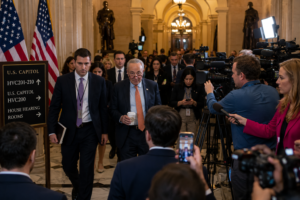
Trump Era Justice Department Expands Investigations Into Political Opponents Amid Controversy
WASHINGTON, D.C. — A wave of federal investigations and legal actions against prominent figures perceived as political opponents of President Donald Trump has drawn intense public scrutiny and heated debate over the past year. The U.S. Department of Justice (DOJ) — long regarded as an independent law enforcement agency insulated from political influence — now finds itself at the center of a growing controversy over whether it is being used to pursue those who have challenged or criticized the president. Critics argue these investigations represent an unprecedented escalation in political retaliation, while supporters maintain they are legitimate inquiries into alleged wrongdoing.
The Expanding List of Targets
Since Trump returned to the White House in January 2025, the Justice Department has launched or revived probes involving a number of high-profile figures — from government leaders to national officials who once stood on other sides of Trump’s political battles. Among the most notable are Federal Reserve Chair Jerome Powell, state officials like Minnesota Governor Tim Walz and Minneapolis Mayor Jacob Frey, and public figures such as former FBI Director James Comey and New York Attorney General Letitia James, all of whom have faced investigations, subpoenas, indictments, or legal threats.
The most recent escalation comes from investigations into Walz and Frey, reportedly centered on allegations that their public statements and decisions impeded federal immigration agents amid tensions following the fatal shooting of a Minneapolis resident by an ICE officer. Those actions led to a nationwide debate over whether the DOJ is now pursuing state-level elected Democrats for political reasons. Lawmakers and civil liberties advocates on the left have condemned the moves as political intimidation, while some Republicans have praised the DOJ’s assertiveness in confronting perceived unlawful behavior.
‘Law and Not Politics,’ or Retaliation?
Administration officials insist that all investigations are grounded in lawful, evidence-based criteria and not driven by partisan motives. Both the DOJ and the White House have publicly rejected claims that investigations into political figures are retaliatory, stating that “no one is above the law,” and that legal scrutiny is justified where there is suspicion of illegal conduct. Yet critics argue that the timing and selection of these investigations — especially those involving vocal critics of Trump — defy traditional DOJ norms of neutrality.
Vice President J.D. Vance, defending the administration’s approach, stated that these actions are “driven by law and not by politics,” echoing administration talking points. Critics, however, note President Trump himself campaigned on promises of retribution against legal adversaries, which some see as influencing the current DOJ agenda.
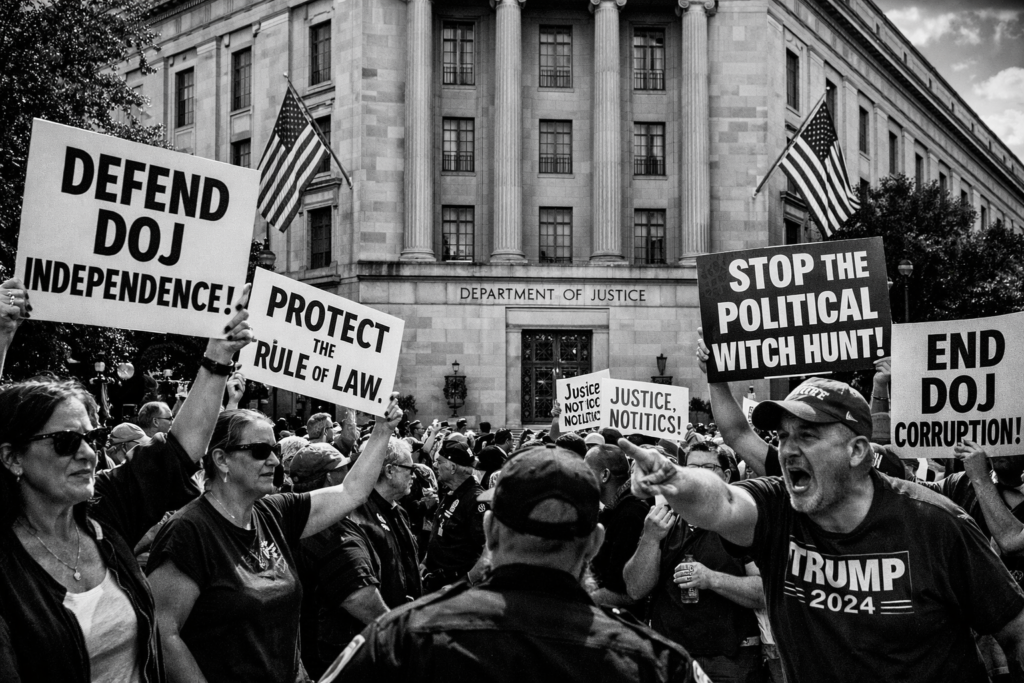
The debate comes amid broader concerns about the future of Justice Department independence, a principle historically protected to prevent the executive branch from directing criminal investigations for political gain. Former Justice Department norms established after Watergate sought to shield prosecutors from such interference. Legal experts warn that eroding these norms could have long-term implications for democratic governance and public trust in federal law enforcement.
A Growing Pattern, Critics Say
Critics point to a series of high-profile cases and actions since Trump’s inauguration that they say point toward a pattern of targeting his perceived political enemies:
- Jerome Powell, the Federal Reserve chair, confirmed a criminal investigation tied to his congressional testimony — a move some view as pressure to conform monetary policy to Trump’s wishes.
- Former law enforcement leaders James Comey and Letitia James were indicted on charges later dismissed by judges citing procedural issues.
- Senators and officials like Adam Schiff have faced federal inquiries connected to property and campaign activity allegations.
- High-profile state leaders like Walz and Frey are under scrutiny for their public confrontations with federal authorities.
In addition, political observers note that hundreds of career DOJ lawyers and FBI agents were fired or reassigned after Trump’s return to office, especially those involved in previous investigations of Trump. Those departures sparked concerns among legal professionals about institutional memory and the DOJ’s future role as a nonpartisan arbiter of justice.
Defenders of the DOJ Push Back
Supporters of the Trump administration’s approach argue that the Justice Department has the right — and in some cases, the duty — to investigate alleged wrongdoing regardless of the political affiliation of the individuals involved. They maintain that past administrations have also faced allegations of political bias in investigations, and that critics are quick to draw partisan lines where none may exist.
Republican lawmakers point to growing crime rates in some areas and argue the DOJ’s heightened enforcement and investigations demonstrate a renewed focus on accountability. They also stress that the DOJ is following legal procedures, including grand jury reviews and judicial oversight, and that prosecutors do not file charges unless sufficient evidence is presented.
Public Perception and Trust
A recent Reuters/Ipsos poll found that a majority of Americans believe the Justice Department is being used to target political enemies, reflecting growing skepticism among the broader public about federal law enforcement neutrality. This sentiment spanned party lines, with some Republicans and a larger share of Democrats sharing concerns.
Legal scholars warn that whether or not the DOJ’s actions are legally justified, perception matters. If citizens view federal prosecutions as politically motivated, it could diminish faith in the American legal system and erode confidence in democratic institutions designed to operate above partisan politics.
Where It Goes From Here
With the 2026 midterm elections looming and political divisions deep, the controversy over the Justice Department’s investigations into Trump’s political foes shows no signs of abating. Democrats are pushing for congressional oversight and hearings to scrutinize potential abuses of power, while Republicans emphasize law and order and the need to uphold legal accountability.
The Supreme Court and federal judiciary, with several Trump appointees on the bench, could also play a role in shaping how these and future investigations unfold — particularly when legal challenges arise over prosecutorial independence and executive influence.
As the DOJ continues to pursue cases involving high-profile political figures, the debate over rule of law versus perceived political retribution will remain a flashpoint in American politics — reflecting broader questions about justice, power and democratic norms in the modern era.