Kyiv Freezing in Darkness After Russian Strikes Cripple Power Grid
KYIV, UKRAINE — Residents of Ukraine’s capital are enduring a relentless humanitarian crisis as Russian missile and drone strikes on energy infrastructure have left large swaths of Kyiv powerless and freezing amid one of the coldest winters in years. Temperatures have plunged well below freezing, amplifying the suffering for hundreds of thousands of civilians struggling without reliable electricity, heating and water — basic necessities most of the world takes for granted.
What had been an energy system already under tremendous strain from nearly four years of war has now reached “the most difficult day” since late 2022, according to Ukraine’s Energy Minister. Widespread outages have made everyday survival a struggle for many families in the capital.
A Winter Crisis Deepens
Kyiv’s energy grid has been a primary target of Russia’s winter offensive. Multiple nights of combined missile and drone attacks have significantly damaged electricity substations, heating plants and transmission networks, creating cascading power failures across the city. Nearly 60 percent of Kyiv’s residents have been left without electricity after the latest barrage, Ukrainian President Volodymyr Zelenskyy said.
The strikes have also crippled heating services in thousands of residential buildings. As of late January, nearly 4,000 apartment blocks in Kyiv were without heat, leaving people — especially the elderly, children and those with medical needs — dangerously exposed to rapidly falling temperatures.
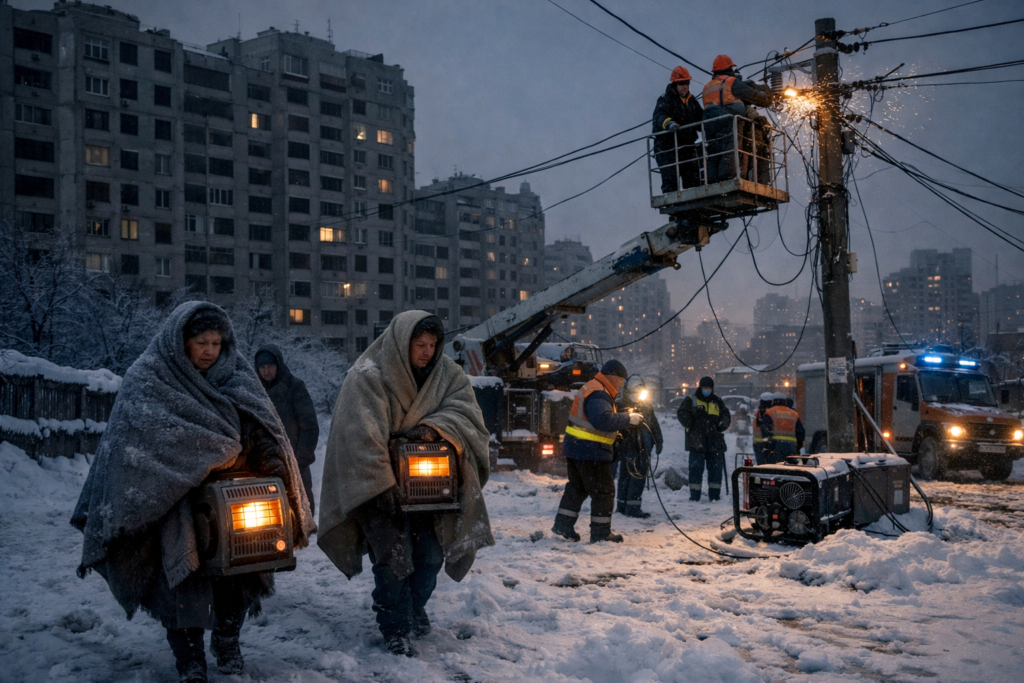
Municipal officials have confirmed that despite around-the-clock efforts by utility workers and engineers, energy restoration remains slow and uneven. Workers from the national grid operator and emergency crews have been deployed city-wide in an attempt to repair damaged infrastructure as quickly as possible, but continued hostile attacks and extreme cold multiply their challenges.
Bitter Cold Meets Power Outages
This winter has been historically harsh. Daytime highs in January have consistently hovered below Kyiv’s usual seasonal averages, with nighttime lows plummeting toward -20 °C (-4 °F). At these temperatures, living without heat, consistent electricity or running water is a public safety emergency.
Some Ukrainians have resorted to collecting snow for water or using any small amount of heat they can muster from portable stoves, layered clothing and hot water bottles to stay warm. Others have evacuated temporarily to regions where power and heat are more stable, highlighting the growing strain on families attempting to stay in their homes.
Schools across the capital have closed temporarily as the crisis worsened, both because classrooms lack heating and to protect children from freezing conditions.
Daily Life in Darkness
For many Kyiv residents, the blackout has not been just inconvenient — it’s life-altering. Families report going hours or days with only a few hours of electricity, while some experience none at all. In some neighborhoods, water supply systems — reliant on electric pumps — have also failed, forcing residents to queue for limited taps or carry water from other sources.
Public transportation systems, hospitals and medical facilities — often dependent on stable power — are operating on backup generators or at reduced capacity. Clinics are struggling to provide care, especially to vulnerable populations.
City services have responded by establishing emergency heating points and shelters equipped with autonomous power sources, allowing residents moments of warmth and access to basic services. Still, critics argue these measures fall short of what is needed to protect civilians from extreme cold during a sustained blackout.
Why the Grid Is Failing
Russian forces have repeatedly targeted energy infrastructure throughout the war, but recent attacks have been more concentrated and destructive than in previous campaigns. Large numbers of attack drones — reportedly 300 or more per assault — coupled with missile strikes on power facilities, have worn down Ukraine’s defenses and battered its energy system.
The capital’s aging energy grid, much of which was already damaged earlier in the conflict, is now struggling to carry out emergency shutdowns designed to prevent total collapse. Officials have introduced rolling outages — temporary power cuts at scheduled intervals — to conserve limited generation capacity and prevent further damage.
National operators have also reported challenges in distributing electricity evenly due to infrastructure damage in key regions surrounding Kyiv. In some parts of the city, only partial restoration has been possible, leaving entire apartment blocks cold and dark.
Rescue Efforts and International Support
Despite these conditions, Ukrainian energy workers have worked tirelessly to restore service. Repair crews have been mobilized in the hundreds — working through freezing nights to repel outages and restore some power and heat to affected neighborhoods.
International support is also flowing. Poland has pledged to send hundreds of generators and industrial heaters to Ukraine to help residents endure the winter. The aid, funded by European Union resources and public donations, aims to provide temporary relief to families living without heat or electricity.
Humanitarian organizations are also setting up warming shelters and distributing emergency supplies, though the scale of the need remains enormous. Many communities rely on neighbor-to-neighbor solidarity to survive the darkest hours.
Human Stories Behind the Headlines
Amid the blackout, stories of resilience and hardship are emerging from the streets of Kyiv. One young mother, whose apartment has been without heat for days, said she and her children sleep layered in coats and blankets, keeping a hot water bottle close to stay warm. Another elderly resident explained that because electricity comes on only briefly, everyday tasks like cooking, charging phones and heating water have become exhausting routines.
Though some residents heed official advice to seek shelter elsewhere, many remain steadfast, refusing to leave their homes or communities. Their resolve reflects the enduring Ukrainian spirit — a determination to live, rebuild and continue resisting Russia’s assault despite immense hardship.
A Heated Humanitarian Debate
The crisis in Kyiv has spurred debate among aid groups and international policymakers about how to prevent civilian suffering during wartime. Critics say that intentionally targeting energy infrastructure crosses a line into humanitarian aggression — a tactic meant to erode morale as much as to disrupt military capabilities. Ukraine and its Western allies maintain that attacks on civilian utilities are a violation of international norms.
Ukrainian leaders have appealed to the international community for increased air defense support, mobile power generation units, and diplomatic pressure on Russia to cease these crippling strikes. At the same time, peace talks continue on diplomatic fronts — even as cities like Kyiv struggle in the dark.
A Winter of Resilience
Kyiv’s winter energy crisis serves as a stark reminder of the human cost of this prolonged conflict. While diplomatic negotiations seek a path to peace, the everyday reality for families here is survival — keeping warm, staying fed, finding light in the darkness and hoping for better days ahead.