Why Charlie McAvoy Didn’t Run the Family Plumbing Business — From Pipes to Pucks
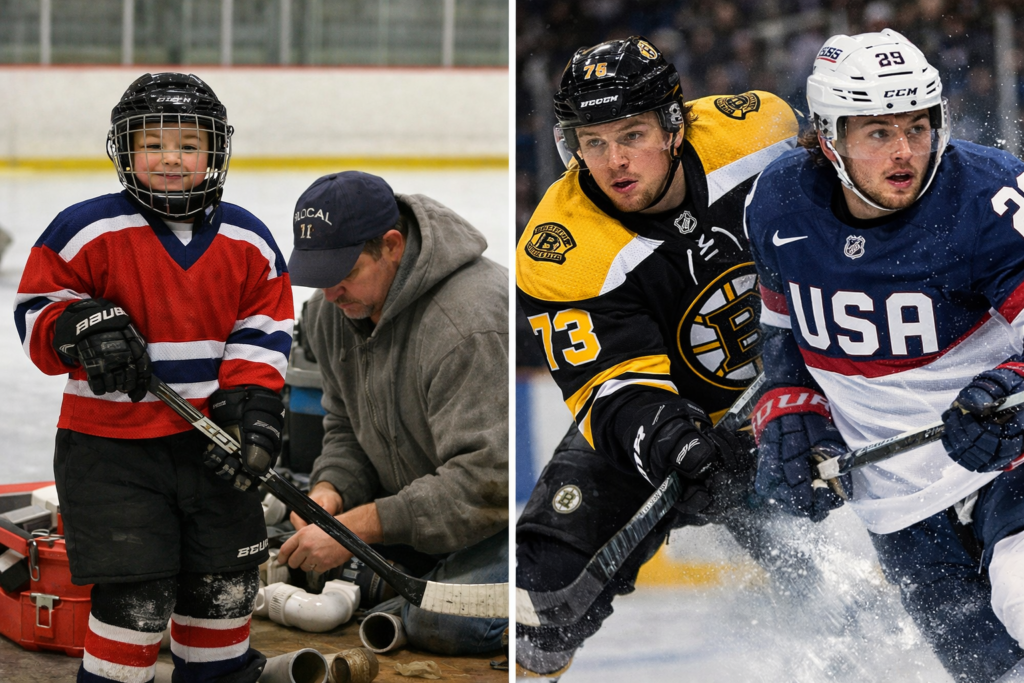
BOSTON — Before Charlie McAvoy was an elite NHL defenseman with the Boston Bruins or wearing the red, white and blue for Team USA at the 2026 Milan Cortina Winter Olympics, he was a young boy with a hockey stick in hand and a shovel in the other. But while he grew up around the tools of a family trade — plumbing — McAvoy was never meant to run his family’s business. His father made sure of that.
McAvoy’s journey from being the son of a Long Island plumber to becoming one of the NHL’s top two-way defenders is a story about sacrifice, opportunity, grit, and the pursuit of a dream — one that took him from assisting on summer plumbing jobs to skating for Stanley Cup championships and Olympic glory.
A Family Legacy, But Not the Future
The McAvoy family story begins on Long Island, New York, where Charlie’s father, Charles McAvoy Sr., runs a four-generation plumbing and heating business that has served the community for decades. Rather than encouraging Charlie to follow in those steady, hardworking footsteps, Joe Sr. had bigger dreams for his son — and specifically, ones beyond the wrench and pipe.
“My dad, he always told me he had bigger dreams for me, that he wanted more for me than just to take over McAvoy Plumbing and Heating,” Charlie said in a recent interview on NBC Local’s My New Favorite Olympian. Instead of nudging him toward the business, Charles Sr. intentionally helped Charlie chase his hockey goals, even though that path was uncertain and expensive.
Lessons Learned in the Plumber’s Yard
Although his father didn’t want him to take over the plumbing company, Charlie still learned valuable lessons from those early days working with his family. Helping out as a kid — often in intense summer heat — taught him the work ethic and physical grit that would later define his hockey career.
“I’d be all excited to go do it,” Charlie recalled. But the reality was often back-breaking work: jackhammering concrete, digging sand to reach water mains and learning just how demanding manual labor really is. His father didn’t sugarcoat it; instead he handed him a shovel and let him discover the importance of effort, sweat and resilience for himself.
That hands-on work, though tough, helped forge the kind of dedication required for professional athletics — and helped Charlie understand what he didn’t want to do as a career. “Every day I saw him work… so I knew I owed it to him to put everything I had into hockey, the same way,” the NHL star said.
The Keys to Opportunity
Charles Sr. even gave young Charlie the keys — literally — to the local hockey rink. As a contractor who worked on the arena’s infrastructure, he had access to the ice that most kids could only dream of. “Anytime I want to use it, go,” he once said, giving Charlie and his friends after-school access that accelerated his development.
Charlie would be there nearly every night, skating, practicing and learning to love the ice in a way that eventually translated into elite hockey instincts on both ends of the rink. That early exposure to the sport laid the foundation for a path that would take him far beyond his Long Island roots.
From Little Skater to NHL Star
Charlie’s hockey journey took flight when he joined USA Hockey’s National Team Development Program in Michigan, where he refined his skills against the best young players in the country. From there, he became a standout at Boston University, earning first-team All-American honors before being selected 14th overall by the Boston Bruins in the 2016 NHL Draft.
With the Bruins, McAvoy quickly made an impact — combining elite skating, crisp passing, physical play and hockey sense that elevated his role as a leader on the blue line. He earned a spot on the NHL All-Rookie Team and went on to be a cornerstone defenseman for Boston over multiple seasons.
Beyond his on-ice performance, McAvoy has also become one of the NHL’s most community-oriented players — helping others off the ice with charitable work, leadership initiatives and support for first responders and families in need.
Olympic Dreams and Giving Back
Even as his hockey career soared, McAvoy hasn’t forgotten his roots. He is set to represent Team USA at the 2026 Milan Cortina Winter Olympics, a dream that would have seemed impossible during those long summer days working in the plumbing yard as a kid.
His father’s belief in his hockey potential changed the trajectory of his life — steering him away from the family business and toward a global stage where he now inspires fans and young athletes alike. “I don’t think we had the crystal ball,” McAvoy said of his father’s decision. “But [Charles] did it because he saw that it made me happy and was something I wanted to do.”
Respect for the Trades, Respect for the Dream
While a plumber’s life wasn’t in the cards for Charlie, he’s quick to express admiration for his father’s profession — and for all who do the hard, often unseen work that keeps communities running. “I have the utmost respect for plumbers and trade workers,” McAvoy said, noting that the job taught him discipline even when the pay-off isn’t immediate.
But for all the respect he has for the trade, his father’s unwavering support for Charlie’s hockey aspirations proved pivotal. Where Charles Sr. lacked the financial means to pursue hockey beyond high school, he made sure Charlie would never have the same barriers. That support — and sacrifice — helped mold an Olympian and NHL star whose influence reaches well beyond the rink.
A Legacy of Giving More Than Expected
In refusing to have his son take over the family business, Charles McAvoy Sr. wasn’t dismissing his family’s legacy — he was expanding it, helping Charlie uphold the same standards of hard work, dedication and community contribution that made the business successful, just in a very different arena.
McAvoy’s story is a reminder that sometimes, pursuing a dream means leaving tradition behind — not out of disrespect, but out of belief that a new legacy can grow from the same roots. And as McAvoy skates toward Olympic competition and continues his NHL career, that lesson remains clear: support, sacrifice and belief can move a shovel and a hockey stick in equally powerful ways.