Second Federal Shooting in Minneapolis Amid Rising Tensions Over ICE Enforcement
MINNEAPOLIS, Minn. — Minneapolis is facing renewed turmoil and deepening controversy after yet another immigration-related shooting by a federal officer in the city late Wednesday, just one week after a fatal encounter involving Immigration and Customs Enforcement (ICE) that left a Minneapolis mother dead and sparked widespread protests. The latest incident — in which a U.S. Immigration and Customs Enforcement agent shot a Venezuelan man in the leg during a targeted traffic stop — has further intensified tensions between local officials, residents, and the federal government, raising fresh questions about law enforcement authority, public safety, protest dynamics, and community distrust.
According to the Department of Homeland Security (DHS) — which oversees ICE operations — the shooting occurred around 6:50 p.m. local time in North Minneapolis during what federal officials described as a targeted immigration enforcement effort. The DHS said that the man, identified as a Venezuelan national who entered the United States in 2022 and is considered to be in the country without legal status, fled a traffic stop, crashed into a parked car and then ran on foot before a confrontation occurred.
Federal law enforcement said the man turned and assaulted an ICE agent, and that two other individuals emerged from a nearby apartment wielding a snow shovel and a broom handle and attacked the agent as well. Fearing for his life, the federal agent fired a defensive shot, which struck the Venezuelan man in the leg. Both the man who was shot and the officer were reportedly hospitalized with non-life-threatening injuries, and the two additional individuals who allegedly assisted the attack were taken into custody.
Protests and Public Outcry in Minneapolis
This latest federal shooting comes amid a backdrop of enormous public frustration and civic unrest sparked by the January 7 fatal shooting of 37-year-old Renee Nicole Good by an ICE agent during an enforcement operation earlier in the month. Good, a Minneapolis resident and mother of three, was killed while in her vehicle; DHS characterized the encounter as one in which the agent acted in self-defense, alleging the vehicle attempted to strike officers. However, local officials and protesters have disputed those claims, citing video footage that they say contradicts the federal account.
Minneapolis Mayor Jacob Frey has been among the most outspoken critics of federal actions. Frey denounced the presence of ICE agents in the city, arguing that their deployment has only escalated tensions and compromised public safety. “This situation is not sustainable,” Frey said, urging calm but urging federal officials to reconsider their approach.
Minnesota Governor Tim Walz, likewise, has pushed back against the federal narrative, urging residents to avoid violent retaliation even as he criticizes the policy. He has also activated additional state resources in anticipation of ongoing protests and public demonstrations.
Federal vs. Local Authority: A Legal and Jurisdictional Rift
One of the most consequential aspects of the unfolding story is the jurisdictional clash between state and federal authorities. In the wake of Good’s killing, federal officials barred Minnesota investigative authorities from accessing evidence related to the case, asserting that federal officers operate under the Constitution’s Supremacy Clause and are immune from local criminal prosecution when acting within the scope of their duties. This move drew immediate criticism from local leaders who said the federal government was impeding transparency and accountability.
Minnesota and the cities of Minneapolis and St. Paul have since filed lawsuits against the U.S. Department of Homeland Security and ICE, claiming that the large-scale operation — known as “Operation Metro Surge” — is unconstitutional and violates civil rights. These legal challenges argue that the federal government’s tactics — including the presence of more than 3,000 armed agents across the state — amount to an unlawful occupation that disregards basic rights and public safety considerations.
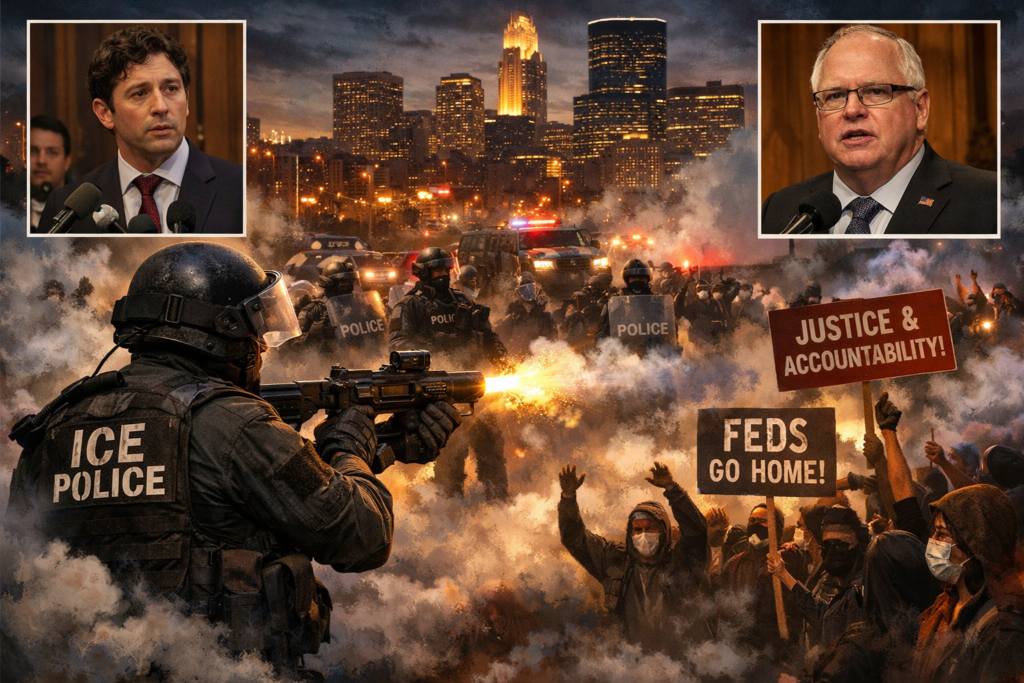
Across the city and state, residents have organized marches, vigils and demonstrations, with thousands gathering near protest sites after both shooting incidents. While many protests have remained peaceful, there have been confrontations with law enforcement involving tear gas and crowd-control munitions, as protesters hurled objects and chants echoed through neighborhood streets.
A Climate of Distrust and Heated National Debate
The national political spotlight has honed in on Minneapolis, where the shootings have intersected with discussions over federal immigration policy, law enforcement practices and the scope of executive authority under President Donald Trump’s administration. Immigration enforcement critics argue that the federal crackdown — especially in communities with sanctuary policies — has sown fear and unease, leading to what local leaders describe as “chaos” and community disruption.
Those supporters of the federal operation, including DHS leaders and some national lawmakers, maintain that federal agents are responding to increases in hostility and assaults on law enforcement personnel. They argue that officers have faced a substantial rise in attacks while carrying out their duties, and that such enforcement operations are critical to national security goals.
The controversial nature of the Minneapolis enforcement strategy has also led to broader debate over how and where immigration enforcement should be conducted in the United States — particularly in cities that have adopted varying degrees of cooperation with federal authorities. The controversy has spurred some lawmakers to suggest changes to federal funding formulas, enforcement policies, or oversight mechanisms to prevent future violent incidents and ensure law enforcement accountability.
Impact on the Community and Families Involved
The shooting of Renee Good deeply affected her family and the Minneapolis community. Good, a mother of three, was remembered by loved ones as compassionate, community-oriented and devoted to her family — characteristics that have intensified the grief and outrage surrounding her death. A fundraising campaign for the Good family has drawn substantive public support amid calls for accountability and justice.
Local immigrant advocacy groups have also voiced profound concern over the federal operation’s impact on immigrant communities. Some community leaders argue that the aggressive enforcement posture not only heightens fear among undocumented residents but also deters even legal residents from participating in everyday life due to fear of confrontation or misunderstanding with federal agents.
What Comes Next: Legal Battles and Public Safety Concerns
As Minneapolis and Minnesota pursue legal action against the federal government, other states and cities are watching closely. Similar legal challenges have emerged in other jurisdictions, with officials arguing that federal immigration enforcement tactics have overstepped constitutional boundaries. These cases could shape federal-state relations and define limits on law enforcement authority moving forward.
Meanwhile, law enforcement and city officials continue to balance public safety concerns with the reality of ongoing protests. Authorities have urged residents to express their grievances peacefully, even as they prepare for the possibility of further confrontations, marches and demonstrations in the days ahead.
With the city on edge, Minneapolis remains a national flashpoint — illustrating the growing intensification of political, legal and societal debates over immigration policy, federal power, and the role of law enforcement in American communities.