Democrats Map Out Multiple Paths to Senate Majority in 2026 Midterms Despite Tough Red Terrain
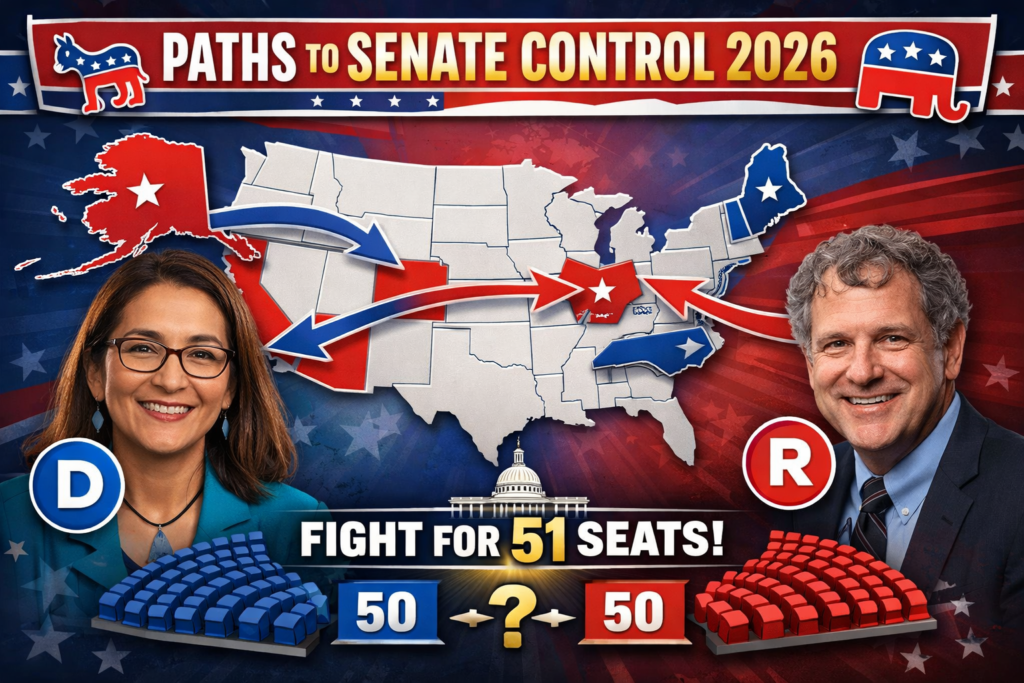
WASHINGTON, D.C. — As the 2026 midterm elections loom, Senate Democrats are outlining ambitious, multi-pronged plans to retake the U.S. Senate majority — even as they face a challenging political map that includes several deep-red states where Republicans remain strong. Senate Minority Leader Chuck Schumer and other Democratic strategists are betting on a combination of strong candidate recruitment, economic messaging and a shifting voter environment to turn the tide in a chamber currently controlled by Republicans 53–47. The GOP’s majority presents a daunting barrier, but Democratic leaders argue they have “multiple paths” to the majority, expanding their campaign battlefield beyond traditional swing states and leveraging candidate strengths in areas formerly thought unwinnable.
The Narrow Math: Net Four Seats Needed for Control
To secure a Senate majority in November, Democrats must achieve a net gain of at least four seats while defending all of their existing holdings — no easy task given the political climate and the fact many seats up in 2026 are in Republican-leaning or closely contested states. Schumer’s leadership team has openly acknowledged that the path is narrow and leaves “little room for error,” especially if Democrats hope to overcome Republican advantages in certain regions and political headwinds that still tilt toward the GOP. At the same time, the Democratic Senatorial Campaign Committee (DSCC) has calculated that multiple pickup combinations could deliver the majority, even if not all targeted races go the party’s way. Among the most promising states outlined in internal strategy memos are key GOP-held contests where strong Democratic candidates have emerged.
Expanding the Battlefield: Red and Purple States in Play
In its campaign planning, Democrats are targeting both historically competitive swing states and a handful of deep-red states where Republican incumbents could be vulnerable:
Alaska: Former U.S. Rep. Mary Peltola, a Democrat with strong statewide name recognition, recently launched her campaign to challenge Republican incumbent Sen. Dan Sullivan, giving Democrats a credible entry point in a state Trump won handily in 2024.
North Carolina: A perennial battleground, where former Gov. Roy Cooper is widely viewed as a top recruit who could peel off moderate voters frustrated with national politics.
Ohio: Former U.S. Senator Sherrod Brown is another marquee recruit in a state that has grown more competitive given economic concerns and recent shifts among independents.
Maine: Gov. Janet Mills brings executive leadership experience to a contest where longtime GOP Senator Susan Collins could see her seat in play.
Iowa and Texas: These traditionally Republican strongholds are long shots, but Democrats see opportunities if national trends favor their candidates. The DSCC memo argues that by expanding the map, the party can “create a number of paths” to the majority — and could even compete in states no one expected to be in play, such as Mississippi, if recruitment and voter enthusiasm align.
Economic Messaging: Targeting Costs, Healthcare, and Household Budgets
A central theme of the Democrats’ strategy is economic messaging designed to resonate with everyday voters concerned about living costs in a Trump-led economy. Senate Democrats and allied groups are emphasizing issues such as affordability of healthcare, rising grocery and housing costs, childcare expenses, and broader economic frustrations faced by middle-class families. Democratic leaders see this messaging as a potential wedge issue, contrasting their proposals to reduce costs with what they describe as Republican failures to deliver economic relief. This messaging is expected to play a critical role in competitive races such as Michigan, Georgia, and others where voters have expressed dissatisfaction with economic trends. The affordability narrative also aligns with broader Democratic messaging around protecting Social Security, Medicare, and healthcare subsidies — topics that poll well among independent and moderate voters.
Voter Environment and Shifts in Public Opinion
Recent polling suggests Democrats may have regained some ground in public opinion on key economic indicators, an encouraging sign for their Senate strategy. One survey found that more Americans now identify with or lean toward the Democratic Party — a shift that provides a modest boost to the midterm outlook. Schumer and his allies are also focusing on broader national trends, arguing that dissatisfaction with President Trump’s policies on healthcare, immigration, tariffs, and governance could help bring out Democratic voters in larger numbers than usual for a midterm cycle.
Primary Challenges and Party Unity
While the Democrats’ map has expanded, it’s not without internal party challenges. Several Democratic primary races — notably in Maine and Michigan — pose potential divisions between progressive and moderate elements of the party. Moderates have occasionally expressed concern over leadership decisions, but the DSCC believes unified ticket building will be vital to overcoming Republican advantages in tight contests. Republican strategists, meanwhile, are not conceding the battlefield. GOP officials point to Trump’s strong margins in key states during the 2024 elections and argue that the Republican base remains energized. They also emphasize their own pickup opportunities in states where Democratic incumbents could be vulnerable.
The Stakes: Majority Control and National Influence
Control of the Senate in 2027 will determine not only the legislative agenda but also oversight of judicial nominations, executive appointments, and critical national policy areas. Given the narrow margins and competitive terrain, party leaders on both sides acknowledge that every seat matters — and that even a single upset in a key state could tip the balance. For Democrats, winning a Senate majority would provide the leverage to advance priorities ranging from climate policy and healthcare reform to voting rights and economic legislation. For Republicans, holding the Senate would reinforce their ability to check Democratic initiatives ahead of the 2028 cycle.
Conclusion: High Stakes, Tight Margins
Democrats head into the 2026 midterms with more paths than they did a year ago, but the road remains narrow and fraught with potential pitfalls. With a combination of expanding battleground states, high-profile candidate recruitment, economic messaging, and shifting public sentiment, the party believes a Senate majority is within reach — even across historically red terrain. Both parties are preparing for an intense campaign season where national narratives and local dynamics will determine control of the Senate — and potentially the direction of American governance for years to come.