White House Unveils New Foreign Policy Doctrine Prioritizing Hemisphere Security and Strategic Threats
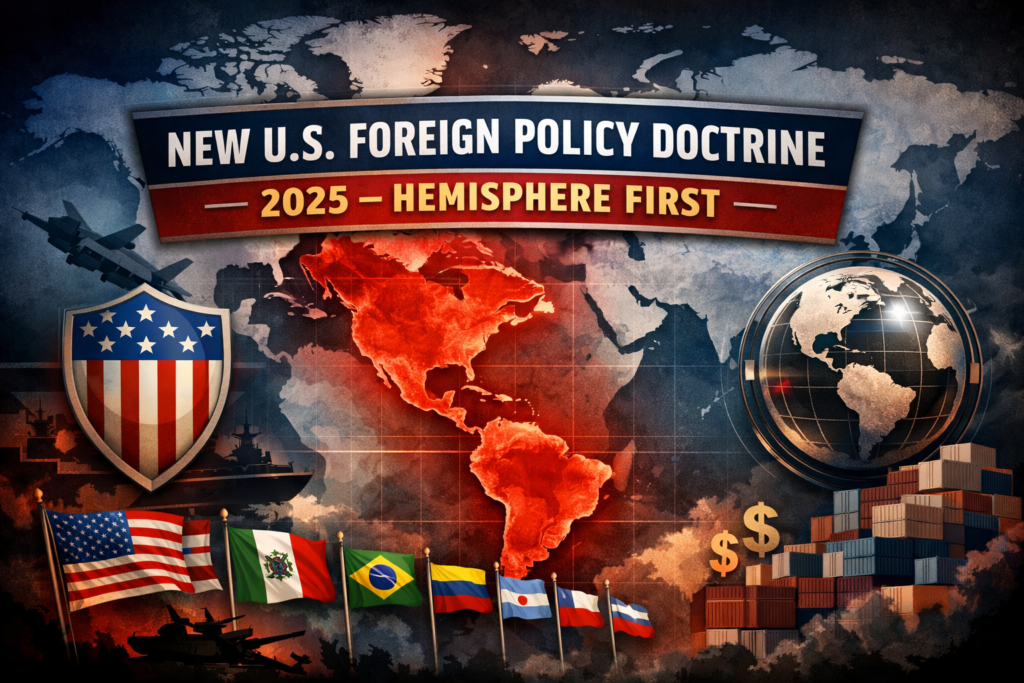
WASHINGTON, D.C. — The Trump administration has rolled out a bold and controversial new foreign policy doctrine that reshapes how the United States views its role on the global stage, placing new emphasis on regional threats, hemispheric dominance and reframed strategic priorities.
The doctrine, encapsulated in the recently released 2025 National Security Strategy (NSS), marks a departure from traditional U.S. global leadership roles. Instead of continuing broad engagement across multiple continents, the strategy puts the Western Hemisphere front and center, describing Latin America and the Caribbean as an area of direct strategic importance and positioning the United States as the primary arbiter of regional security and influence.
At the heart of the document is what analysts have called a modern iteration of the Monroe Doctrine, sometimes referred to informally as a “Trump Corollary.” This updated doctrine frames the Americas as a sphere in which the United States will actively counter foreign influence — whether economic, military or technological — and prioritize threats that could affect U.S. national interests before they reach American borders.
The strategy also reflects a broader reorientation toward “America First” security principles, criticizing longstanding alliances in Europe and urging a redistribution of military responsibilities. European partners are portrayed in unusually direct terms as needing to address migration, economic challenges and demographic pressures without relying on traditional U.S. leadership — a tone that has raised eyebrows among allied governments.
In tandem with the hemispheric emphasis, Washington’s policy document elevates concerns over migration, drug trafficking and foreign strategic competitors as core threats. It sets out plans for military and economic tools aimed at disrupting criminal networks and countering non-state actors in the region. Meanwhile, relations with global powers such as China and Russia are redefined in terms of competitive deterrence rather than collective security frameworks used in past administrations.
Foreign-policy experts note that this shift could set the stage for heightened tensions with U.S. allies, particularly in Europe, while signaling to adversaries that Washington intends to amplify its influence close to home. Supporters say the doctrine sharpens U.S. focus on near-term risks that directly impact American citizens, while critics warn the approach undercuts collaborative diplomacy and undermines long-standing multilateral alliances.
As the strategy begins to guide diplomatic, military and economic policy decisions in 2026 and beyond, the global response — and reactions within Capitol Hill — will help determine whether this doctrine marks a lasting departure in U.S. foreign affairs.