Routine Mammograms Show Potential to Predict Women’s Heart Disease Risk, New Research Finds
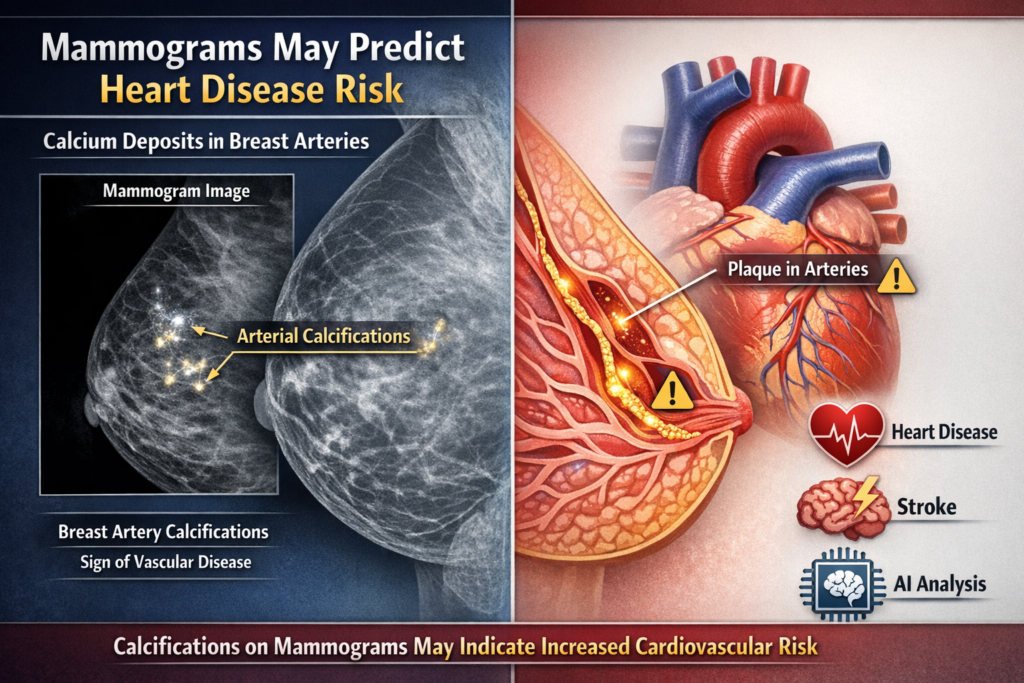
WASHINGTON, D.C. — Mammograms — long used as a frontline screening tool for breast cancer — may soon offer much more than just early cancer detection. A growing body of research suggests that calcium buildup in the arteries of the breast, visible on routine mammographic images, could help identify women at higher risk for future heart disease, stroke and other cardiovascular events.
Calcium deposits — known medically as breast arterial calcification (BAC) — show up as bright white lines or specks on a mammogram and are typically considered unrelated to breast cancer. However, studies show that women whose mammograms reveal BAC may face a heightened risk of serious cardiovascular problems compared with those without these deposits.
In research presented at a major radiology conference, scientists found that women with significant calcium accumulation in breast arteries over time had a notably higher risk of heart attacks, strokes, heart failure and even death within several years, underscoring the value of using existing imaging data to improve cardiovascular risk assessments.
Experts say this could be particularly valuable because current heart risk calculators often underestimate cardiovascular danger in women, who historically receive diagnoses later than men and experience worse outcomes after heart attacks. Detecting BAC on routine mammograms could offer doctors an early opportunity to recommend preventive care like blood pressure management, cholesterol control and lifestyle changes.
Medical innovators are also exploring artificial intelligence (AI) tools that can automatically analyze routine mammograms for BAC and translate that information into cardiovascular risk scores without extra imaging or cost — potentially turning a standard breast cancer screening into a dual tool for early heart disease detection.
While more research is still needed to standardize reporting and clinical use, these findings highlight how a familiar, widely offered test might help physicians and women better understand and address hidden heart risks earlier in life.